I still remember the first time a client asked me for organic rice flour. Specs and I realized how little most buyers actually know about what they’re purchasing. They just want it white, fine and organic as if that one word covers everything. It does not. Not even close.
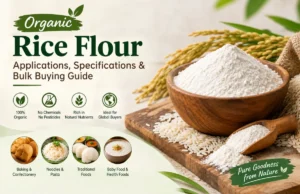
Rice flour has quietly become one of the most requested ingredients across bakeries baby food manufacturers gluten free product lines and even cosmetic formulators (yes really it shows up in some face powders). But sourcing it in bulk especially the organic kind is a different beast than picking up a packet from a supermarket shelf. There’s mesh size to think about moisture content aflatoxin limits if you are exporting, and a supplier who won’t ghost you the moment your order gets a little demanding.
Let’s get into it properly.
Where Rice Flour Actually Gets Used
Most people assume rice flour is just for gluten-free baking. Fair assumption honestly since that’s where the demand spike came from over the last decade. But the applications go a lot wider than that.
Bakeries use it for texture control mixing it with wheat flour to get a lighter crumb in certain breads and biscuits. Noodle manufacturers especially the ones making rice noodles or vermicelli need a very specific starch content. Which honestly changes batch to batch depending on the rice variety used. Baby food companies lean on organic rice flour. Because it’s considered hypoallergenic and easy on infant digestion though pediatricians have mixed opinions on arsenic content which is a whole separate rabbit hole.
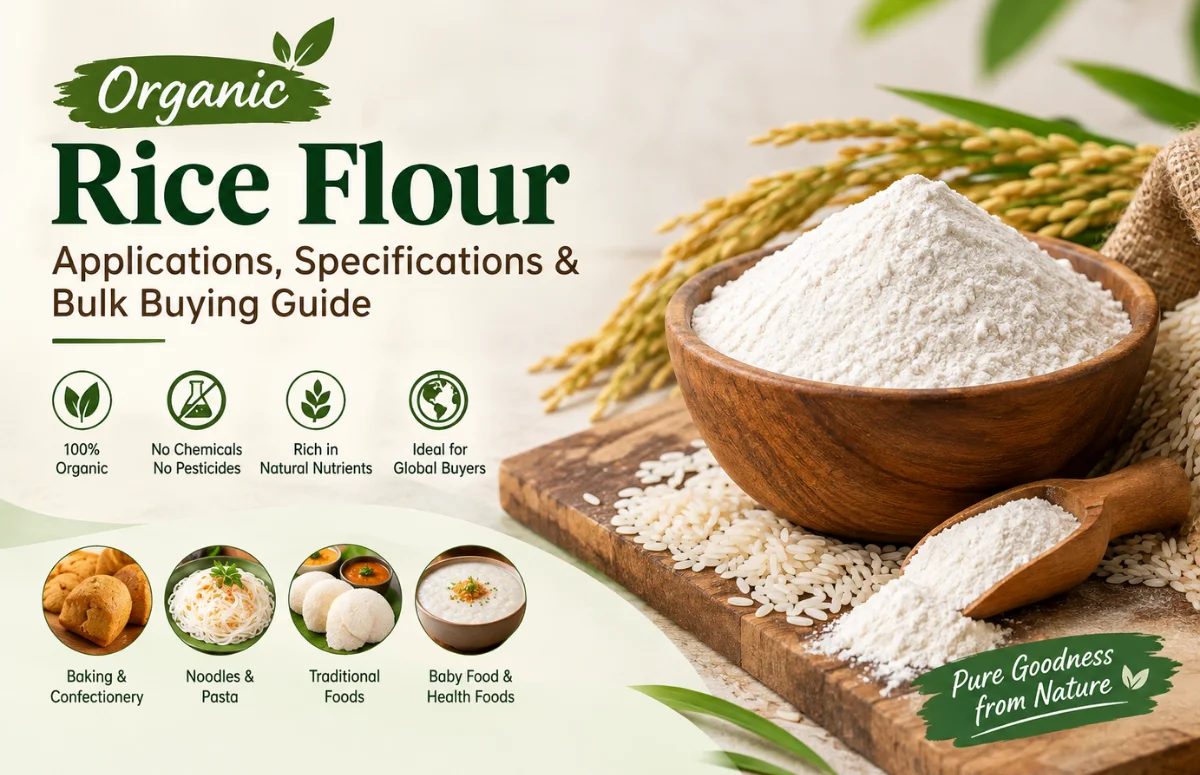
Then there’s the snack food industry extruded snacks papads. Even some batters for South Indian dishes like dosa and idli use a rice flour blend. Cosmetic and pharma use is smaller in volume but growing mostly for its absorbent skin friendly properties. If you are a buyer trying to figure out your MOQ this is where knowing your end use really matters. Because the specs you need for baby food are nowhere near what you had need for an industrial snack extruder.
Specifications That Actually Matter (Not Just Marketing Fluff)
Here’s the thing a lot of suppliers throw around organic and premium without giving you the numbers that matter for processing. What you actually want to ask for:
Moisture content ideally under 12%. Because anything higher invites mold during storage especially in humid Indian warehouses. Mesh size most commercial buyers want somewhere between 100 and 200 mesh depending on application finer mesh for baking slightly coarser for extrusion. Ash content tells you about the bran contamination level so lower ash usually means a cleaner more refined flour. And obviously certification NPOP for domestic and Indian export USDA NOC or EU organic if you are shipping abroad.
Honestly speaking I have seen buyers get burned. Because they never asked for a Certificate of Analysis before the shipment left the warehouse. Always ask. Every single time.
The Supplier Landscape in India
India’s organic rice flour supply chain is scattered unglamorous and honestly a bit chaotic if you are new to it. But there are pockets of real quality once you know where to look.
A lot of the serious organic supply still comes out of Madhya Pradesh and Chhattisgarh. Where organic rice cultivation has grown steadily thanks to government push and NGO involvement in farmer clusters. Suppliers sourcing directly from these belts tend to have better traceability. You can actually ask which village or farmer cooperative the paddy came from which matters a lot if your export buyer wants documentation.
Then you have got the South Indian angle Andhra Pradesh and parts of Karnataka have decent organic paddy production too though the flour milling infrastructure. There is a bit more industrial and less boutique. Good for volume sometimes less flexible on customization.
There are also a handful of exporters based out of Gujarat and Maharashtra. Who do not grow anything themselves but have built solid aggregation networks basically middlemen. But the good kind, the ones who actually do quality checks before repackaging and shipping. I have dealt with a couple of these and honestly some of them run tighter QC than the actual mills.
One name that keeps showing up when people talk about organic sourcing. More broadly not just rice flour specifically is Indian Farm Organics https://www.indianfarmorganics.com/. They work across a range of organic commodities and have a reasonably transparent sourcing model from what I have seen. Which is refreshing in an industry where transparency often just means a nice PDF brochure.
There are smaller regional players too some based in Punjab working with basmati by products for flour others in Odisha. Where organic farming has gotten real institutional support in the last few years. Quality here can be inconsistent though. One shipment is great the next has visible bran specks because someone rushed the polishing stage. It happens more than suppliers like to admit.
And then honestly there’s a growing cluster of women led FPOs farmer producer organizations getting into organic rice processing, backed by various state agri missions. These are smaller in scale but sometimes offer better pricing. Because there’s less middleman markup worth exploring if your order sizes are not massive.
So How Do You Actually Pick One?
Now, this is important and it’s where most buyers go wrong. They pick based on price first. Don’t do that. Price should honestly be the third or fourth filter, not the first.
Start with certification verification do not just take their word. Actually check the certificate number against the certifying body’s database. Takes five minutes and saves you months of headache. Then ask for samples obviously but don’t just check color and smell actually run it. Through your process if you can, even a small trial batch. Flour that looks fine in a bag can behave completely differently once it hits your extruder or oven.
Ask about their traceability can they tell you which farm cluster or region the paddy came from?. If they can not answer that in under thirty seconds that’s a small red flag. Not a dealbreaker necessarily but worth noting.
Payment terms and logistics reliability matter more than people think too. I have seen deals fall apart not because the flour was bad. But because the supplier couldn’t manage consistent dispatch schedules. And that messes up your entire production planning. Also and this sounds obvious but people skip it ask for references from other bulk buyers. Ideally in your same industry segment since a supplier great for bakery clients might not understand extrusion grade requirements at all.
If you’re working with an organic food supplier in India for the first time, it genuinely helps to visit the facility, even just once, before committing to large volumes. Photos and video calls can hide a lot. A five minute walkthrough in person tells you things no email chain ever will.
A Few Honest FAQs
Is organic rice flour actually more nutritious than regular rice flour?
Marginally in terms of pesticide residue and sometimes micronutrient retention. But nutritionally the macros are basically the same. The bigger value is in the sourcing practices not some dramatic nutrition boost people assume exists.
What’s a reasonable MOQ for bulk buyers?
Depends heavily on the supplier but most serious exporters or mills work with a minimum of around 500 kg to 1 ton for a first order. Smaller FPOs sometimes go lower. Which can be useful if you are testing a new supplier relationship.
How long does organic rice flour typically stay shelf stable?
Around 6 to 9 months if stored properly cool dry away from moisture. Beyond that rancidity risk goes up especially if there’s any residual bran fat in the flour.
Should I worry about arsenic content in rice flour?
It’s a fair concern, particularly for baby food applications. Ask suppliers for heavy metal testing reports not just organic certification. The two are not the same thing and people conflate them way too often.
At the end of the day sourcing organic rice flour in bulk is not rocket science. But it does reward people who ask the annoying detailed questions upfront rather than assuming certification alone guarantees quality. It rarely does.