Walk into any decent supermarket in a Tier 1 Indian city right now and you will find a dedicated organic section. Maybe two years ago it was a single shelf with overpriced imported granola. Now it’s an entire aisle. That shift didn’t happen by accident behind it is a growing network of farmers, processors and brands who’ve quietly built something real over the last decade. If you are a retailer a restaurant owner or just someone trying to source organic ingredients at scale, figuring out which organic food supplier in India is actually reliable (and not just slapping a green label on things) can be genuinely confusing.
So here’s what I have put together a proper guide based on what’s out there in 2026 not a recycled listicle from three years ago.
Let’s Start With Who’s Actually Doing This Well
Organic India is probably the name most people recognize first, and for good reason. They have been around since the late ’90s and have built an enormous supply chain rooted in Uttar Pradesh’s tulsi and herb farms. What makes them stand out is not just the product range it’s the traceability. They have invested heavily in farmer partnerships and hold both USDA Organic and India Organic certifications. Their bulk supply options for B2B buyers are solid, though pricing can be on the higher end. Worth it if consistency matters to you.
24 Mantra Organic is another heavyweight. Based out of Hyderabad, they work with over 50,000 farmers across multiple states, which is honestly impressive when you stop to think about what that coordination actually looks like on the ground. They supply everything from staples like rice and lentils to specialty items like millets and cold pressed oils. Their distribution network has expanded significantly, and they now have pretty good reach even in smaller cities. One thing I will say their quality control has gotten noticeably tighter over the last couple of years, which wasn’t always the case.
Now, here’s one that does not get nearly as much attention as it deserves. Indian Farm Organics (https://www.indianfarmorganics.com/) works directly with certified organic farmers and focuses on clean supply chains for both domestic and export markets. What’s interesting about them is the emphasis on farm-to-customer traceability something a lot of the bigger players talk about but don’t always execute well. If you are a business looking for a smaller but more responsive organic food supplier in India, they are worth reaching out to.
The Regional Players Worth Knowing
Sresta Natural Bioproducts also the company behind the 24 Mantra brand operates one of India’s largest certified organic farming networks, but their B2B arm is what’s particularly relevant here. They handle private label supply for several retail chains, which tells you something about their scale and reliability.
Down to Earth Organics, operating primarily out of Maharashtra and Karnataka, has carved out a niche in fresh produce supply for restaurants and cloud kitchens. The cold chain logistics are not perfect this is India, after all but they have invested in better packaging and their delivery windows have improved. For hospitality businesses trying to source seasonal organic vegetables consistently, they are a practical option.
Then there’s Navdanya, Vandana Shiva’s seed sovereignty network turned supply operation. They are ideologically driven which some buyers love and some find limiting. Their focus is heavily on heritage grain varieties and traditional crops. Availability can be inconsistent, and they don’t always move at the speed a commercial buyer needs. But if you are sourcing for a premium product line and want a compelling story behind your ingredients, Navdanya delivers on that.
Suminter India Organics is one I’d highlight for anyone interested in export-grade supply. They handle certified organic commodities spices, cotton, oil seeds and work extensively with international markets. For domestic bulk buyers in the food processing industry, their consistency and documentation standards are genuinely above average.
Praakritik is a newer name that’s been gaining traction, particularly among D2C and e-commerce buyers. They source directly from small farms and focus on unprocessed, minimally packaged goods. Not the right fit for large institutional buyers, but for smaller food brands building an organic product line they are flexible and communicative in a way that larger suppliers sometimes aren’t.
How Do You Actually Choose the Right Supplier?
This is where most guides get vague, so I will be direct.
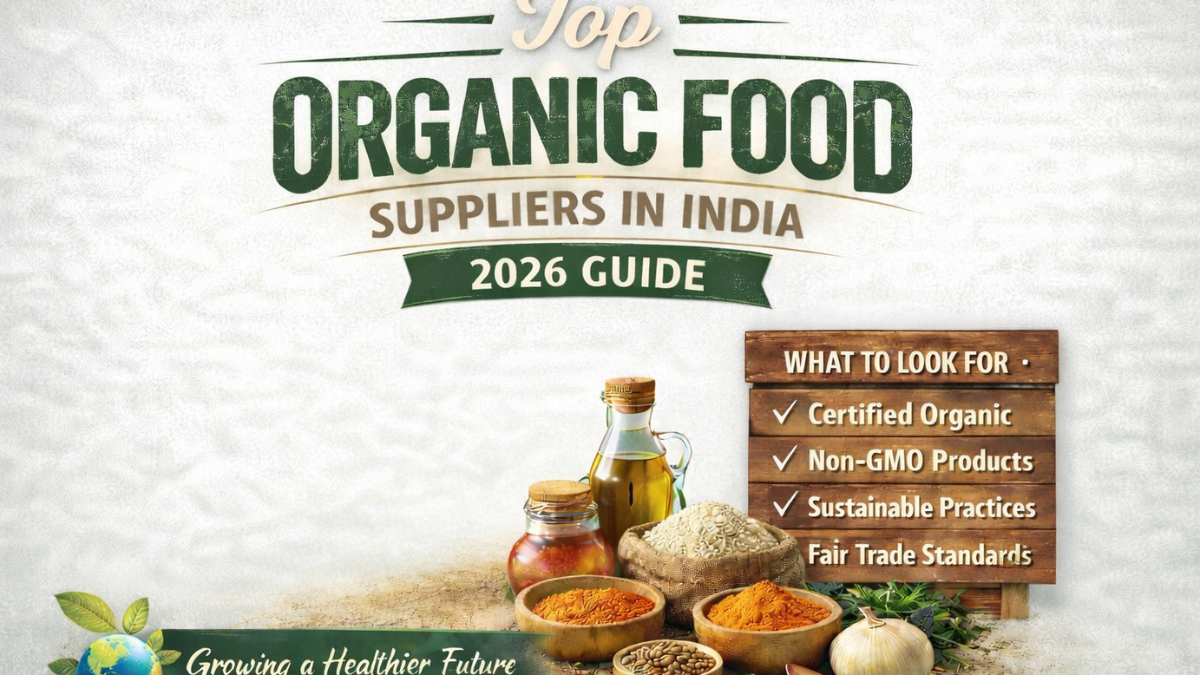
First- certifications. Look for suppliers with India Organic certification from APEDA at minimum. If you are exporting or catering to international clients, USDA Organic or EU Organic certification matters. Don’t just take a supplier’s word for it ask for the actual certificate and check the issue date. Certifications expire and not everyone is on top of renewals.
Second- traceability. A good organic supplier should be able to tell you which farm a product came from when it was harvested and what the soil testing results look like. If that question gets a vague answer or a long pause that’s information too.
Third — and honestly, this one gets ignored a lot visit the facility if you can. Or at minimum request a sample batch and get it independently tested before committing to a large order. Lab testing for pesticide residues is not expensive relative to what a bad batch can do to your product or your customers.
Pricing is obviously a consideration but the cheapest certified organic supplier in India is rarely the best one. Organic certification has real costs. If someone’s prices look implausibly low ask more questions.
Finally, think about communication. This sounds obvious but supply chain breakdowns often come down to a supplier who doesn’t pick up calls or delays paperwork. Work with people who are responsive. It matters more than it sounds.
A Few Questions That Come Up A Lot
Is organic certification mandatory to call a product organic in India? Technically, yes under FSSAI regulations any product sold as “organic” in India needs to be certified under the National Program me for Organic Production (NPOP) or the Participatory Guarantee System (PGS-India). PGS is meant for small farmers selling locally. For commercial supply, NPOP certification is the standard.
Are Indian organic suppliers reliable for export? Many of them are particularly the larger ones like Summiteer Organic India, and 24 Mantra who have established export documentation processes. The key is ensuring the certifying body is recognized in your destination country.
How do prices of organic ingredients compare to conventional in 2026? The premium has actually narrowed a bit as scale has improved, but you are still generally looking at 20–60% higher prices depending on the product category. Staples like pulses are on the lower end of that premium specialty items like cold-pressed oils or heritage grains can be significantly higher.
What’s the minimum order quantity for most B2B organic suppliers? It varies a lot. Larger suppliers like 24 Mantra or Sresta typically have MOQs in the range of 100–500 kg per SKU. Smaller or direct-farm suppliers may be more flexible. Always ask upfront it avoids a lot of back and forth.
The organic food market in India is not a trend anymore. It’s a proper industry with real supply chains, improving certification infrastructure, and a consumer base that’s increasingly paying attention to what’s on the label. The suppliers doing it right are the ones who’ve built relationships with farmers rather than just buying from whoever’s cheapest. That’s the thing to look for honestly more than any certificate or marketing claim.