A few years ago my aunt in Jaipur called me slightly annoyed. Because the organic basmati she had bought at a premium tasted exactly like the regular stuff. Same aroma same slightly broken grains at the bottom of the bag and a price tag nearly double. She wanted to know if she had been fooled.
Maybe she had maybe not. But her question stuck with me. Because it’s the one almost everyone asks sooner or later. The label says organic. The price says organic. How do you know it is?
Let’s start with the rice itself because the variety matters more than people give it credit for. Then we will get into who sells it.
Three rices, three personalities
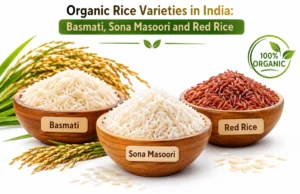
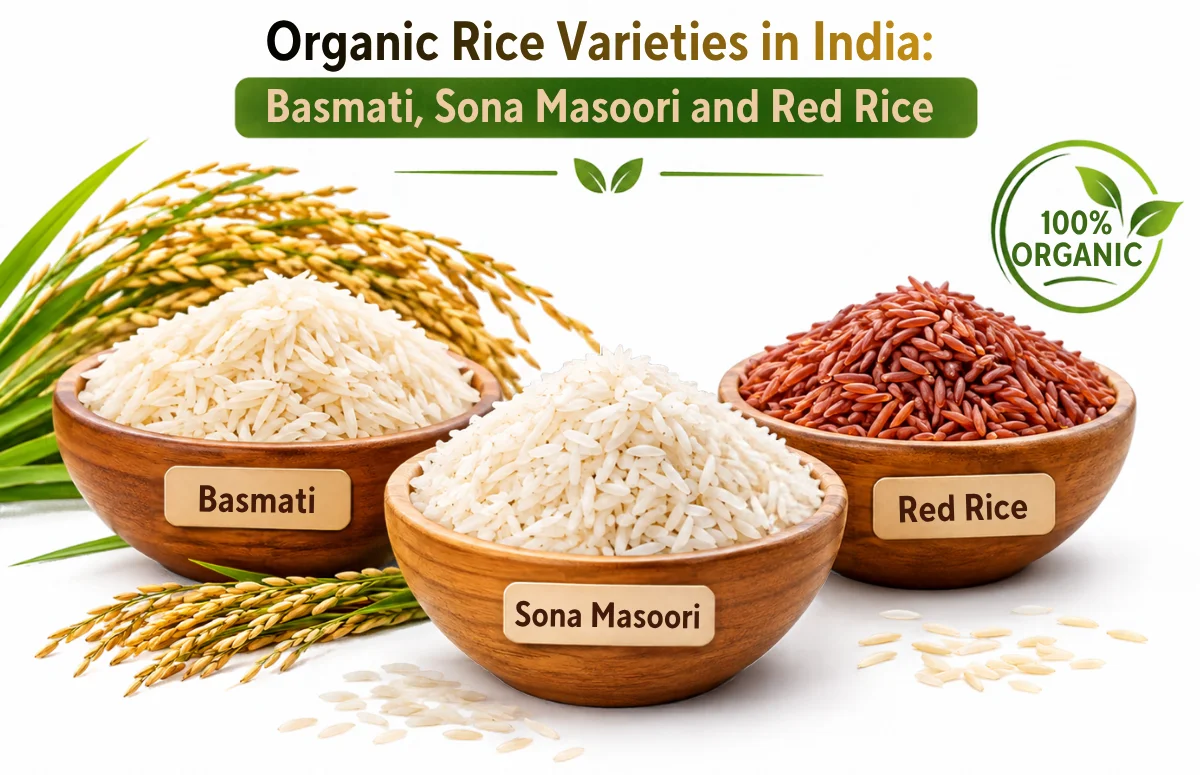
Basmati is the showpiece. Long slender grains that stretch even longer when cooked and that aroma which is hard to describe if you have not smelled a fresh pot of it. Most of it comes from the foothills of the Himalayas, Punjab, Haryana, Uttarakhand, parts of Uttar Pradesh. Organic basmati is trickier to grow than people assume. Basmati is a fussy plant prone to blast and bacterial blight and without synthetic sprays farmers lose more of the crop. That’s partly why it costs what it costs. Honestly a very cheap “organic basmati” should make you suspicious.
Sona Masoori is the opposite in temperament. It’s a lightweight medium grain rice from Andhra Pradesh Telangana and Karnataka and it’s what most South Indian homes eat every day. It does not try to impress. It cooks up soft does not get heavy and works with sambar, rasam, curd rice, pretty much everything. If you are switching a whole family to organic and need something you can eat twice a day without getting bored this is usually the smart pick. Not glamorous but practical.
Red rice is where things get interesting. It comes in many forms Kerala’s matta rice the red rices of Tamil Nadu like Mappillai Samba and Himalayan red varieties. They are less polished so the bran stays on and that’s where the reddish color the nutty flavor and the extra fiber come from. They take longer to cook and the texture is chewier. Some people love it from the first bite. Others need a few tries. My advice is to buy a small bag first and soak it for a couple of hours. It makes a real difference.
The suppliers or at least the ones I’d actually look at
Now, this is where I should be honest. There’s no single best supplier. Each one serves a slightly different need. What follows is based on how these names are generally known in the market so check current product ranges and certifications yourself before ordering. They change.
24 Mantra Organic is probably the most recognizable name for anyone shopping in supermarkets. It’s run by Sresta Natural Bioproducts out of Hyderabad and you will find their rice, pulses and flours in most big retail chains. They carry the usual suspects including Sona Masoori and basmati. It’s a good choice if you want something easy to find without hunting online. The trade off is that mass distribution sometimes means less of that small farm personal feel.
Organic Tattva, based in Mumbai has built a decent following with urban buyers. Their range is wide and the packaging is clear about origin and certification which I appreciate. They lean toward the everyday staples customer who wants a one stop shop for rice, grains oils and spices.
Pro Nature, out of Bengaluru has been in the organic space for a long time and they have a reputation for working with farmer groups directly. If sourcing story matters to you and for some people it really does they are worth a look. Their rice range includes regional varieties which is useful if you want something beyond plain white rice.
Conscious Food, Hyderabad again has been around a while and is popular for things like traditional rice varieties and millets. If your interest in red rice goes beyond a single bag of matta say you want to explore some of the older heirloom types they are a decent place to start poking around.
LT Foods, the company behind Daawat and Royal is a different animal altogether. It’s a large rice company and its organic line (sold under the Ecolife name) comes with the infrastructure and export experience of a major player. I had think of them for bulk or export level buyers or anyone who values the reliability of a big established operation more than a boutique story.
Indian Farm Organics (https://www.indianfarmorganics.com/) is the sort of smaller specialist I often point people toward when they ask me about direct sourcing. They focus specifically on organic staples rice among them and if you are comparing a few options it’s a decent one to put on your shortlist especially if you want to ask questions about origin and varieties rather than just grab a pack off a shelf.
One more thing worth saying. If you are a restaurant owner a retailer or someone buying in volume you will probably talk to more than one of these. That’s normal and honestly it’s smart. Don’t marry the first quote you get.
How to actually choose
Here’s the thing most articles skip the brand name matters less than the paperwork behind it.
Start with certification. In India look for the India Organic logo (the NPOP standard) or the Jaivik Bharat mark and if the rice is meant for export check whether they also hold USDA Organic or EU Organic. If a supplier is vague about this move on. Don’t let anyone wave you off with it’s grown naturally no chemicals. That’s a claim not a certification.
Then ask about traceability. Can they tell you which region the rice came from? Which season? A decent organic food supplier in India will be able to answer that without sounding annoyed. If every question gets a vague answer take that as an answer.
Check the grain too. With basmati especially look at the length and the proportion of broken grains. Aged basmati usually a year or more cooks up separate and fluffy. Fresh basmati can turn sticky. Ask about aging. Most buyers never do and it’s one of the biggest quality factors.
And price. I know I have said it already but I will say it once more. Organic farming has real costs lower yields certification fees more labor. If the price is barely above regular rice ask why.
A few smaller things I have learned the hard way. Smell the rice if you can. Old or badly stored rice has a stale musty note you can’t miss once you notice it. Check the packing date not just the expiry. And buy small first. Cook it taste it see how your family reacts then commit to a 10 kg bag.
A short FAQ
Is organic rice actually healthier?
Well, it depends what you mean. It’s grown without synthetic pesticides and fertilizers which many people prefer for obvious reasons. Nutritionally the bigger difference comes from the type of rice not the label. Red rice with its bran intact has more fiber than polished white rice organic or not.
Why is organic basmati so much more expensive than regular basmati?
Lower yields higher crop loss risk certification costs and usually smaller batch sizes. Also aging since good basmati is stored for months before sale. It all adds up.
How long can I store organic rice?
Without preservatives it’s more vulnerable to insects and moisture. Keep it in an airtight container in a cool dry spot. A few dried neem leaves in the container is an old trick and it works reasonably well. Red rice because of the bran goes off a bit faster than white so don’t stock up for a year.
Can I trust “organic” labels on online marketplaces?
Carefully. Check for a visible certification number and do not be shy about messaging the seller. If they can’t provide it that tells you what you need to know.
Anyway, that’s the long and short of it. My aunt by the way switched suppliers started asking for the certificate before buying and now she’s the one lecturing relatives on how to read an organic label. So there’s that.