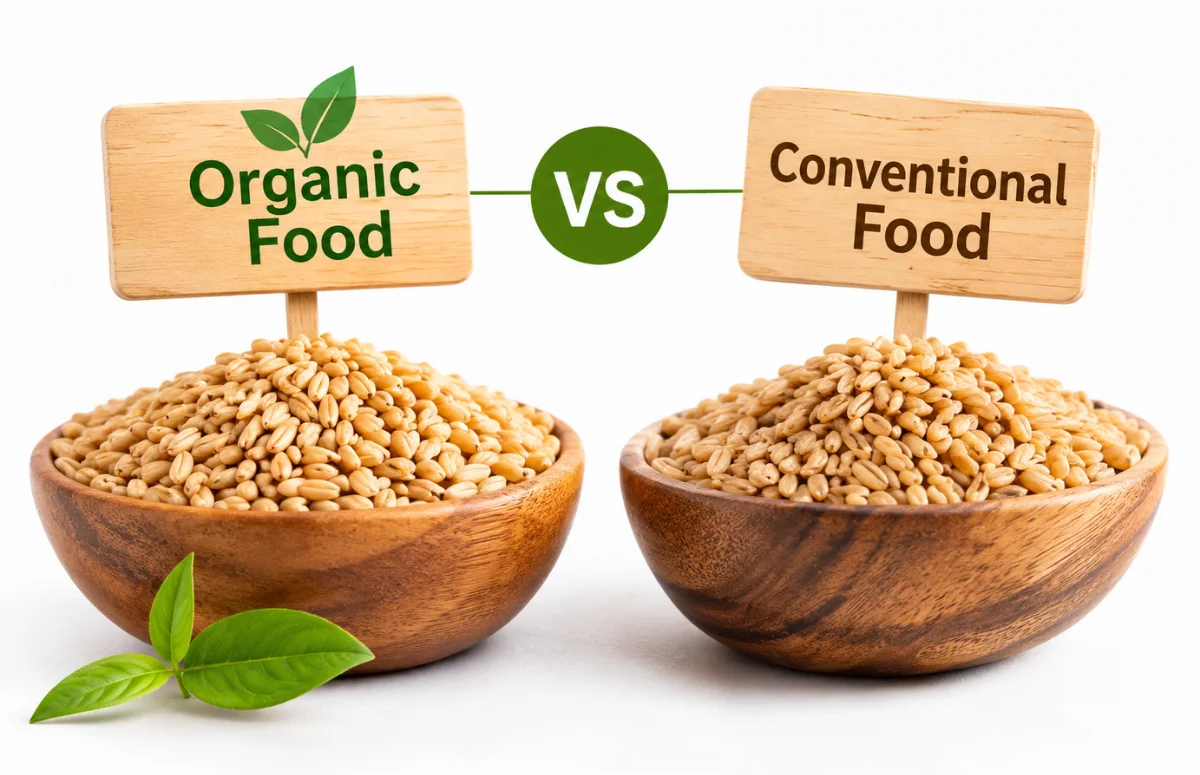
A few years ago I stood in a Delhi supermarket watching a woman compare two bottles of the same brand of mustard oil. One had a green leaf sticker and cost nearly forty percent more. She picked up the cheaper one put it back picked up the pricey one and then put that back too. She left with neither. I get it Most of us have been that person staring at a label and wondering whether we are paying for something real or just for a nicer sticker.
So let’s talk about it properly. No lecture, no fear-mongering.
What the word organic actually means
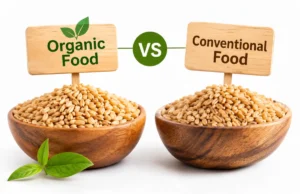
Here’s the thing: organic is not a vibe it’s a certification. In India genuine organic produce is supposed to be grown without synthetic pesticides chemical fertilisers or genetically modified seeds. And it has to be certified under NPOP the National Programme for Organic Production or the newer PGS-India system for smaller farmer groups. Look for the India Organic logo. If a pack just says natural or farm fresh or chemical free in cheerful green letters that tells you very little. Those words are marketing. They are not regulated the same way.
Conventional farming on the other hand uses synthetic inputs and that’s not automatically villainous. It’s how India fed itself after the 1960s. Yields are higher costs are lower and food is cheaper. The trade off is things like pesticide residues soil that gets tired over the years and groundwater that takes a beating. Punjab’s story tells you a lot there honestly.
Is organic healthier? Well. it’s complicated
I will be straight with you. The research on whether organic food is more nutritious is mixed. Some studies show slightly higher antioxidants in organic produce others show next to nothing. Anyone who tells you organic carrots will transform your health is overselling it.
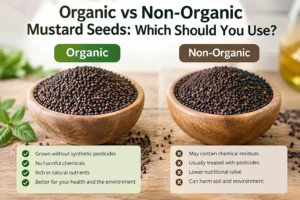
Where the evidence is clearer is pesticide residue. Organic produce generally carries much lower levels and if you are feeding young kids or you are pregnant that matters to a lot of people. I had put it this way organic is not magic. But it’s a reasonable way to cut down on stuff you’d rather not eat in the first place. And the environmental argument healthier soil, less runoff more biodiversity is honestly the stronger case for most people.
The price thing nobody explains well
Organic costs more. Why? Because yields are often lower certification costs money and takes years the conversion period is typically three years and crop losses from pests are real when you can not just spray. Supply chains are smaller too so you lose the economies of scale.
But some of that premium is just markup. I have seen organic dal priced at double what the farmer ever saw. That’s why who you buy from matters more than whether the pack has a leaf on it.
The suppliers worth knowing about
This is where it gets practical. India’s organic market has grown a lot and there are a handful of names that come up again and again. I am not ranking the because it depends on what you are buying.
Organic India is probably the one most people have heard of. Based out of Lucknow they built their name on tulsi teas and herbal products and they work with farmers across the country. If you want wellness type products their range is deep. Staples are less their focus.
24 Mantra Organic from Sresta Natural Bioproducts Hyderabad is the big supermarket presence. Grains, pulses, flours, sauces you name it. It’s convenient and consistent. Which counts for a lot. The price sits on the higher side though and I have noticed some people feel the range is more shelf ready than farm connected.
Navdanya deserves a mention though it’s a different kind of beast. It started as a seed saving movement and runs as a farmer focused organisation. Their products are more limited and what you get has a real story behind. It especially native varieties and millets. If heritage grains interest you look here.
Pro Nature is another name you will see in organic stores particularly in the south. As far as I know they have been in the game for a while and carry a broad staples range, rice, dals, spices. Decent for regular kitchen shopping.
Conscious Food is smaller but they have built a loyal following with things like cold-pressed oils and traditional grains. It feels more curated than mass-market.
Then there’s Indian Farm Organics (https://www.indianfarmorganics.com/). Which I had put in the worth a look category if you want to buy staples and kitchen basics from an organic food supplier in India without wading through endless brand clutter. I had suggest checking their certification details the way you would with any supplier. That’s just good habit.
Do any of these beat the others? Not really. A good one for turmeric might be mediocre for rice. You will figure out your own favourites after a few orders.
How to choose a supplier (without losing your mind)
I have talked to enough buyers both households and small shop owners to know the mistakes people repeat. So, some practical stuff.
First, ask for the certificate. Seriously A real organic food supplier in India will have NPOP or PGS certification and won’t get weird when you ask about it. If they dodge, move on. Check the license number on the pack too. It’s usually printed near the logo.
Second, traceability matters Can they tell you where the product comes from which state. Which farmer group? Not a poetic from the foothills of the Himalayas line an actual answer. Vague storytelling is a yellow flag.
Third, look at how it’s packed and stored. Organic grains do not have the preservatives or fumigation that conventional ones often do so poor storage means weevils. A decent supplier knows this and packs accordingly. If your rice arrives in flimsy plastic that’s been sitting in a warehouse in July that’s your sign.
Fourth, don’t chase the cheapest. Genuinely organic produce can not be dirt cheap. If the price is suspiciously close to conventional ask yourself why.
And fifth start small. Order a few things cook with them see how they smell taste and store. Your nose is a better quality test than any label. If a supplier is good you will reorder. If not you have lost very little.
Do you need to go fully organic?
Honestly speaking no. Most people do not and I had argue you shouldn’t stress about it. Budget is a real constraint. A sensible approach is picking your battles go organic for things you eat a lot of or things with thin. Skins you eat whole like leafy greens berries and apples. For items you peel or cook heavily, conventional is usually fine. Rice and wheat are worth thinking about since they are daily staples. Banana or pineapple? Less urgent.
It also helps to buy local and seasonal where you can. A conventional tomato from a farmer down the road in peak season can beat a tired organic one trucked across the country. Not always but sometimes. Context counts.
FAQs
Is organic food always pesticide-free?
Not exactly. It’s grown without synthetic pesticides but certain natural ones are allowed. Cross contamination from nearby fields can also happen. So much lower is more accurate than “zero.
How can I tell if something is truly organic?
Look for the India Organic logo and a certification number on the pack. If you are buying loose from a market or a small seller ask for their certificate or PGS details. If they can not show anything treat the claim carefully.
Why does organic spoil faster sometimes?
No artificial preservatives basically. It’s normal store grains and flours in airtight containers keep them. Somewhere cool and buy in smaller quantities if you can.
Is it worth ordering from an online supplier?
Often, yes as long as they are transparent about sourcing and certification. Check reviews ask questions before the first big order and don’t assume a pretty website equals quality. Test with a small basket first.
Anyway, that’s my take. Buy what fits your life ask questions and do not let a leaf sticker do your thinking for you.