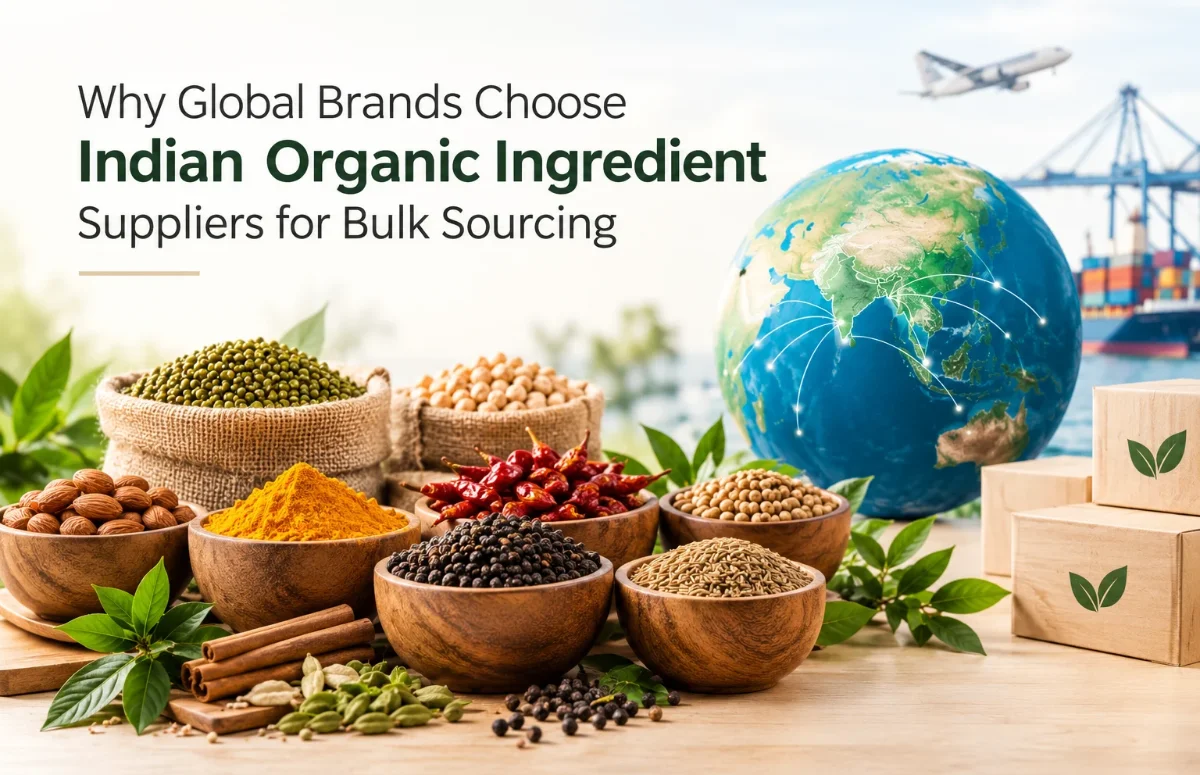
A few years back I sat in on a sourcing call where a buyer from a mid sized European snack company was getting visibly tired. Three suppliers from three countries and all three had hit the same wall one fell short on volume one could not hold price past a single harvest one sent paperwork that looked like it had been photocopied from a photocopy. Then someone said almost offhand Have we looked properly at India?.
That question shows up in a lot of procurement meetings now. And honestly it’s not hype.
It starts with the land (and the people on it)
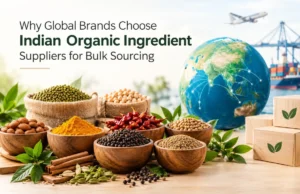
Here’s the thing most articles skip. India has more organic producers than any other country by a wide margin. We are talking well over a million farmers most of them smallholders working a few acres. That sounds like a weakness for bulk sourcing and sometimes it is. But it’s also why the country can grow such an odd wonderful range of stuff basmati, turmeric, ashwagandha, moringa, cardamom, jaggery, sesame, millets, cold pressed oils, cashews, tea. Try finding one other country that covers all of that.
Climate helps too. You have got the Himalayan foothills the Deccan plateau coastal Kerala the dry belts of Rajasthan. Different crops different harvest windows. A brand that needs steady supply across the year can spread its risk. Sikkim went fully organic as a state back in 2016 which got a lot of press though the real story is the quieter work happening in Madhya Pradesh, Maharashtra, Karnataka and Uttar Pradesh.
And cost. I won’t pretend organic from India is cheap in absolute terms. Because it is not certification and traceability cost money anywhere. But the price-to-quality ratio is hard to beat and that’s what a buyer ordering twenty containers cares about.
The certification thing Because buyers do ask
Now, this is important. A brand in Germany or the US is not going to take anyone’s word for it. India’s own system NPOP is the backbone and plenty of exporters layer USDA NOP and EU organic certification on top sometimes JAS too. The good ones do not hide this. They hand you the scope certificates the transaction certificates the farm group lists without you having to chase.
The ones who get cagey about audit trails? Walk away. I mean it.
So who are the actual players?
I will be upfront. I am not going to rank anyone because the best supplier depends entirely on what you are buying. But some names keep coming up and they are worth knowing.
Organic India is probably the best known globally, based out of Lucknow. They built their name on tulsi and a whole herbal range working with farmers across Uttar Pradesh and beyond under a fairly structured fair-trade-style model. If your product leans wellness or botanical they are often the first call. Their brand is also strong enough that some buyers find them more of a consumer company than a pure ingredient house so it depends how you want to work.
Sresta Natural Bioproducts the people behind the 24 Mantra Organic label out of Hyderabad took a different route. They went deep into contract farming signing up farmers across several states and building the supply chain around that. For staples like grains, pulses, spices and sugar that backward integration matters. You can actually ask where something was grown and get a real answer.
Phalada Agro Research Foundation in Bangalore has been around a long time and has a more research driven farmer-support feel. Think spices cashews, rice, coconut products out of the south. Their roots in agronomy show up in how they talk about soil and farming practice which some brands love and others find slightly slow paced. Depends on your timeline.
Nature Bio-Foods Mumbai-based is one of those names you hear more in trade circles than in consumer ones. Organic rice, sugar, spices that sort of commodity leaning ingredient work with a clear export focus. If you are buying in real volume and care mostly about consistent specs and documentation that kind of company often fits better than a boutique.
Allanasons also Mumbai is an old trading house with decades of export experience particularly in spices, nuts and dried goods. They are not organic only which is worth knowing. But if you need a partner who understands international shipping compliance and dealing with fussy buyers that history counts for something.
Conscious Food out of Hyderabad has built a decent reputation around organic staples and packaged goods and they have been fairly active on the export side. I had put them in the worth a sample order category rather than anything more breathless.
And then there are the newer, leaner operators. Indian Farm Organics is one that came up in a few conversations I have had, and it’s the kind of organic food supplier in India that smaller and mid sized brands tend to like because the whole process feels less corporate. Fewer layers between you and the people actually handling your order. I had still say what I had say about anyone ask for samples check certificates speak to a reference. Don’t just trust a nice website.
You will notice I didn’t write one neat paragraph per company with identical formatting. That’s because they genuinely are not the same kind of business and pretending otherwise helps nobody.
How to actually pick one (the less glamorous bit)
Okay. This is the part where most buyers either overthink or underthink.
Start with what you need not with who’s famous. If you want 40 tons of organic sugar every quarter a boutique herbal company is the wrong conversation. If you need small batch cold pressed oil with a farm story you can print on packaging a commodity trader is the wrong one. Sounds obvious People still mess this up constantly.
Then look at documents before you look at prices. Certificates test reports, pesticide residue results traceability records. A supplier who responds to a documentation request in hours rather than weeks is usually running a tight operation. A slow reply on paperwork is almost never a one off.
Ask about their farmers. Not in a fluffy way. Ask how many where how they are trained what happens when a crop fails. Organic farming is unforgiving and a good supplier will have thought about this already.
Order a sample and I mean a proper one ideally from a production lot not a hand picked jar. Test it in your own lab if you can. Compare it against what they claimed.
One more thing. Pay attention to how they handle bad news. Every supplier has a delayed shipment or a weather damaged harvest at some point it’s agriculture. What separates the good ones is whether they tell you early with a plan or let you find out when the container does not show up.
And be a little skeptical of anyone who promises everything lowest price, fastest delivery every certification any quantity. Somewhere in that list something’s being fudged.
Why the big brands keep coming back
When I talk to people who have been sourcing from India for years the reasons stay pretty consistent. Variety mostly since one country can cover a lot of your ingredient list. Scale that’s increasingly reliable as exporters invest in processing and cold storage. A growing comfort with the compliance side which used to be a real headache. And a certain flexibility. Indian suppliers tend to be willing to adjust packaging, grind sizes, blends, that kind of thing without making it a three month negotiation.
It is not perfect. Logistics can be bumpy monsoon seasons can mess with timelines and quality can vary between suppliers more than you had like. Anyone who tells you otherwise is selling something. But the direction is clearly upward, and global brands even the cautious ones seem to have figured that out.
A few quick questions people ask
Is Indian organic certification accepted internationally?
Mostly yes, though it depends on the market. Many exporters hold USDA and EU organic certification alongside NPOP so check which one your destination country requires before you sign anything.
What’s a realistic minimum order for bulk sourcing?
Honestly it varies a lot. Some suppliers start at a few hundred kilos for trial orders others only deal in full container loads. Just ask early so you do not waste a week.
How long does it take to onboard a new supplier?
Plan on a couple of months if you are doing it properly sample testing, audits documentation a small first order. Rushing this is where people regret things later.
Can I visit the farms?
Often, yes and good suppliers usually welcome it. If someone seems oddly reluctant to show you where your ingredients come from take note.