I was standing in the vegetable aisle a few weeks back. Staring at two bunches of spinach one in a plain plastic bag. Priced at forty rupees the other wrapped fancy with an organic sticker and priced almost double. My first thought was not about pesticides or soil health. It was does this actually matter or am I just paying for a label? That question sent me down a rabbit hole and honestly the answer. Is not as simple as either side wants you to believe.
Everyone’s got an opinion on organic versus conventional farming these days. Your health conscious cousin swears by organic everything. Your uncle who’s been farming for thirty years will tell you organic is a marketing gimmick dressed up as science. Both of them are partly right and partly missing the point.
The Actual Difference Without the Marketing Spin
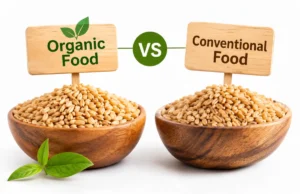
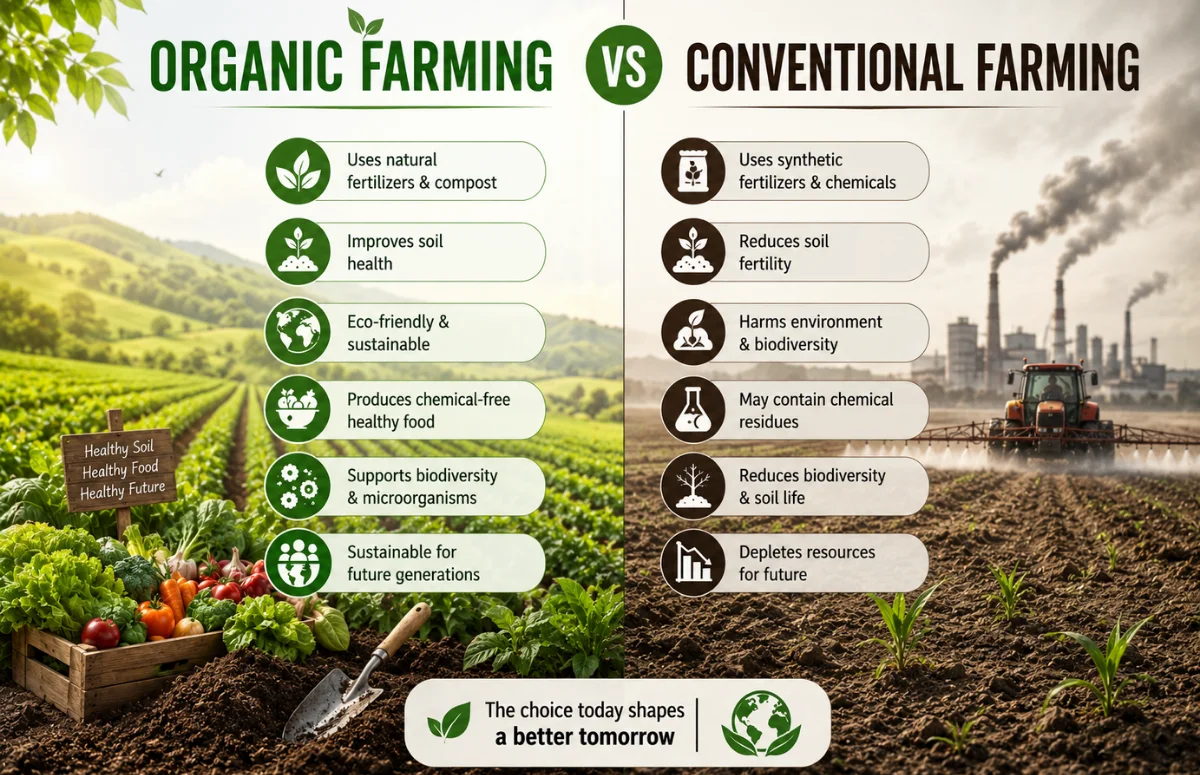
Conventional farming at its core, leans on synthetic fertilizers chemical pesticides and increasingly genetically modified seeds to push yields as high as possible. It’s efficient. It’s what fed a rapidly growing population through the Green Revolution and honestly. We should not pretend that was not a real achievement. India went from grain shortages to being a net exporter partly because of this approach.
Organic farming flips the priority. Instead of chasing maximum yield with chemical shortcuts it works with the soil using compost crop rotation biological pest control things that sound almost old fashioned but are backed by a growing body of agronomic research. No synthetic pesticides no chemical fertilizers no GMOs. The yields are often lower at least in the short run. But the soil doesn’t get depleted the same way and that’s a long game most conventional systems are not built for.
Here’s the thing though organic is not some monolithic gold standard either. There’s a huge range in how seriously farms actually implement organic principles. Some are meticulous about it testing soil regularly maintaining buffer zones rotating crops thoughtfully. Others are barely scraping past certification requirements. So when someone says organic food is always better I had push back a little. It depends entirely on who’s growing it and how.
Yield Cost and the Uncomfortable Trade-offs
Nobody likes talking about this part but let’s be real organic farming generally produces less per acre. Studies vary but somewhere in the range of 10 to 25% lower yields compared to conventional methods is a commonly cited figure depending on the crop. That gap matters a lot when you are thinking about feeding a country of 1.4 billion people not just stocking a boutique store shelf in Bangalore or Delhi.
That yield gap is exactly why organic produce costs more. Farmers need more land more manual labor and they are taking on more risk (pest damage, unpredictable weather affecting crops without chemical backup) for a smaller harvest. Add certification costs which by the way are not cheap or quick for small Indian farmers and you start to understand why that spinach was double the price.
Now, this is important: cost does not equal value in a simple one-to-one way. Conventional farming has hidden costs too soil degradation water table contamination from fertilizer runoff pesticide residue that shows up in bloodwork years later. Those costs just are not sitting on the price tag at checkout. Economists call these externalities. Farmers just call it the land is not what it used to be.
Soil Health The Part Everyone Skips
I think this is genuinely the most underrated piece of the whole debate. Conventional farming especially when it’s been running the same land for decades with heavy fertilizer use tends to strip soil of its natural microbial life. You end up needing more and more inputs just to maintain the same output it’s a bit like an addiction if I am being blunt about it.
Organic practices, done properly rebuild that microbial ecosystem over time. Earthworm activity increases water retention improves and the soil becomes more resilient to drought which, given how erratic monsoons have gotten lately is not a minor detail. I have talked to a few farmers in Punjab and Maharashtra who switched to organic partly for ideological reasons but stayed because their land started performing better after the third or fourth year. Not instantly mind you the transition period is rough and yields often dip before they recover.
What About the Food Itself
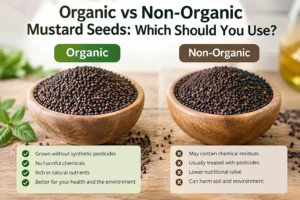
This is where things get murkier and I will be honest with you the science is not as settled as either camp claims. Some studies show organic produce has marginally higher antioxidant content. Others find no meaningful nutritional difference at all. What is fairly well established is that organic food tends to carry significantly lower pesticide residue which matters more for some people than others depending on health sensitivities pregnancy or just personal risk tolerance.
Taste is subjective obviously but I will say this anecdotally a lot of people notice a difference in things like tomatoes and leafy greens grown organically particularly if they are sourced locally and fresh rather than shipped long distances. Whether that’s the farming method or just freshness is genuinely hard to isolate.
So, How Do You Actually Choose a Supplier
Start by checking whether they are certified under India’s organic standards (look for NPOP or India Organic certification and PGS-India if it’s a smaller cooperative). That’s your baseline not your finish line. Beyond certification ask where the produce actually comes from is it a single farm, a network of small growers or sourced opportunistically depending on season. Suppliers who can trace produce back to specific farms tend to be more trustworthy simply because there’s accountability built in.
This is probably the part people actually care about if you ere trying to buy rather than farm. Finding a reliable organic food supplier in India is not as simple as spotting a green leaf logo on packaging certification standards transparency and consistency vary a lot more than people expect.
I had also pay attention to how transparent they are about their process. A supplier who’s happy to explain their soil practices, their certification renewal, even their pricing structure, is usually more legitimate than one that just slaps “100% organic” on everything and calls it a day. I came across Indian Farm Organics (indianfarmorganics.com) while researching this piece, and what stood out was how openly they talk about their sourcing network rather than just pushing a sales pitch that kind of transparency is honestly rarer than it should be in this space.
Price is another signal weirdly. If organic produce is priced almost identically to conventional stuff be a little skeptical real organic farming has cost structures that make rock bottom pricing pretty unlikely. That’s not a hard rule but it’s a useful gut check.
FAQ
Is organic food always pesticide-free? Not entirely actually. Organic farming allows certain natural pesticides things derived from neem or other biological sources. The rule is not zero pesticides it’s no synthetic chemical pesticides. Worth knowing before you assume organic means completely untouched.
Why is organic produce so much more expensive in India specifically? Certification costs smaller farm scale lower yields and a supply chain that has not matured as much as conventional distribution. It’s improving slowly as demand grows and more cooperatives get involved.
Can conventional farming ever be sustainable long-term? It can be managed better reduced chemical inputs better crop rotation precision agriculture tools. It’s not automatically unsustainable but current large scale practices in a lot of regions aren’t heading in a great direction without changes.
Should I just switch entirely to organic? Honestly, that’s a personal call based on budget and priorities. A lot of people go organic for produce with edible skins apples, spinach berries while sticking with conventional for things like bananas or avocados where residue exposure is lower. There’s no universal right answer here whatever anyone tells you.