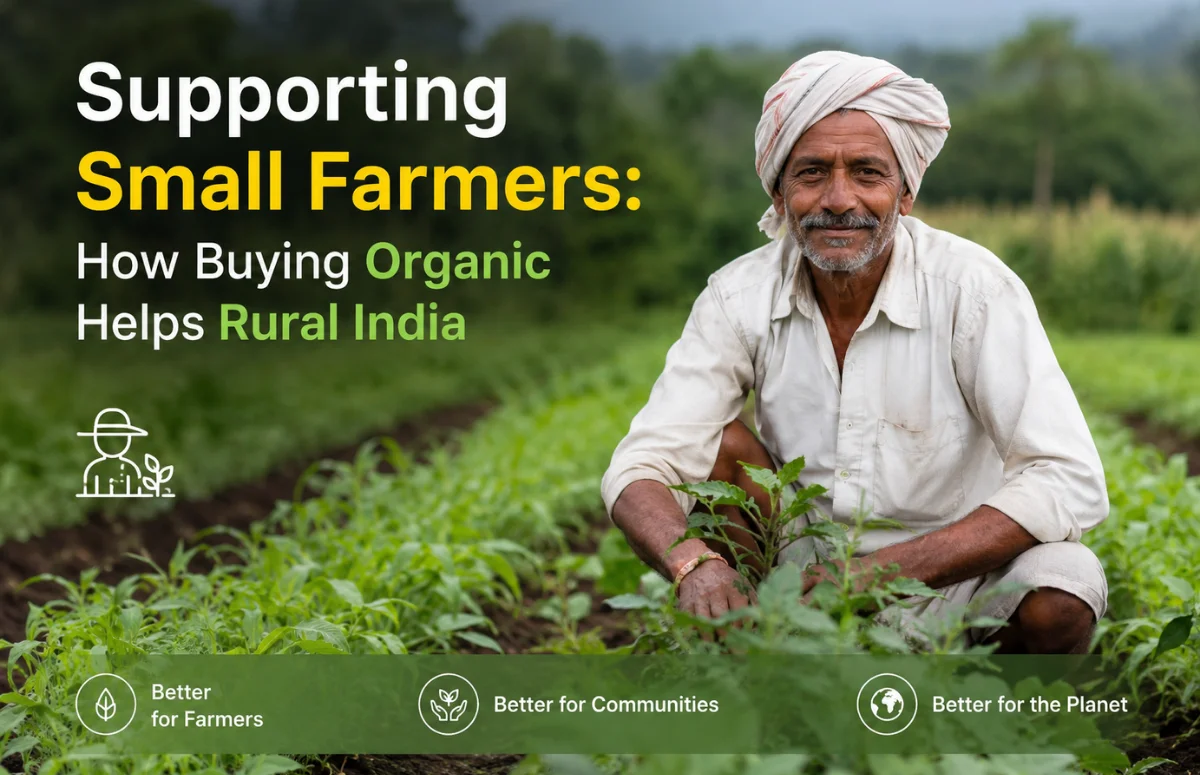
There is a moment that stays with me. A few years back. I was visiting a cousin in a small village outside Nagpur cotton belt country. And I met this elderly farmer maybe 65 sitting outside his home with this look on his face. That I can only describe as resignation. He had been farming the same land his father farmed. And yet the conversation kept circling back to debt to erratic monsoons to how his sons had left for Pune. The land was still there. The knowledge was still there. But the economics just were not working anymore.
That conversation is probably why I have spent a lot of time. Since then thinking about what actually changes the equation for small farmers in India. And one thing that keeps coming up over and over in research in conversations. With agri-entrepreneurs in what I see on the ground is organic farming. Not as some Western lifestyle trend. But as a genuine economic and ecological lifeline.
Here’s the thing though organic only works as a lifeline if people actually buy it. That’s where the rest of us come in.
When we talk about buying organic the conversation in India tends to get hijacked by two groups urban wellness consumers. Obsessing over pesticide free salads and sceptics. Who dismiss the whole thing as a premium scam for the elite. Both miss the larger picture. Organic farming when it’s done right and supported by a real supply chain. Can increase a small farmer’s income by anywhere between 20 to 40 percent. The reason is straightforward lower input costs (no synthetic fertilisers or pesticides). Better soil health over time and access to premium markets. The last part is the piece most people overlook.
A small farmer in Rajasthan or Uttarakhand growing certified organic produce does not automatically find buyers. That’s where organic suppliers and aggregators become critical. They bridge the gap between a village in Himachal and a kitchen in Hyderabad. Without that bridge the whole system collapses back on itself.
The suppliers actually doing the work
Let me walk you through some of the more meaningful players in this space. Because the landscape has evolved quite a bit in the last decade and it’s worth knowing. Who’s actually building something real.
Organic India is probably the name most people recognise. Started in the late 1990. They work with thousands of smallholder farmers across UP, Rajasthan and Madhya Pradesh growing everything from tulsi to turmeric. What they have done well is the certification piece getting USDA Organic and India Organic. Certified is a nightmare for individual farmers and Organic India essentially holds their hand through it while guaranteeing procurement. Their tulsi teas are their most visible product. but the farming network behind it is what’s actually impressive.
Then there’s 24 Mantra Organic. Which operates at a much larger scale and is arguably the biggest organic food supplier in India. When you look at sheer product range. They work with over 40,000 farmers and unlike some companies. That source from large farms their model actively targets marginal and semi marginal landholders. Their supply chain spans pulses rice, spices oils the everyday staples not just superfoods. That matters because it means more farmers are integrated into the system not just the ones growing fashionable crops.
Sresta Natural Bioproducts which is the parent company behind 24 Mantra has put genuine effort into. What they call community farming helping cluster farmers adopt organic practices together. So that certification costs and knowledge gaps are shared. It’s a more sustainable model than just individual farmer tie ups.
Down south, you have Aarohi Organic. Which started as a small initiative in Uttarakhand supporting women’s self help groups in the hills. What began almost as a social enterprise has grown into a proper. Supply chain for mountain crops wild honey mountain lentils cold pressed oils. The elevation and biodiversity of Uttarakhand’s farming communities is genuinely remarkable. And Aarohi has done well to create market access for produce that would otherwise never travel beyond the local mandi.
One that I think deserves more attention is Dharaksha Ecosolutions. They are newer but interesting because they are working at the intersection of agri waste and farmer. Income turning paddy straw (a massive pollution problem in Punjab) into packaging material. While also promoting organic paddy cultivation. It’s a model that addresses multiple problems simultaneously which is rare.
For sourcing directly from tribal and forest-dwelling communities. TRIFED’s organic vertical has been doing quiet. but meaningful work procuring minor forest produce like mahua tamarind. And wild-harvested herbs from Adivasi communities across Jharkhand, Odisha and Chhattisgarh. These are not farmers in the conventional sense. But these communities are custodians of biodiversity that most of us don’t even know exists.
One platform worth looking at if you are interested in direct-from-farm sourcing is indianfarmorganics.com . Which works specifically on connecting consumers and businesses with verified small farm organic producers. It’s the kind of platform that’s trying to cut out the unnecessary middlemen. Without cutting out the farmer which is harder to do than it sounds.
And finally Navdanya founded by Vandana Shiva has to be mentioned not just as a supplier. But as a philosophical anchor for the whole organic movement in India. Their seed bank work and direct farmer markets (particularly around Delhi) have kept indigenous seed varieties. Alive that would otherwise have disappeared into history. You can buy from Navdanya. Yes but more importantly they represent a reminder of what organic farming is actually trying to preserve.
How to pick a supplier and why it matters more than you think
Honestly not all organic labels mean the same thing. This is where a lot of consumers get tripped up. India has a few certification bodies APEDA’s India Organic PGS India (Participatory Guarantee System) and third-party. Certifiers tied to international standards like USDA or EU Organic. PGS India is particularly interesting because it’s a community led verification model designed specifically for small farmers. Who can’t afford individual certification.
When you are choosing a supplier the first thing to ask is does this company work directly with small farmers. Or do they just source from large organic estates. Both produce certified organic food but only one actually distributes income across a wide network of rural households. The second thing do they publish information about their farming communities. Any credible organic brand should be able to tell you roughly. Where their produce comes from and how the farmers are compensated.
Price is obviously a factor but here’s a thought worth sitting with the price gap. Between organic and conventional food in India. is much smaller. Now than it was even five years ago partly. Because input costs for organic farms have dropped and partly because scale has improved. On staples like atta dal and rice you are often looking at a 15–25% premium. For that you are getting both a cleaner product and a direct contribution. To a farmer’s ability to stay on their land.
Third thing and this is practical look for suppliers who have a traceable grievance accessible model. Meaning can you find out who grew your food and does the company. Have a mechanism for farmers to raise complaints. This is a higher bar but companies that meet it tend to be the ones actually building something durable.
A few questions people keep asking
Does organic farming actually help small farmers financially or is it just good for the environment?
Both, but the financial case is real. Reduced input costs mean farmers spend less and premium pricing means they earn more. The challenge is the transition period usually two to three years where the land is converting. But can’t yet be sold as certified organic. Suppliers who support farmers through this period with advance payments or input credit are the ones worth supporting.
Is Indian organic produce actually safe and certified or is it just a label?
It varies which is why supplier transparency matters. Stick to brands that are certified by APEDA carry India Organic marks or are PGS-certified. Self-labelled natural produce without any third-party verification is a different story.
I want to buy organic but I live in a small city how do I access reliable suppliers?
The online market has expanded a lot. Most of the companies mentioned here ship nationally. If you want hyper local look for your state’s agricultural department websites. Many now list registered PGS organic farmer groups that sell directly. It takes slightly more effort. But the traceability is often much better.
Does switching to organic really make a difference at the individual buyer level?
Short answer yes when it’s consistent. Sporadic organic buying doesn’t shift the economics much. But households that make organic staples a regular purchase are contributing to what’s essentially a parallel market. Signal one that tells farmers and agri companies that this demand is real and worth investing in. It sounds abstract but supply chains respond to sustained demand, not one-off purchases.
The old farmer outside Nagpur I don’t know if organic certification ever reached his village. But there are tens of thousands of farmers younger than him. Who are making that bet right now, switching to organic waiting out the transition years, hoping the market shows up. The question is whether the market meaning us will hold up our end.