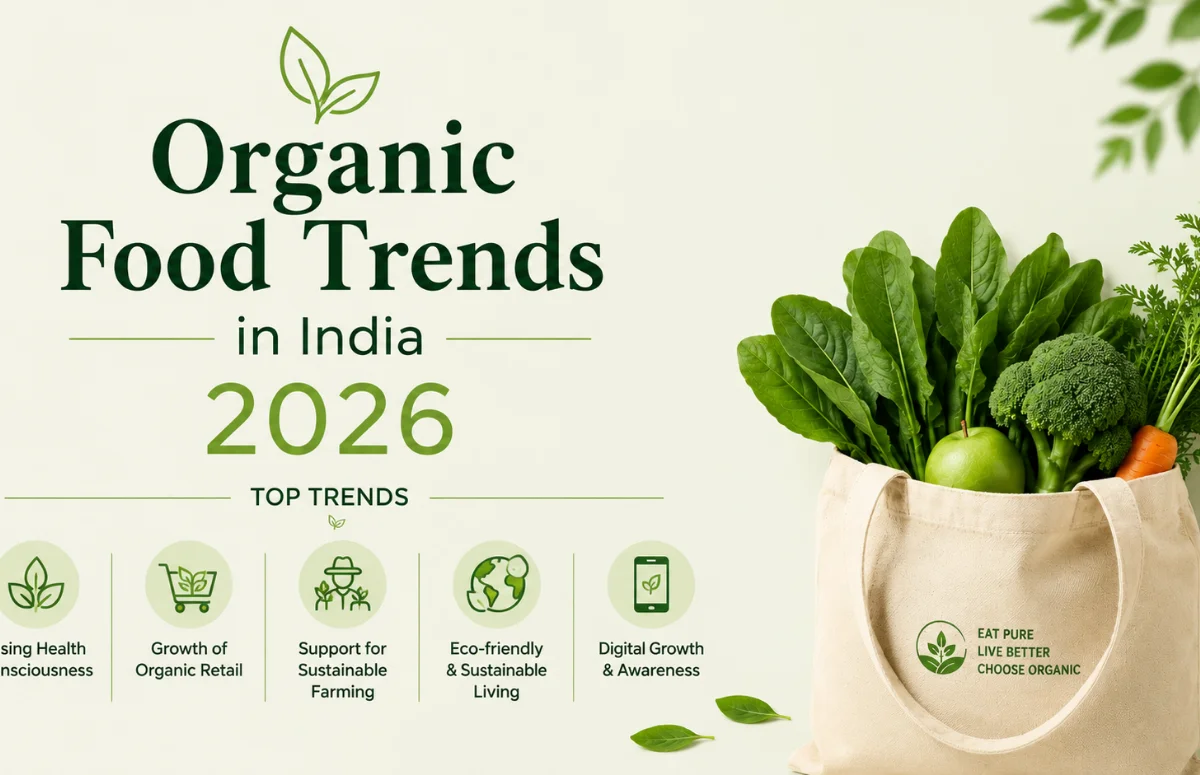
I was at a kirana store in Jaipur a couple of weeks back and the guy at the counter. Must be in his fifties pointed at a shelf of organic moong dal. And said “Yeh sab ab chal raha hai” (this is all selling well now). Five years ago that same shelf space would have gone to imported cornflakes or some fancy granola brand. Something has genuinely shifted and it’s not just urban Bangalore techies buying quinoa anymore. It’s tier 2 cities it’s mothers worried about pesticide residue in baby food. It’s gym bros who suddenly care where their ghee comes from.
Here’s the thing when people talk about organic food trends. They usually mean some abstract market size number from a consulting report. I had rather talk about what’s actually happening in warehouses on farms and in WhatsApp groups. Where bulk buyers are quietly comparing notes on which supplier ghosted them last quarter. Because honestly that’s where the real story is in 2026.
The Shift Nobody Saw Coming (Or Maybe Everyone Did Just Quietly)
Millets had their big government backed moment a couple years ago. And that hype has not really died down if anything it’s matured. Ragi jowar, bajra are not “exotic superfoods” anymore they are just… groceries. What’s new this year is the demand for traceability. Buyers especially export facing ones want to know. Which farm cluster a batch of turmeric came from not just Rajasthan stamped on a bag. NPOP and USDA certifications used to be a nice-to-have on packaging. Now they are table stakes and I have seen at least two deals fall through this year purely. Because a supplier could not produce lab reports fast enough.
There’s also this quiet move toward direct farmer partnerships instead of going through three layers of middlemen. Makes sense margins are thin enough in organic farming without everyone taking a cut.
Who is Actually Supplying This Stuff
Let’s get into the suppliers because that’s where most trend articles go vague and useless.
Two Brothers Organic Farms run out of Karnataka. Built their whole identity around the no middlemen pitch farmer to consumer traceable heirloom seeds. They have grown a serious following partly because people genuinely trust the founders story and partly. Because their ghee (made the traditional bilona way from curd rather than cream) has become something of a cult product. I will admit I was skeptical the first time someone told me ghee could have a following. But tasting it side by side with the regular supermarket stuff you do notice a difference.
Pro Nature Organic has been around long enough to feel like an established name rather than a startup. They cover a wide grocery range pulses spices packaged. Staples and lean heavily on the chemical free full pantry replacement angle. Good for retail buyers who want one supplier handling multiple categories instead of juggling five vendors.
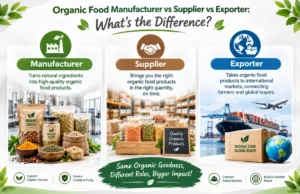
Then there’s Pratithi Organic which works at scale with thousands of farming partners mostly processing raw produce into packaged goods. Their pitch is less about a romantic farm story and more about infrastructure modern processing facilities consistent supply. For B2B buyers who need volume without drama that matters more than a nice Instagram page.
AsmitA Organic Farms positions itself squarely as a B2B and wholesale platform connecting exporters. Manufacturers and bulk buyers rather than selling jars of pickle to individual households. If you are a brand looking to private-label organic staples this is the kind of supplier. You had end up talking to alongside a handful of similar wholesale focused operations.
I will also mention Ganpati Scientifics. Based out of Jaipur which has carved out a niche as a bulk organic food supplier in India. Dealing in spices pulses, grains and dry fruits with NPOP, USDA and EU certifications. The kind of paperwork that actually matters when you are shipping internationally. I came across their site indianfarmorganics.com, while digging into how smaller Rajasthan. Based exporters handle documentation and what stood out was the focus on custom packaging. And sample requests before committing to large orders a small thing. But it tells you something about how seriously they take buyer trust.
There’s also Organic Mandya working out of Karnataka’s Mandya district with a fairly specific local mission. Chemical-free farming tied to a particular region’s livelihood rather than trying to be everything to everyone. And Satavic Farms an older name in the space focused on grains and pulses with a strong wellness and Ayurveda. Undertone running through their branding.
None of these suppliers are identical and that’s sort of the point. Some are consumer facing brands you had recognize from Instagram ads others are quiet B2B operations. You had only find if you were actually sourcing in bulk. Knowing which type you need before you start calling people saves a ridiculous amount of time.
Okay So How Do You Actually Pick One?
This is where most buyers especially first timers go wrong. They Google best organic food supplier in India click the first link. And assume the highest ranking site is automatically the most reliable one. It is not. SEO and sourcing reliability have basically nothing to do with each other.
What I had actually check in no particular sacred order ask for the certification documents. Directly not just a logo on the website. Anyone can put a USDA badge image on a homepage. Not everyone can produce the actual certificate number when you ask. Second request a sample batch before placing a bulk order. Any supplier worth dealing with should be fine with this and if they hesitate or stall, that tells you something. Third figure out their actual supply consistency. A supplier might have gorgeous turmeric in November. And then go quiet for two months when the harvest cycle shifts. Ask about this upfront rather than discovering it mid contract.
Pricing is tricky too. Organic genuinely costs more to produce. So if a quote feels suspiciously cheap compared to everyone else that’s a red flag not a win. I have heard horror stories of organic cumin that was well just cumin with a sticker. Lab testing is not optional if you are buying in any real volume. It’s the only way to actually know what you are getting versus what you are being told you are getting.
And honestly talk to them on a call if you can. Email responses can be templated and polished by anyone. A two minute phone conversation tells you more about whether someone actually knows. Their supply chain or is just reselling someone else’s stock with a markup.
Where This Is Probably Headed
If the last year is any indication, the line. Between organic and regular premium food is going to keep blurring for urban consumers. While B2B buyers get pickier about documentation and traceability tech QR codes linking to farm data that sort of thing. Exporters are also paying closer attention to EU and US regulatory tightening. Which is pushing Indian suppliers to clean up their certification game faster than they might have otherwise. Not glamorous but it’s the real driver behind a lot of the changes happening right now.
A Few Quick Questions People Keep Asking
Is organic food actually pesticide-free, or just reduced ? Certified organic farming restricts synthetic pesticide use significantly. But zero residue is not a guarantee anyone can responsibly. Make environmental contamination neighboring farms all of that plays a role. Certification means strict standards were followed not laboratory perfect purity.
Why does organic cost so much more in Indian markets? Lower yields, costlier certification audits, and smaller-scale farming all add up. There’s also a genuine supply gap demand has grown faster. Than certified farmland has at least in certain categories like pulses and specific spices.
Can small businesses source directly from farmers, or do they need a middleman supplier? Technically yes you can go direct, but unless. You are buying serious volume and have someone who understands agri logistics. It’s usually more practical to work with an established organic food supplier in India. Who already handles the certification packaging and quality control headaches for you.
How do I know if organic on a label is even legitimate? Check for the actual NPOP or India Organic logo with a traceable. Certification number not just the word organic printed in green font. If a seller can not produce documentation when asked directly that’s your answer right there.