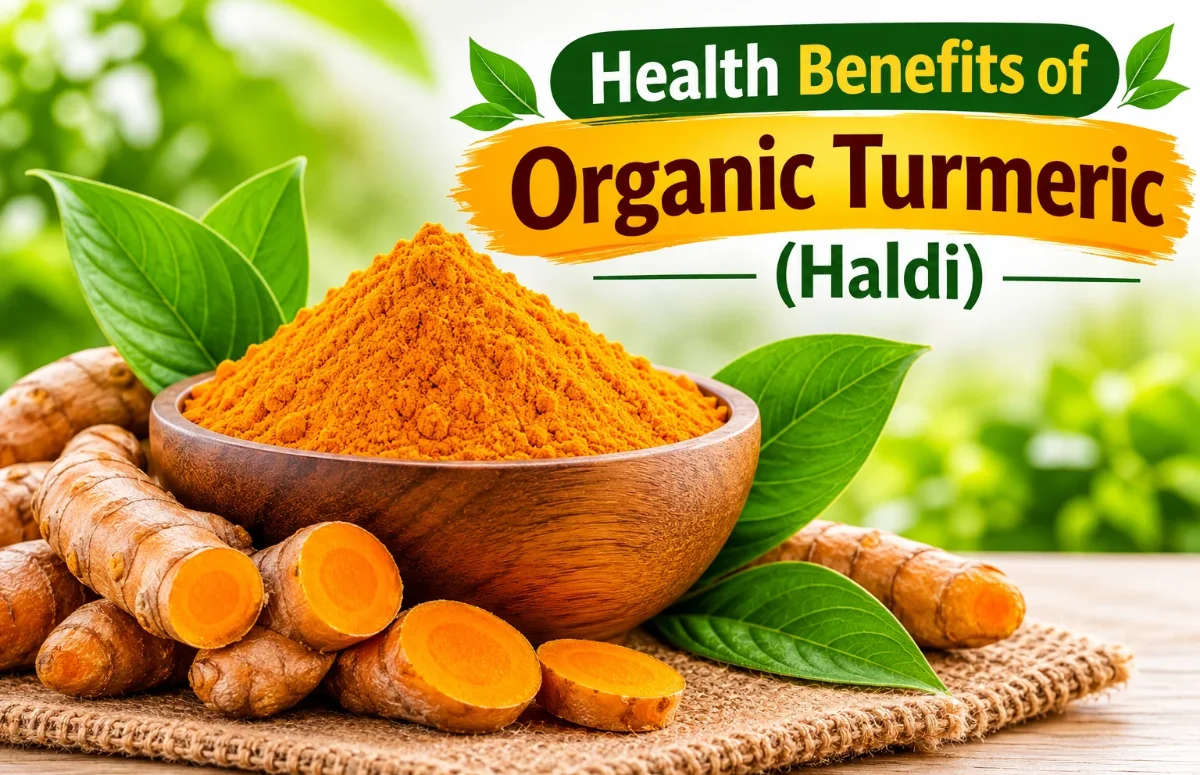
My grandmother never read a single research paper on curcumin. She just stirred a pinch of haldi into warm milk whenever anyone in the house sneezed twice in a row. No explanation no dosage. You drank it and that was that.
Funny thing is a lot of what she did by instinct is now getting attention in labs around the world. Some of it holds up well. Some of it is stretched way past what the evidence says. And somewhere in the middle sits a very practical question that most blogs skip: if you are going to eat turmeric regularly does organic actually matter?
Let me try to answer that without the usual wellness-brand excitement.
What turmeric actually does
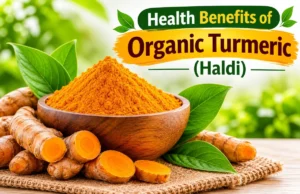
The active compound everyone talks about is curcumin. It makes up roughly 2 to 5 percent of ordinary turmeric powder though it varies a lot by variety and region. Curcumin is what gives haldi that deep orange-yellow colour and it’s also what researchers keep returning to because of its anti-inflammatory and antioxidant behaviour.
Inflammation is the part that matters most. Chronic low-grade inflammation shows up behind a long list of everyday problems: stiff joints sluggish digestion skin flare-ups even some metabolic issues. Curcumin seems to calm certain inflammatory pathways in the body. Several small clinical studies have looked at it for osteoarthritis pain and the results were decent in some cases comparable to mild painkillers. I’d still call that “promising” rather than “proven.” Most of the trials are small and many use concentrated extracts not the spoonful you’d add to dal.
That’s the first honest thing to say. Cooking with turmeric is not the same as taking a standardised curcumin supplement. Both can be good for you, but don’t assume the kitchen version delivers lab study doses.
The absorption problem nobody mentions enough
Here’s the thing. Curcumin is notoriously hard for the body to absorb. Eat it plain and a lot of it just passes through. This is why a traditional Indian kitchen without anyone planning it got the combination right: turmeric cooked in oil or ghee usually with black pepper somewhere nearby.
Piperine, the compound in black pepper has been shown to boost curcumin absorption substantially. One often-quoted study found a huge increase though that was at a specific supplement dose so take the number with a pinch of salt. Fat helps too since curcumin dissolves in fat rather than water. So golden milk with a crack of pepper is not just a trend. It’s actually smart.
If you only take one practical thing from this article take that. Haldi plus fat plus a little pepper. Done.
Digestion, skin, immunity and the rest
Traditional use in India leans heavily on digestion and there’s some backing for it. Turmeric appears to stimulate bile production which helps with fat digestion and a few studies suggest it eases bloating and general stomach discomfort. People who get that heavy feeling after rich meals often say a bit of haldi in their cooking makes a visible difference. Personally I think this is one of the more believable benefits, mostly because it’s consistent across generations of kitchens and not just one study.
Skin is another area. Turmeric’s antimicrobial and anti inflammatory nature is why haldi shows up in wedding rituals and home face packs. Does it brighten skin? Mixed evidence. Can it calm minor irritation? Possibly. Just be careful because raw turmeric stains skin yellow for a day or two and nobody warns you about that before the big family function.
On immunity, I’d keep expectations modest. Antioxidants support the body’s defences, sure but no single spice is going to protect you from a bad winter. Anyone who sells turmeric as an immunity cure is overselling it.
So why organic?
Honestly speaking, this is where it gets interesting because the case for organic turmeric has less to do with extra curcumin and more to do with what else might be in the powder.
Turmeric is a root, and roots grow in soil. Whatever is in that soil, pesticide residues heavy metals, whatever was sprayed nearby can end up in the crop. Conventional turmeric has had real quality problems over the years. The worst known one is adulteration with lead chromate a toxic yellow pigment added to make low-grade powder look richer in colour. It’s been documented in several countries and it’s not a small issue. Certified organic supply chains involve traceability testing and documentation and that makes this kind of cheating much harder.
Is organic automatically higher in curcumin? No and anyone claiming that is oversimplifying. Curcumin content depends mostly on the variety and where it’s grown. Lakadong turmeric from Meghalaya for example is famous for very high curcumin often 7 percent or more. Whether a particular lot is organic is a separate question from how potent it is.
So when I say organic matters, I mean it matters for cleanliness and trust, not for magic.
A few names worth knowing in the Indian organic space
If you are a buyer a brand owner or just a curious home cook trying to understand who’s who, here’s my rough read of the landscape. I’m not ranking anyone and you should always verify current certifications yourself because things change.
Organic India based in Lucknow is probably the name most people overseas recognise. They have been around since the late 1990s, built their reputation on tulsi and herbal products and work with a large network of farmers. Turmeric is part of the range though they are better known for teas and supplements than for bulk raw spice.
24 Mantra Organic from Sresta Natural Bioproducts in Hyderabad is a strong retail brand in the Indian market with a wide range of staples and spices. Good if you are looking at consumer-ready packs.
Navdanya is a bit different. It’s not a conventional commercial supplier in the same sense. It’s a movement started by Vandana Shiva focused on seed saving and farmer led organic agriculture and it sells products through its network. Worth knowing about if the story of the farmer matters to you as much as the product.
Pro Nature Organics is another long standing name that supplies a mix of organic staples and spices with a fairly broad catalogue.
Conscious Food, rooted in southern India focuses on organic and traditional grains, spices and food products and has built a loyal customer base, especially around staples and natural sweeteners.
Then there’s the smaller export oriented end of things where firms like Ganpati Scientifics in Jaipur work as a certified organic food supplier in India for overseas importers and private label brands. If you are someone sourcing in bulk say a retail brand in Europe or the Gulf you will find that this tier of supplier often gives you more flexibility on packaging grades and documentation than the big consumer names do. You can see what a typical export catalogue and spec range looks like at https://www.indianfarmorganics.com/, which is useful just to understand what questions to ask any supplier.
I’m mixing consumer brands and export suppliers on purpose. People often ask “who’s the best” and the real answer depends on whether you want a jar on a shelf or a 10-tonne container.
How to actually choose a supplier
Now, this is important. Don’t start with price. Start with paperwork.
Ask for the organic certificate and make sure it’s current. For exports, that usually means NPOP and for the US or Europe USDA Organic or EU Organic equivalency. Then ask for a transaction certificate for the specific shipment. A supplier can be genuinely organic and still not have certified that particular lot and that gap catches buyers out more often than you’d think.
Second, ask for a lab report a proper certificate of analysis showing curcumin percentage, moisture, heavy metals and pesticide residue. If someone gets vague or slow about this that tells you something.
Third, ask for samples. Actually taste and smell them. Good turmeric has a warm, slightly earthy, almost peppery aroma. Flat or dusty smell is a red flag. Colour that looks unnaturally bright, almost neon is a bigger one.
Fourth, talk to them. I know it sounds old fashioned but a five-minute call tells you a lot. Do they know where the crop is grown? Can they name the region? A real supplier usually can without hesitation.
And finally, check how they handle logistics and communication. Turmeric that’s perfect at origin can go wrong with poor storage or a sloppy container. Reliability after the sale matters as much as quality before it.
Using it at home without overthinking it
You don’t need a protocol. A spoonful in dal a bit in sabzi, a cup of haldi doodh a few evenings a week with pepper. That’s plenty. If you are thinking about concentrated supplements particularly for a medical condition or alongside blood thinners, talk to a doctor first, because high-dose curcumin can interact with certain medications and isn’t right for everyone.
Also, buy smaller quantities more often. Ground turmeric loses aroma over time and a jar that’s sat open for a year isn’t doing much beyond colouring your food.
FAQ
Is organic turmeric really better than regular turmeric?
Not necessarily higher in curcumin, no. The real advantage is cleaner sourcing: fewer pesticide residues and much lower risk of adulteration as long as the certification is genuine.
How much turmeric should I have daily?
For normal cooking, whatever your recipes use is fine. Around half a teaspoon to one teaspoon a day is common in households. Supplements are a different matter so check with a doctor.
Can I take turmeric on an empty stomach?
Most people can, but some find it upsets their stomach. Having it with food ideally with some fat also helps absorption anyway.
What should an importer check before ordering?
Current organic certification a lot-specific transaction certificate a lab report with curcumin and heavy metal values and a sample. Skip any of those and you are taking a gamble.