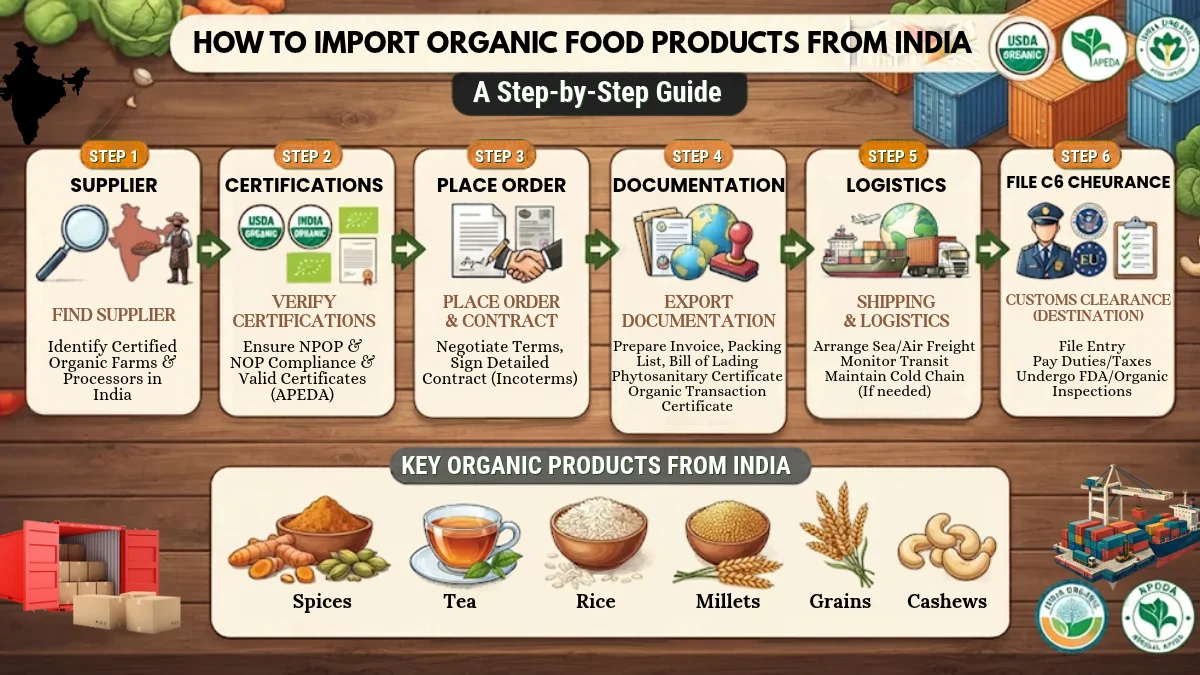
A friend of mine who runs a small specialty grocery in Rotterdam. Once told me the hardest part of importing from India was not the shipping or the paperwork. It was figuring out who was telling the truth. Every supplier she emailed said 100% organic certified export quality. Every single one. Three weeks later she still couldn’t tell which ones actually were.
That’s the real problem. India has a huge organic sector but it’s messy uneven and full of people who are very good at brochures. So before you place a first order slow down a bit.
Start with the paperwork not the product
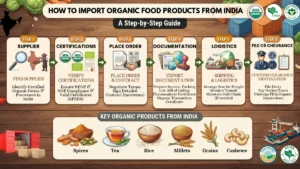
I know boring. But here’s the thing in India organic exports are governed by the National Programme for Organic Production (NPOP) which is run under APEDA the agricultural export body. Certification happens through accredited agencies and every legitimate exporter should be able to hand you a scope certificate and transaction certificates for each shipment.
Now, this is important. NPOP has equivalence arrangements with certain markets but the details have shifted over the years and they differ by product type. If you are importing into the EU the US or the UK check what’s currently accepted for your specific product. Don’t take a supplier’s word for it and honestly don’t take a blog’s word for it either, including this one. Rules change. Call your customs broker.
Who’s actually out there
Let me walk through some names you will run into pretty quickly Indian Farm Organics. Different suppliers fit different buyers and I had rather you see the spread than pick a best.
Organic India is probably the one people recognize first. Based in Lucknow they built their reputation on tulsi (holy basil), herbal teas and wellness products, sourcing from farmer groups in Uttar Pradesh and beyond. They are a brand as much as a supplier. So if you want to private label something the conversation can feel different compared with a pure bulk exporter. They are good for finished packaged goods less so if you want raw commodity pricing.
24 Mantra Organic, from Hyderabad comes at it from another angle. Think grains, pulses, flours, sugar and a broad pantry range. They have spent years building direct relationships with farmers and the product line is wide enough that a retailer can fill a shelf from a single catalog. Minimum orders and pricing structure are worth asking about early since they sell through retail as well as export.
Then there’s Phalada Agro (their consumer line is Pure & Sure) based in Bangalore and working with smallholder farmers largely in Karnataka. Their focus on traceability is a bit stronger than average. Which matters if your customers ask where things came from. They tend to suit buyers who care about the farmer story as much as the spec sheet. Fair warning that kind of supply chain can be slower and less flexible on huge volumes.
Navdanya is a slightly different animal. It grew out of Vandana Shiva’s seed saving and farmer movement and is closer to a network and nonprofit than a typical exporter. If your brand leans heavily on mission heirloom varieties or biodiversity they are worth knowing. If you need forty containers of uniform basmati by March probably not your first call.
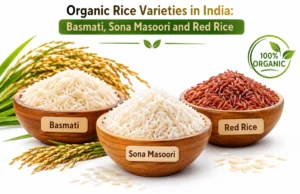
Speaking of rice Nature Bio-Foods a Mumbai based company has been a significant name in organic rice basmati especially, plus other grains and pulses for export markets. Larger and more export oriented. Which usually means more consistent documentation and more experience with buyer audits. It’s also more corporate so don’t expect the same hand holding a small producer might offer.
Conscious Food is another one I had put on your shortlist if spices millets and ready-to-cook items are your area. Mid-sized with an eye toward international buyers.
And there are smaller newer outfits. A site like Indian Farm Organics is the kind of place worth a look when you are comparing what a smaller organic food supplier in India. Can offer on range and certifications though like anyone they should be put through the same checks as the rest. No supplier gets a pass because their website looks good.
One more honest observation. The big names are not automatically better. I have seen buyers get excellent service and sharper pricing from a mid sized exporter in Madhya Pradesh. That nobody had heard of mostly because the owner answered his own emails.
How to choose honestly
Don’t start with price seriously. The cheapest quote in organic is usually cheap for a reason and the reason tends to surface at a port in Hamburg three weeks into a delay.
Start by asking for the certificates and then actually verify them with the issuing body. Takes a day maybe two. Ask which fields or farmer groups the product comes from and whether the exporter owns processing or just trades. Neither is bad but you should know which one you are dealing with because it changes who’s responsible when something goes wrong. Pesticide residue testing is another big one. Ask for lab reports from the last few batches not a single glowing report from a year ago.
Then order samples. Cost you a bit saves you a lot. Test them yourself ideally at a lab in your own country since that’s the standard your regulators will actually use.
Pay attention to how they communicate too. Do they answer the awkward questions or dodge them?. Do they send photos of packing not just stock images?. A supplier who is slightly annoying about documentation is usually a good sign. The ones who say no problem, no problem to everything. I had worry.
What the actual import looks like
Once you have picked someone the process is fairly straightforward on paper. You agree on specs, price and incoterms (FOB or CIF are the most common starting points). The exporter arranges their end certification phytosanitary certificate packing and the organic transaction certificate. On your side you need an importer registration where required the right customs classification and in the EU the electronic certificate of inspection through TRACES. The US has its own organic import certificate rules and they have tightened in recent years.
Plan for time. Sea freight from India to Europe or the US can run several weeks longer if the shipping lanes are disrupted which they have been a lot. Build a buffer organic products especially grains and spices also need proper storage and moisture control in transit so ask how they pack. Cheap packaging has ruined more shipments than anything else I have heard about.
Start small. A first trial order a single container or even a consolidated shipment, lets you learn the supplier’s habits before you commit your cash flow to them. And keep your paperwork tidy. When an auditor asks for a trace back you really do not want to be digging through old emails.
FAQ
Is Indian organic certification accepted abroad?
Often yes, but it depends on the destination market and product type. NPOP has recognition arrangements with some regions and the specifics have changed over time. Check current rules for your country before you order and confirm the supplier’s certifying body is accepted there.
What’s a realistic minimum order?
Varies wildly. Larger exporters might want a full container while smaller producers or brands may do pallets or consolidated lots. Ask early so you do not waste each other’s time.
How do I know the product is really organic?
You can never be 100% sure from a distance which is why documentation batch testing and your own sample checks matter so much. Verify the certificate with the certifying body and test.
Which products are easiest to start with?
Honestly, spices, tea, rice and pulses are the most established. So there are more experienced suppliers and clearer paperwork habits. Start there before getting adventurous with say fresh produce which is a whole other headache.