I was standing in a supermarket aisle in Jaipur. A few weeks back watching a woman pick up two packets of atta turn them over. Put one down pick up the other and just sigh. One said 100% Natural. The other said Certified Organic. She looked genuinely stuck. And honestly I don’t blame her because most of us have been trained to treat these two words as. Basically the same thing when they are really not.
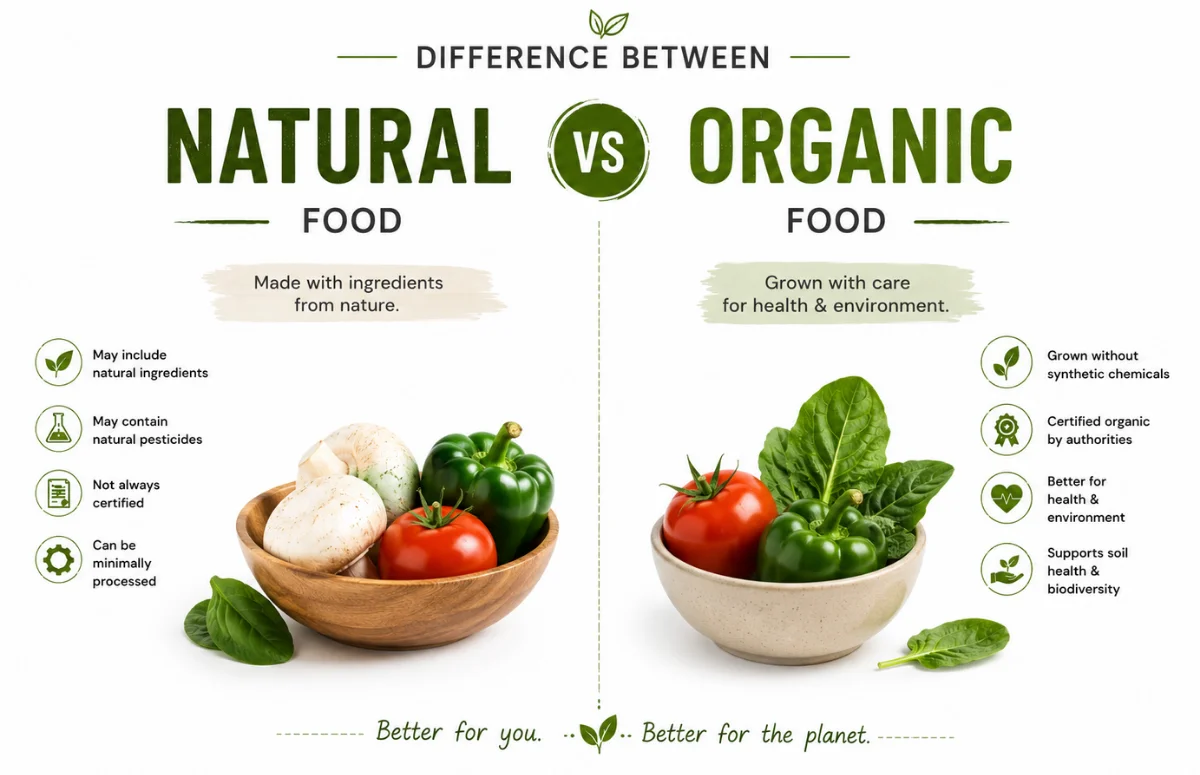
Here’s the thing. Natural is one of the loosest terms in the entire food industry. There’s no strict legal definition tying it down in most cases. Which means a company can slap it on a product. As long as nothing overtly synthetic was added at the very last step. It sounds wholesome. It photographs well on packaging with a green leaf logo. But it tells you almost nothing about how the crop was actually grow. What was sprayed on it three months before harvest or whether the soil. It came from had seen a chemical fertilizer in the last decade.
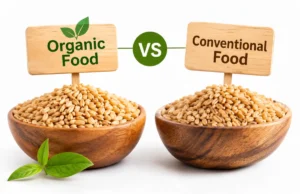
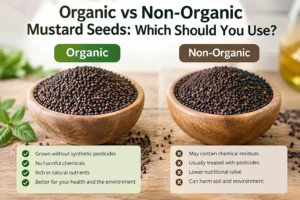
Organic on the other hand, is a whole different animal it’s a regulated term. In India if something is labelled organic and it’s meant for retail sale (especially for export or under FSSAI rules). It has to go through certification. That means documented farming practices no synthetic pesticides or fertilizers no GMOs and usually a paper trail. You could theoretically request to see. It’s not perfect certification systems have their gaps and I have heard enough stories from people in the industry. To know that not every organic tag is bulletproof. But it’s a far more accountable system than natural will ever be.
So What’s Actually Different Practically Speaking?
Think about it this way. A tomato grown with chemical pesticides but with no artificial colour or preservative. Added afterward can still be marketed as natural. Nobody’s lying technically. But the tomato itself carries pesticide residue. And the soil it grew in might be depleted from years of synthetic fertilizer use. Now take an organic tomato same fruit different journey. The farmer used compost maybe neem based pest control crop rotation the whole slower and frankly more expensive process. That tomato costs more not because someone’s gouging you. But because organic farming is genuinely harder to scale. And yields tend to be lower at least in the first few years after a farm transitions.
I will be honest I used to think organic was mostly marketing fluff myself until. I spent time talking to a few actual growers. The amount of record keeping alone soil testing buffer zones. From conventional farms seed sourcing is not something a natural label requires at all.
Talking About Suppliers Because This Is Where It Gets Real
Now, knowing the difference matters most when you’re actually trying to buy the real thing. India’s organic food supply chain has grown up a lot in the past ten years though. It’s still nowhere near as mature as say Germany’s or the US’s.
Sikkim is probably the most talked-about example when this topic comes up. It became India’s first fully organic state, and a lot of suppliers. Now source spices ginger cardamom and turmeric from cooperatives there. It’s not glamorous. But the groundwork laid by that state-wide shift genuinely changed how buyers think about sourcing from the northeast.
Then you have got clusters in Madhya Pradesh which honestly produces a huge chunk of India’s certified. Organic soybean wheat, and pulses a lot of people. Do not realize MP is actually one of the largest organic cultivation states by area. Suppliers working out of Indore and Ujjain often deal directly with farmer collectives there which keeps the chain relatively short.
Maharashtra has its own strong organic cotton and fruit belt especially around Nashik and Vidarbha. Where grape and pomegranate growers transitioned partly. Because export markets in Europe demanded it the price premium made the switch worthwhile for a lot of small landholders.
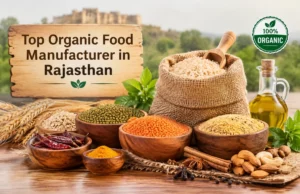
Rajasthan where I’m based has been quietly building its own organic millet and pulses network. Particularly bajra and moong grown in drier districts. Where farmers were already using fewer inputs. Simply because of water scarcity. So the transition to certified organic was not as dramatic a leap as you had think.
Karnataka’s organic coffee growers in Coorg are another example worth knowing. Supplying both domestic specialty roasters and export buyers often through smaller cooperative run supply chains rather than big corporate ones.
Uttarakhand has carved a niche in organic Basmati and hill produce, leaning on its relatively. Untouched soil and lower pesticide history compared to the heavily farmed Punjab belt.
And then there are aggregator style suppliers companies that do not necessarily farm the land themselves. But work with a network of certified organic farms across states. Handle the logistics testing and packaging and sell onward to retailers exporters or directly to consumers. If you are looking into this space sites like indianfarmorganics.com. Are a decent example of how that model works in practice. Pulling produce from multiple certified regions rather than betting on one geography.
How Do You Actually Pick a Supplier?
This is the part people skip and then regret. Honestly speaking, don’t just go by the word organic on someone’s website. Ask for their certification body it should be one recognized. Under India’s NPOP (National Programme for Organic Production) or if it’s for export USDA/EU equivalents. A legit organic food supplier in India will hand over this documentation without hesitation. If they get vague or defensive about it that’s a red flag plain and simple.
Also check whether they work with a fixed group of farms. Or if their sourcing shifts around a lot consistency in sourcing usually (not always) means better quality control. Ask about testing frequency too. Some suppliers batch test for pesticide residue others don’t bother beyond the initial certification. That gap matters more than people realize.
And don’t ignore scale mismatches. A supplier who claims to have twenty different organic product lines available year-round at low prices in a country. Where organic yields are still inconsistent that math does not always add up. Sometimes it’s blended sourcing (part organic, part conventional) dressed up nicely. Not always malicious but worth questioning.
A Few Quick Questions People Usually Ask
Is organic food actually more nutritious than natural food? Not dramatically, based on most research the nutrient difference is often marginal. The bigger difference is usually in pesticide residue levels and environmental impact not vitamin content.
Can something be both natural and organic? Sure plenty of products are. But being organic already implies a certain baseline of natural practices. So the natural label becomes kind of redundant once something is certified organic.
Why is organic food so much pricier here in India? Lower yields, higher labor costs for manual weeding and pest control certification fees. And smaller supply chains without the economies of scale conventional farming enjoys.
How do I know a product isn’t just greenwashing with the word natural? Look past the packaging. Check the ingredient list ask about sourcing. If it’s a smaller brand and remember if there’s no certifying body mentioned. Anywhere treat natural claims with a healthy dose of skepticism.