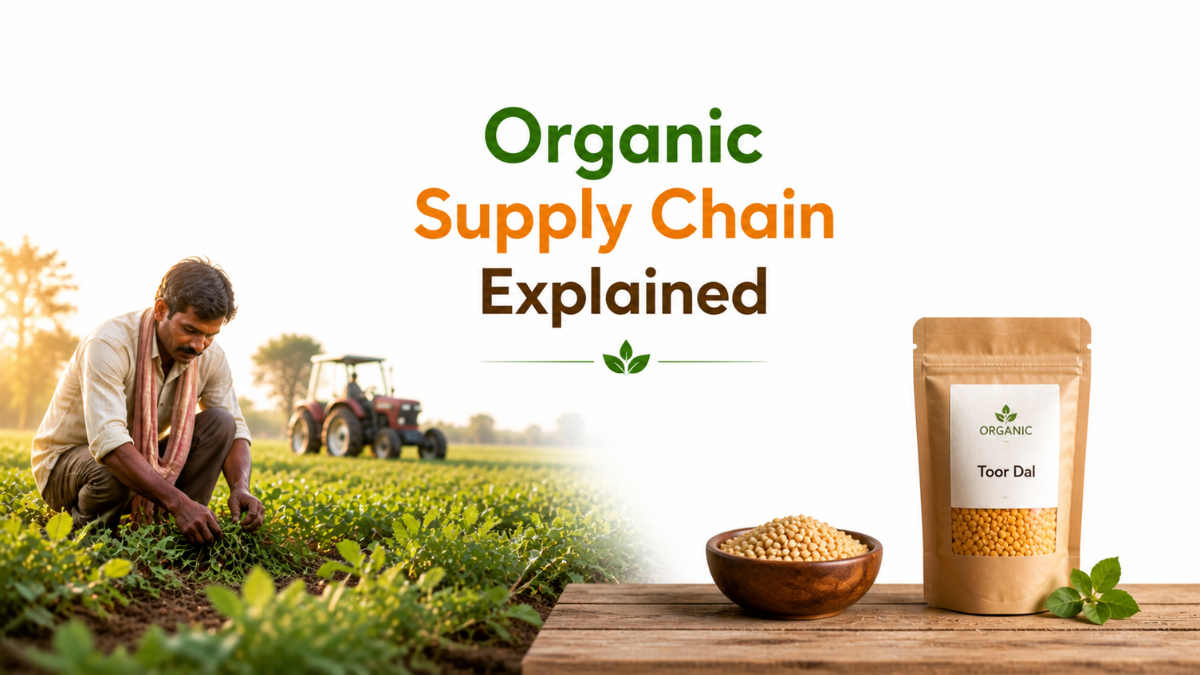
Walk into any decent supermarket today and you will find a shelf with “organic” labels slapped on everything from spinach to breakfast cereal. Most people grab the product feel vaguely virtuous about it and move on. But very few actually stop to ask how did this get here? Who grew it? How many hands did it pass through? And more importantly, does “organic” even mean the same thing across all those stops?
The organic supply chain is genuinely fascinating once you start pulling at the thread. It’s not just about farming without pesticides. It’s a whole ecosystem certification bodies aggregators cold storage facilities exporters, domestic distributors and finally retail or direct-to-consumer channels. Each node in that chain matters. A lot.
It starts way before the farm
Here’s the thing the organic supply chain actually begins before a single seed goes into the ground. Soil management input sourcing water testing, seed selection all of this has to comply with organic standards. In India the most relevant certifications are NPOP (National Programme for Organic Production) for exports and PGS-India (Participatory Guarantee System) for domestic markets. These are not just rubber stamps. They require documentation inspections and a conversion period (usually 2–3 years) where the land is transitioning from conventional farming.
Most small farmers don’t go through this alone. They are often part of Farmer Producer Organizations (FPOs) or work with aggregators who handle the certification process on their behalf. Which honestly makes sense the paperwork involved in getting NPOP certified would overwhelm most individual farmers who already have enough to deal with.
From farm to collection center
Once crops are harvested. They move to collection centers or aggregation hubs. This is where things get logistically interesting. Organic produce can not be mixed with conventional. Produce not in the truck. Not in storage not anywhere. There is a whole concept called segregation that is taken very seriously. In certified supply chains. Any contamination even accidental can jeopardize the organic status of an entire batch.
Cold chain infrastructure is still a weak spot in many parts of India. Better in states like Maharashtra, Karnataka, and parts of the North East, but patchy in others. A lot of perishable organic produce leafy greens, dairy, fresh turmeric suffers quality loss. Between the farm and the distributor simply because storage and transport. Conditions are not consistently maintained.
The role of organic suppliers in India
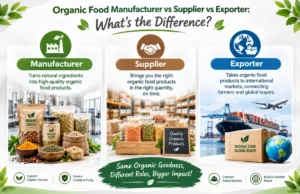
This is where it gets practical. Organic food suppliers act as the bridge between producers and buyers whether that’s a retail brand an institutional buyer like a hotel chain or an export house. Their job is to ensure consistency in quality, traceability and certification validity. Not all of them are equal though.
A few names that come up regularly in this space:
Indian Farm Organics is one of the more well regarded names. If you are looking for an organic food supplier in India that works directly with farmer networks. They focus on traceable sourcing, and their model leans toward building long-term relationships with farming communities rather than just transactional procurement. Worth checking out at www.indianfarmorganics.com if you’re a buyer looking for certified organic sourcing with actual documentation backing it.
Sresta Natural Bioproducts (known for the 24 Mantra Organic brand) has been around since the early 2000s and operates one of the larger certified organic procurement networks in the country. They work with thousands of farmers across multiple states and have both domestic and export operations.
Suminter India Organics is primarily export focused. And works heavily in cotton and food crops. Their supply chain includes third-party certification under multiple international standards Fairtrade, USDA Organic, EU Organic which makes them a go-to for global buyers.
Organic India does both sourcing and branded consumer products. Their herb and wellness product range is well known. But on the B2B side. They also supply raw certified organic ingredients. Tulsi, ashwagandha moringa they have got strong farm networks for these.
Conscious Food is a smaller but respected player, especially in the heritage grains and pulses segment. They’ve been doing this since the mid-90s and have a following among conscious consumers who care about provenance.
Aadvik Foods works primarily in the niche of camel milk and some exotic organic dairy products. Smaller operation very specific but worth mentioning because niche organic supply chains in India are actually growing faster than the mainstream ones.
Down to Earth Organics based out of Uttarakhand handles a lot of hill-produce rajma varieties, local millets, forest honey. Their geography is actually an advantage many Himalayan farming communities have been farming organically by default for decades so the conversion challenge is minimal.
Praakritik is newer and leans heavily into direct-to-consumer but also works with corporate gifting and institutional buyers. Their focus is on traceable, small-batch sourcing and they’re quite transparent about where each product comes from.
Each of these suppliers has a different strength some are better at volume, others at variety, some at export documentation. Understanding what you actually need before approaching any of them saves a lot of time.
How to actually choose the right supplier
Okay, so you need an organic supplier. How do you not get burned?
First question to ask: are they certified and by whom? NPOP is the Indian standard. If you are buying for export. You will need to check whether the certification. Is recognized in the target market. EU Organic and USDA Organic have their own equivalencies with NPOP, but it’s not automatic. Ask for the certificate. Ask for the scope what products what farms what date range.
Second thing: traceability. A genuinely good supplier should be able to tell you which district ideally which village a batch of turmeric came from. If they can’t or if they seem vague about it that’s a red flag. In a market where organic fraud is not unheard of (someone mixing conventional with certified is more common than the industry likes to admit) traceability documentation is your only real protection.
Third: how do they handle rejections? This one’s underrated. Ask what happens if a batch fails quality checks. A supplier who has a clear protocol return, replace, compensate is more trustworthy than one who just says “it won’t happen.” Because sometimes it does.
Price is obviously a factor, but organic supply chains cost more to run for real reasons. If a quote seems suspiciously close to conventional market rates ask more questions.
And practically speaking visit if you can. Even a single farm visit changes the relationship and your understanding of what’s actually happening upstream.
A few questions I get asked a lot
Is organic produce from India actually free from pesticides? Mostly yes if it’s genuinely certified. Soil conversion takes time specifically because residual pesticides need to clear. But there are products in the market with organic labels that haven’t gone through proper certification. Which is why buying from a supplier with verifiable NPOP or PGS documentation matters.
Does organic certification guarantee better nutrition?. Honestly, the research is mixed. Some studies show higher antioxidant levels in organic produce others don’t find significant differences. What’s more consistently true is lower pesticide residue and better soil health outcomes over time.
Why is organic food more expensive? Lower yields (without synthetic inputs, farms often produce less per acre), higher labor costs certification fees, separate storage and logistics it all adds up. The price premium is real and mostly justified. Though there’s also some amount of brand markup in the consumer space that has nothing to do with actual farming costs.
Can small businesses source directly from organic farmers? Yes, increasingly. PGS-certified farmer groups often sell directly to local businesses or through platforms. The tradeoff is managing consistency and documentation on your own. For a restaurant or a small food brand it might be worth it. For anything at scale, working through an established supplier is usually more practical.
The organic supply chain in India is maturing slowly, but meaningfully. More farmers are getting certified more buyers are asking the right questions and traceability tools are getting better. It’s still a space with real challenges, but for anyone serious about where their food comes from, understanding how this chain works is step one.