Walk into any grocery store these days and you will see the word organic plastered across everything from apples to cotton swabs. It’s become one of those terms that everyone uses but fewer people actually understand. I have spoken to farmers buyers certification bodies and curious consumers and honestly the confusion is real. So let me try to break this down in a way that actually makes sense.
So What Even Is Organic Food?
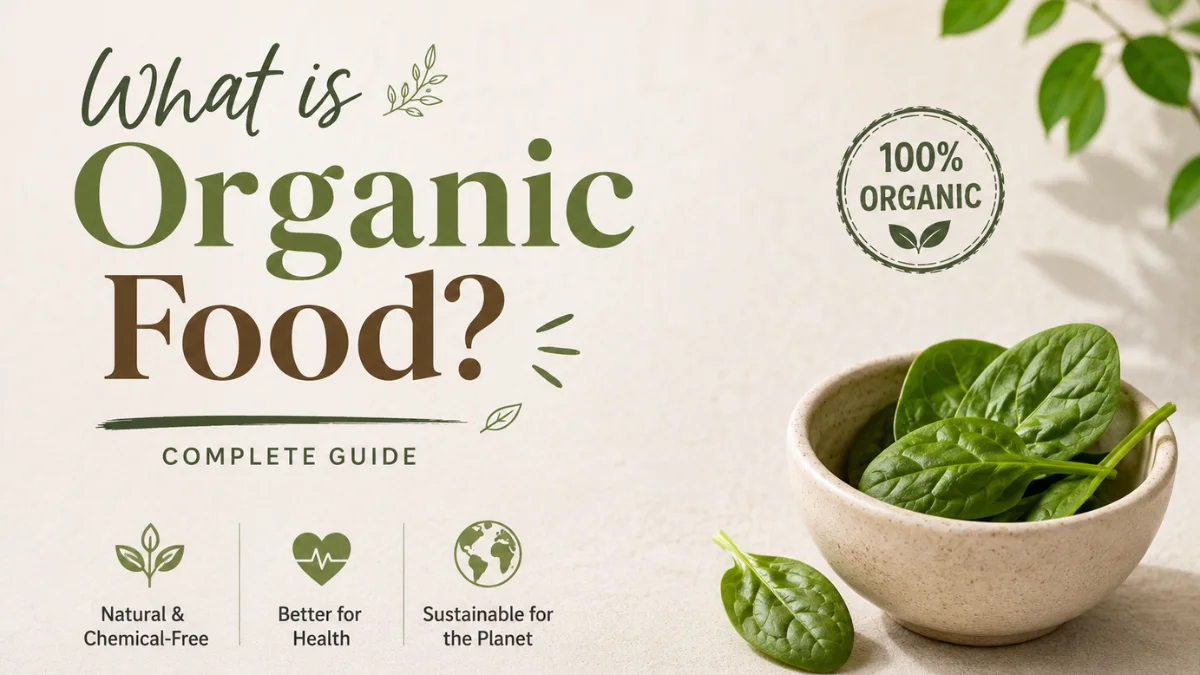
At its core organic food refers to produce and products grown or raised without the use of synthetic pesticides chemical fertilizers genetically modified organisms (GMOs) or irradiation. For animal products it also means the animals aren’t routinely given antibiotics or growth hormones.
But here’s the thing the word organic isn’t just a farming philosophy. It’s also a certification. In India for instance the regulatory framework around organic certification has evolved significantly over the past decade. The NPOP (National Programme for Organic Production) governs what can legally be called organic and producers need to go through a rigorous third party audit process before they earn that label.
Now, this is important: just because a farmer uses natural methods doesn’t automatically make their produce certified organic. A small family farm in Uttarakhand might be growing the cleanest food. You have ever eaten no chemicals, ancient methods good soil. But if they haven’t been certified they can’t legally market it as organic. That gap between practice and certification is something the industry is still working through.
Why Does It Matter The Actual Reasons People Buy Organic
People switch to organic for different reasons and not all of them are the same. Some are motivated by health concerns residual pesticides in food hormones in dairy that sort of thing. Others care about the environment organic farming generally does better at preserving soil health water quality and biodiversity. And then there’s a growing segment of buyers who just want to support farmers who are doing things the right way.
The research on health outcomes is mixed to be honest. Some studies show measurably higher antioxidant levels in organically grown crops others find the differences negligible. What’s harder to argue with is the environmental picture. Synthetic fertilizer runoff soil degradation and pesticide resistance in pests are real problems and organic farming at scale offers a partial solution.
There’s also the question of taste. A lot of people swear that organic produce tastes better. I have had heirloom tomatoes from an organic farm in Himachal Pradesh that tasted nothing like what you get in a supermarket. Is that purely the organic growing method? Or the variety. Or the freshness. Probably all three. But it’s hard to dismiss entirely.
The Organic Food Landscape in India
India is actually one of the largest producers of organic food in the world something most people don’t realize. We have millions of hectares under organic cultivation and the sector has been growing fast driven by both domestic demand and strong export interest from markets in Europe the US and Japan.
The challenge is fragmentation. Unlike large consolidated farms in the US or Australia India’s organic production mostly happens across small and marginal landholdings. Getting consistent quality reliable certification and efficient supply chains in that environment is genuinely hard work.
That’s where a good organic food supplier in India becomes critical not just as a middleman but as someone who bridges farmers and buyers in a way that’s fair transparent and scalable.
Suppliers Worth Knowing About
Let’s talk about some of the players operating in this space because the supplier you choose matters enormously especially if you’re buying in bulk or sourcing for a business.
Indian Farm Organics is one name that’s been growing steadily in reputation. They work directly with certified organic farmers across multiple states and offer a fairly wide range of products grains, pulses, spices and more. What I appreciate about their approach from what I have seen is the emphasis on traceability. You can visit their website at https://www.indianfarmorganics.com/ to get a sense of the sourcing model. It’s not a flashy platform but the information is there if you dig.
Organic India is probably the most recognizable name in the domestic market they have been around since the late ’90s and have a strong herbal and wellness focus. Tulsi tea triphala ashwagandha that’s their wheelhouse. They work with thousands of tribal and small farmers across Madhya Pradesh and Uttarakhand and their certification credentials are solid.
24 Mantra Organic is another major player particularly popular in South India and now with decent pan India distribution. They have built a vertically integrated model sourcing processing packaging retail and that shows in the consistency of their products. Their rice and atta lines are what most people know them for.
Sresta Natural Bioproducts which is the parent company behind 24 Mantra also does significant B2B supply beyond their retail brand. If you are looking to source in larger quantities they are worth approaching directly.
Conscious Food out of Mumbai has been quietly doing excellent work since the ’90s. They are a smaller operation but deeply committed the founders came from a place of genuine conviction rather than a market opportunity, and that shows in how they operate. Their pulses and flours are particularly good.
Praakritik is a newer entrant but has been gaining traction especially in tier 1 cities. They focus heavily on packaging transparency and have built a decent direct-to-consumer model. Worth watching.
Suminter India Organics operates more on the B2B and export side working with international buyers who need certified organic commodities like sesame cotton, spices and oilseeds. If you are a manufacturer or exporter they are a significant sourcing option.
And then there’s Navdanya, founded by Dr. Vandana Shiva in Uttarakhand more of a movement than a commercial enterprise. but they do sell seeds, grains and specialty products. If you are interested in biodiversity conservation alongside your organic sourcing Navdanya deserves attention.
How to Actually Choose a Supplier (Not the Generic Advice)
This is where most guides fall short so let me be more direct. First verify certification and don’t just take their word for it. Ask for the actual certificate. Look for NPOP certification for domestically sold products or NOP certification if the products are being exported to the US. USDA organic equivalency agreements matter if you are working in international trade. Some suppliers claim to be in the process of certification. That’s fine for small personal purchases. but not acceptable if you are building a brand or running a food business.
Second ask about testing. Genuine organic suppliers will have third-party lab testing for pesticide residues. If they can’t produce those reports that’s a red flag. India has had issues with suppliers who are certified on paper but whose products don’t hold up to testing this is a known problem in the industry and it’s worth being cautious.
Third, visit if you can. Or at least ask for a video call with the sourcing team. Supply chain transparency isn’t just a buzzword it’s how you actually know what you are buying. A supplier who’s reluctant to show you where the product comes from is not a supplier you want a long term relationship with.
And finally pricing. Organic costs more there’s no getting around it. If a price seems too good to be true for certified organic it probably is Legitimate certification fair farmer payments, and proper quality control all cost money. Suspiciously cheap organic is often neither.
A Few Questions I Get Asked a Lot
Is organic food actually healthier? The honest answer is probably. But not dramatically so in all cases. The clearest benefit is reduced pesticide exposure. Whether that translates to measurable health improvements over time depends on a lot of factors. If it’s within your budget it’s a reasonable choice. But don’t feel guilty if you can’t always afford it.
What’s the difference between natural and organic? Natural means almost nothing legally. Any product can slap that word on the label. Organic has actual certification requirements behind it. Don’t conflate the two.
Are all organic farms small family operations? No. There are large-scale organic operations both in India and globally. Scale doesn’t disqualify something from being organic the farming practices and certification are what matter.
Is the organic certification process in India reliable? Mostly yes but with caveats. NPOP is a credible program and the accredited certification bodies are generally doing their jobs. That said, enforcement is imperfect and fraud does exist at the margins. Buying from established suppliers with clear documentation is the best mitigation.
Organic food isn’t a magic bullet and the industry isn’t without its problems. But as both a concept and a growing market it represents something genuinely worth supporting cleaner farming healthier ecosystems and a more honest relationship between what’s grown and what’s eaten. Whether you are a consumer trying to make better choices or a buyer sourcing at scale understanding what organic actually means and who’s doing it right is the first step.