Walk into any supermarket these days and you will see the word organic plastered across everything from baby spinach to breakfast cereal. People are paying a premium for it debating it at dinner tables and sometimes feeling vaguely guilty when they can’t afford it. But here’s the thing most of what people think they know about organic food is either half true outdated or just plain wrong.
I have spent a good chunk of time talking to farmers sourcing teams and nutrition folks across the supply chain. And the myths? They are everywhere. Let me walk you through the big ones.
Organic means no pesticides
This is probably the most widespread misconception and it needs to be cleared up properly. Organic farming does restrict synthetic pesticides but it doesn’t mean zero pesticides. Farmers can and do use naturally derived pesticides: copper sulfate neem oil pyrethrin spinosad. Some of these at high enough concentrations aren’t exactly harmless either.
Now, that doesn’t mean organic produce is unsafe far from it. The residue levels are generally much lower and many organic farmers actively work to minimize any chemical inputs. But the completely chemical free narrative? That’s more marketing than reality. The actual benefit is about what kinds of chemicals are used and how the soil is being managed long term. That’s the story that matters.
Organic is always nutritionally superior Right
Honestly speaking the research here is frustratingly mixed. Some studies show higher antioxidant levels in organically grown crops. Others show marginal differences or none at all. The issue is that nutritional content depends on so many variables soil health variety, harvest timing how long it sat in a truck that isolating organic vs. conventional as the deciding factor is nearly impossible.
What does seem consistent is that produce grown in well managed healthy soil tends to taste better and have better mineral profiles. And good organic farming almost always involves better soil care. So there’s probably something there. Just don’t expect organic broccoli to be a magic health food when the conventional version also has plenty of fiber and folate.
It’s always better for the environment
Okay this one’s complicated. Organic farming avoids synthetic fertilizers and tends to support biodiversity that’s genuinely good. But organic yields per acre are often lower which means you need more land to produce the same amount of food. In some calculations that actually results in more total land use and potentially more emissions from transportation or land conversion.
That said the long term picture soil carbon sequestration, water table health, insect diversity often favors organic. It’s not a simple win but it’s not a wash either. The truth sits somewhere in the middle which is apparently where all the uncomfortable truths live.
The India angle and why sourcing actually matters
This is where I want to spend a bit more time because India’s organic food landscape is both impressive and genuinely complicated. The country has one of the largest areas under organic cultivation globally, with states like Sikkim, Madhya Pradesh, Rajasthan, and parts of Maharashtra leading the way. And yet, most Indian consumers are still buying from fragmented, unverified sources with sketchy certification claims.
If youare serious about buying actual organic food or sourcing it for your business knowing your supplier is everything. Here are some notable players worth knowing about:
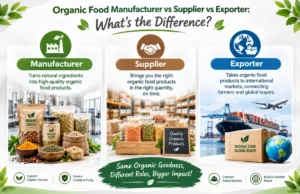
Indian Farm Organics is one of the more credible names in this space. They focus on farm-to-fork traceability and have a range of certified organic products that includes grains, pulses, spices and cold-pressed oils. Their website (https://www.indianfarmorganics.com/) gives you a reasonable sense of their sourcing transparency which honestly not every brand bothers to communicate. If you are looking for a reliable organic food supplier in India they are worth a closer look.
Organic India has been around long enough to build genuine credibility they work closely with farmers in Uttar Pradesh and Uttarakhand particularly for tulsi and herbal products. Not the cheapest option but the certification trail is solid.
24 Mantra Organic has a wider mass market presence and decent range staples snacks spices. They have invested in farmer partnerships across Andhra Pradesh and Telangana. Good for retail and household buying.
Sresta Natural Bioproducts (the parent company of 24 Mantra) also runs a significant B2B operation and exports quite a bit. Worth knowing if you are on the procurement side of things.
Down to Earth Organics is smaller regional and slightly harder to find on mainstream e-commerce but their products are well regarded in the premium grocery space especially for fresh produce in metro cities.
Farmers Fresh Zone operates out of Kerala and has built a direct-from-farm model that’s genuinely different from most. They have leaned hard into cold-chain logistics which matters more than people realize for organic produce quality.
Conscious Food has been doing this since the early 90s practically before organic was a cool word in India. Their range of traditional grains and oils is particularly good and they have maintained consistency over the years.
Navdanya founded by Vandana Shiva is as much a movement as it is a brand. They focus on seed sovereignty and heirloom varieties. Their products are deeply tied to their philosophy and for buyers who care about biodiversity and indigenous crop preservation there’s nothing quite like them.
How to actually choose a supplier (without losing your mind)
Alright, so if you are a business buyer or even a household that orders in bulk how do you evaluate this? First: look for certification. In India, the relevant bodies are NPOP (National Programme for Organic Production) and PGS-India for smaller farmer groups. If a supplier can’t tell you who certified them and when that’s a red flag.
Second, traceability. Can they tell you which farm the product came from? Some can some really can’t. For categories like spices where adulteration is rampant even in the conventional market traceability isn’t optional, it’s essential.
Third, don’t over rely on price as a signal. Organic should cost more the input costs and yield trade offs are real. But there are products in the market priced at a 200-300% premium over conventional with no real justification. Learn what a reasonable premium looks like for each category. For example, organic turmeric might be 30-50% more expensive. If someone’s charging you four times the price, ask questions.
And honestly? Talk to the company. Ask them something specific about their farming practices or certification renewal cycle. The quality of that conversation tells you a lot.
One more myth worth busting
Organic food is only for the wealthy. There’s truth in this the premium is real and it creates access issues that are worth taking seriously. But it’s also slightly reductive. Some organic products like certain pulses millets, and locally sourced seasonal produce are much closer in price to conventional alternatives than people expect. The gap is widest in packaged and processed organic products where branding and margins inflate the cost significantly. Buy raw buy local, buy seasonal. The premium shrinks considerably.