I was at a small grocery store in Bengaluru a few weeks back. Watching a woman spend a solid ten minutes comparing two jars of organic honey. She was not checking the price oddly enough. She was flipping the jars around hunting for a certification mark muttering. Something about how everyone slaps organic on the label now. And honestly she’s not wrong to be skeptical. That’s kind of where the global organic market sits right now massive demand real confusion and a lot of businesses trying to figure out who they can actually trust upstream.
Here’s the thing though the demand itself is not slowing down. If anything it’s getting weirder and more specific. A decade ago organic mostly meant vegetables and maybe some rice. Now you have got buyers in Germany asking about organic turmeric with third party lab reports wellness brands in California sourcing organic moringa powder by the tonne and Gulf based distributors quietly building entire private label ranges around Indian organic spices. The category has grown up basically.
What’s Actually Moving Right Now
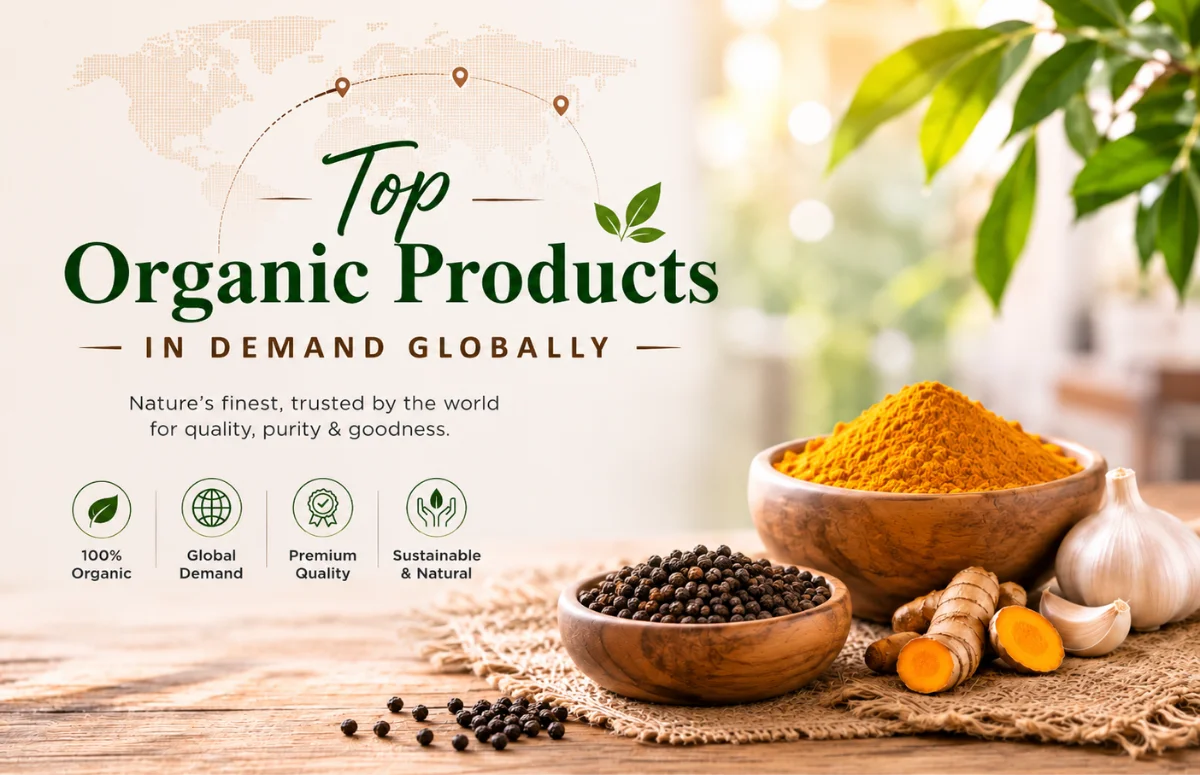
Spices are still the heavyweight and I do not think that’s changing anytime soon. Turmeric especially thanks to the whole curcumin and inflammation wellness wave has turned into something closer to a commodity than a niche product. Ginger black pepper cardamom cumin. These were always exported from India sure. But the organic certified versions are commanding a genuinely different price point. Now sometimes 30-40% above conventional. Buyers seem willing to pay it. Which tells you something about. Where consumer trust has shifted.
Then there’s the pulses and grains segment. Which honestly gets less attention than it should. Organic lentils chickpeas and millets (millets especially riding on that whole ancient grain marketing wave) are seeing steady pickup from European and North American importers. Quinoa gets all the press. But millets like ragi and jowar are quietly. Becoming India’s answer to it cheaper to produce climate resilient and increasingly certified organic at scale.
Tea and coffee deserve a mention too. Darjeeling and Assam organic teas have basically always had a premium export identity. But what’s newer is the coffee side organic Arabica from the Western Ghats is finding buyers in Scandinavian markets. Where single-origin chemical-free is basically a religion at this point. I won’t pretend I fully understand Scandinavian coffee culture. But the demand is real and it’s not slowing down.
Cotton is the wildcard here. Not food obviously. But organic cotton from India particularly from Madhya Pradesh and Gujarat feeds a huge chunk of the ethical fashion supply chain globally. Fast fashion brands trying to rehab their image love slapping GOTS-certified organic cotton on a tag and India supplies a disproportionate share of that raw material worldwide.
And okay I have to mention essential oils and herbal extracts because this segment has genuinely exploded. Organic neem oil, tulsi extract ashwagandha root powder these used to be Ayurveda-store items. Now they are showing up in mainstream supplement brands from Berlin to Toronto. The wellness-industrial complex for better or worse has been very good for Indian organic exporters.
The Supplier Landscape Within India
Now, this is where it gets interesting for anyone actually trying to source this stuff rather than just read about trends. India’s organic supply chain is fragmented there’s no way around saying that plainly. You have got large scale exporters handling containers of turmeric for European retailers and then you have got small farmer cooperatives in places like Sikkim (India’s first fully organic state worth remembering) selling in far smaller batches.
Sikkim itself deserves a special mention as a supplier hub not a company exactly. But a whole state that went organic-only back in 2016 and never looked back. Buyers sourcing vegetables, ginger and cardamom often go straight to Sikkim-based aggregators because the certification integrity there tends to be tighter less room for the organic in name only problem that plagues other regions.
Then you have the more established private players companies that built their reputation over fifteen plus years working with both domestic retail chains and export buyers. Organic India (yes the tea and supplement brand most people recognize) started as a farmer-partnership model in Uttar Pradesh and Madhya Pradesh. And it’s still one of the more transparent supply chains out there at least from what I have seen in their sourcing documentation.
There’s also a newer wave of digitally-native suppliers smaller outfits that basically run their whole procurement and export process online. Which honestly makes them easier to vet than some of the older paperwork heavy exporters. I came across indianfarmorganics.com while researching this piece and it’s a decent example of that shift a fairly straightforward setup connecting farm level organic produce and staples directly to buyers without the usual five layers of middlemen you had expect. Not saying it’s the biggest name in the space. But it reflects where the industry seems to be heading leaner. More direct, less opaque.
Beyond that you have got regional cooperative networks in Maharashtra and Karnataka focused heavily on organic cotton and pulses a cluster of Kerala-based spice exporters. Who have been doing this since long before organic was a marketing buzzword and a growing number of Punjab-based grain suppliers pivoting from conventional. Wheat to certified organic lines as domestic demand catches up with export demand.
So How Do You Actually Pick One?
This is the part nobody explains well in my experience. Certification is obviously step one India Organic (NPOP) USDA Organic if you are exporting to the US, or EU Organic for European buyers. But certification alone does not tell you everything. I have talked to procurement folks who got burned by suppliers with valid certificates. But wildly inconsistent batch quality the paperwork was fine the actual product was not.
What matters more honestly is traceability. Can the supplier show you which farm. Which cluster which harvest cycle a batch came from? A legitimate organic food supplier in India should be able to walk you through their sourcing chain without getting defensive about it. If they are vague about where exactly the produce comes from that’s usually a red flag not a coincidence.
Volume consistency is the other thing people underestimate. A supplier might have gorgeous organic turmeric in October and then go quiet for three months. Because the harvest cycle does not align with your order schedule. Ask about seasonal availability upfront save yourself the headache later. And do not be shy about requesting lab reports for pesticide residue. Even on certified batches. Certification bodies do spot checks. But they are not infallible and a good supplier won’t mind the extra scrutiny.
FAQ
Is Indian organic produce actually cheaper than European or American organic? Generally yes mostly because of labor costs and land availability though the gap has narrowed as demand pushed prices up domestically too. It’s not the bargain it was ten years ago.
What’s the biggest challenge for buyers sourcing organic from India? Probably consistency across seasons plus navigating the sheer number of small-scale suppliers versus a handful of larger more reliable exporters. Due diligence takes real time here.
Are millets really going to overtake quinoa in export demand? Hard to say definitively. But the trajectory looks promising millets are cheaper to grow. More climate-resilient and India’s government has actively pushed millet exports since the UN’s International Year of Millets. Worth watching over the next few years.
How do I verify a supplier’s organic certification is legitimate? Cross-check the certificate number against the certifying body’s public database APEDA maintains records for NPOP-certified exporters. Takes five minutes and saves a lot of potential trouble down the line.