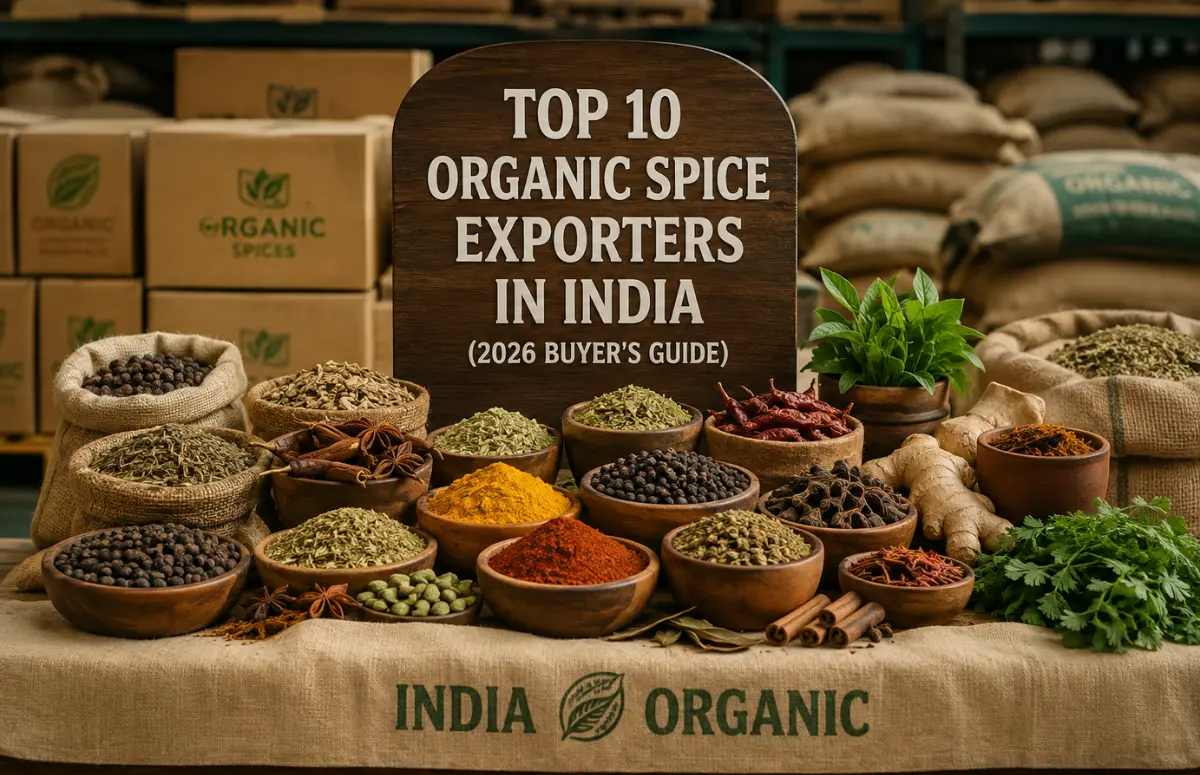
I was on a call last month with a procurement manager from a mid sized spice blending company in Germany. And she said something that stuck with me. Everyone claims organic. Almost nobody can actually prove it when you push back. That’s the whole game right now. India ships more spices than any other country on earth. But the organic segment is still small still a bit chaotic and still full of suppliers. Who slap a green leaf on their packaging without much behind it.
If you are a buyer trying to source turmeric, cumin, black pepper cardamom or chili from India this year. You already know the frustration. Search results are cluttered half the top exporter lists online are recycled from 2019 and everyone’s website looks basically identical. Same stock photos of farmers in fields same vague claims about premium quality. So I wanted to write something a little more honest. Based on what I have actually seen working around this industry talking to importers and digging through export data. And trade fair conversations over the past couple of years.
This is not a definitive ranking with medals attached. Think of it more as a shortlist you can actually use plus. Some blunt advice on how to vet these companies yourself. Because and I say this with love you should never fully trust a top 10 list including this one.
Why organic spice sourcing from India is trickier than it looks
Here’s the thing. India’s spice export volume is enormous chilies, turmeric and pepper alone move hundreds of thousands of tonnes a year. But organic certified spices are a sliver of that total. NPOP and USDA/EU equivalency certification requires farm level traceability. Which means real cooperatives real audit trails and real farmer contracts not just a processing unit. That decided to run an organic line on Tuesdays. A lot of exporters genuinely do this well. A lot do not and the gap between the two is not always obvious from a company profile page.
So when you are evaluating suppliers the name recognition matters less than you had think. What matters is farm-gate traceability certification consistency across seasons. (not just one lucky audit year) and whether they can actually scale. Your order without cutting corners on the organic chain of custody.
The suppliers worth knowing
Sresta Natural Bioproducts (24 Mantra Organic) is probably the name most buyers recognize. First and for good reason they have been in the organic space in India. Longer than most building out farmer networks across states like Madhya Pradesh and Maharashtra. Specifically for organic cultivation rather than converting conventional supply after the fact. Their spice range is broad and their certification documentation tends to be genuinely thorough which honestly is not something. You can say about everyone on this list.
Suminter India Organics works a slightly different model heavy on direct farmer partnerships. And full traceability down to the plot level. Buyers I have spoken to who work in the EU market like them specifically. Because their paperwork holds up under EU organic regulation scrutiny. Which is not a small thing given how often that documentation trips people up at customs.
Phalada Agro Research Foundations is one of those companies that does not market. Itself loudly but has quietly built a strong reputation in turmeric. And a handful of other spices working closely with farmer groups in Karnataka. If you want a supplier that is not chasing every trend. And instead sticks to what they do well this is worth a look.
Vedic Organic Foods tends to come up when buyers are sourcing smaller. More curated batches think specialty retailers rather than bulk industrial buyers. Their strength is really in flexibility. Which matters if you are not ordering container scale volumes but still need certified organic product.
Kanan Overseas based out of Gujarat has built a solid export track record in cumin and other seed spices. Specifically leaning into the strength of the region Gujarat and Rajasthan are basically the cumin belt of India. So working with an exporter rooted there gives you a shorter more reliable supply chain for that particular product.
Ambe International is another one that’s carved out a niche working across a wider. Spice basket with an emphasis on export documentation and compliance. Which honestly is half the battle when you are dealing with international food safety regulations. That change more often than anyone would like.
Indian Farm Organics deserves a mention here too and not just as a footnote. They have positioned themselves as an organic food supplier in India that leans specifically into farmer-partnership. Sourcing rather than buying spot-market organic stock and their site indianfarmorganics.com. Lays out their spice categories and sourcing approach in more detail. If you want to dig further worth a browse if you are building your shortlist.
Aum Fresh Foods rounds things out with a focus on turmeric and ginger. Specifically working mostly with cooperatives in the western states. Smaller scale than some names on this list. But that can actually be an advantage if you want a supplier who has time to answer your emails properly.
So how do you actually pick one?
Now, this is the part everyone skips over and it’s the part that matters most. Don’t start with the company’s marketing. Start with the certificate. Ask for their current NPOP certificate and. If you are importing into the EU or US their equivalency documentation too and actually check the expiry date. Because certifications lapse and get renewed with gaps more often than you had expect. Then ask where the farms actually are. A vague answer like across South India is a red flag a real supplier will name districts. Sometimes even specific villages. Because that’s how traceability audits work in the first place.
Honestly speaking, sample orders tell you more than any sales call ever will. Order a small batch before committing to a container. Test it not just for flavor and color which matters. But get it lab tested for pesticide residue if you have any doubt at all. Organic certification covers the farming process. But residue testing catches contamination that can happen anywhere along the chain. Including during storage or transport near non organic product. Which happens more than the industry likes to admit.
Price is the other thing worth talking about plainly. If an exporter’s organic turmeric is priced suspiciously close to conventional turmeric be skeptical. Organic farming yields less per acre and costs more to certify and audit every season. So the price has to reflect that somewhere. It does not need to be wildly inflated. But rock-bottom organic pricing is usually a sign that something in the supply chain. Is not quite what it claims to be.
And ask about volume consistency. A supplier who can deliver a beautiful 500kg sample batch. But struggles to repeat that quality at 20 tonnes is not necessarily. Lying to you they might just not have the farmer base to scale. That’s a fair limitation but you need to know. It before you sign a contract not after your third shipment comes in inconsistent.
A few quick questions people usually ask
Is Indian organic turmeric actually better than conventional for export? Better is subjective flavor wise the difference is often marginal. But for buyers targeting health-food premium retail or EU/US markets with strict labeling laws. Organic certification is not optional. it’s the entry ticket. So better really depends on which market you are selling into.
How long does it typically take to get a sample shipment from India? Realistically, anywhere from 2 to 6 weeks depending on the spice the season. And whether the exporter already has stock certified and ready versus needing to source fresh from farmers. Cumin and pepper tend to move faster smaller-batch specialty spices can take longer.
Do I need to visit India before finalizing a supplier? You do not strictly need to but if you are planning a long term or high-volume relationship. It’s worth it at least once. Video audits and third-party inspection services can fill the gap if travel is not practical. But nothing quite replaces walking a farm and a processing unit yourself.
What’s the biggest mistake first-time buyers make? Trusting the certificate logo without checking the certification body. And the expiry date and not asking for a residue test on the first order. Both are quick checks that save a lot of grief later.