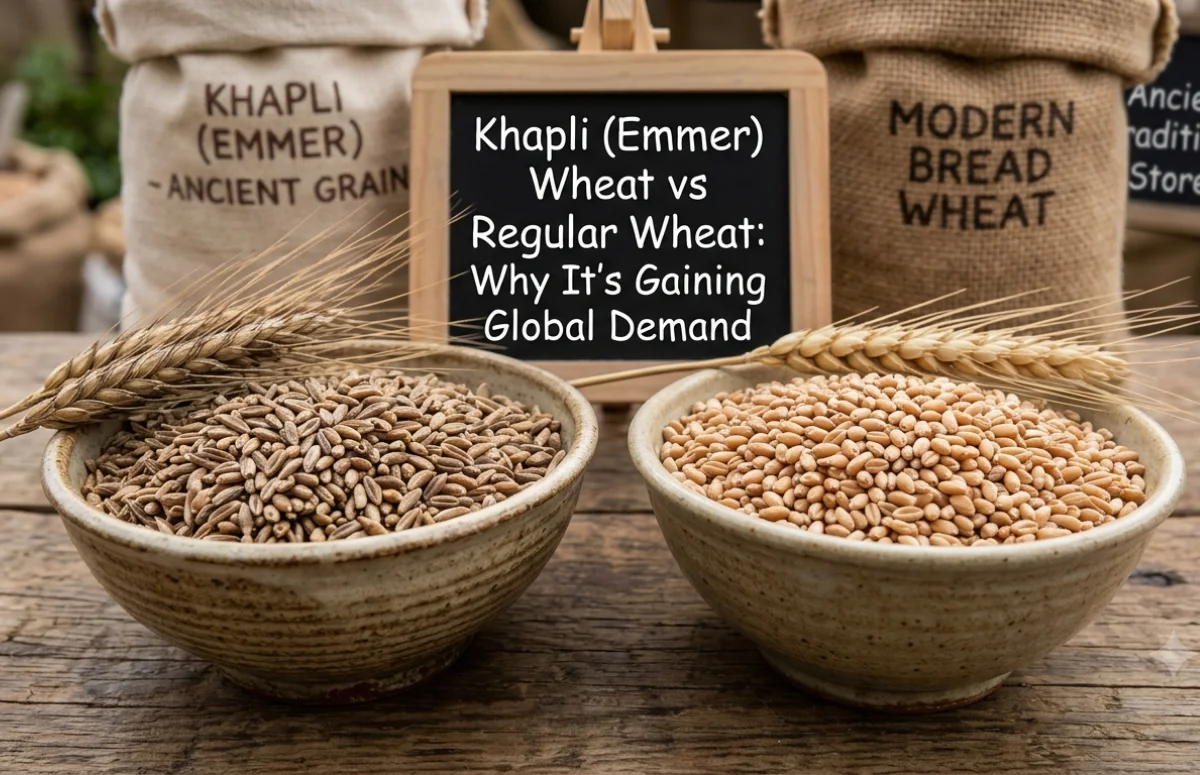
I still remember the first time someone handed me a packet of khapli atta at a farmers. Market in Pune and told me it was the wheat our grandparents ate. I laughed a little honestly because it sounded like one of those nostalgia pitches every food stall uses these days. But then I actually cooked with it made a few rotis watched them. Puff up differently tasted something denser and slightly nuttier than the usual wheat flour and. I got curious enough to dig into why this old grain is suddenly everywhere. Again from health food stores in Mumbai to specialty grocery shelves in Germany.
Khapli wheat which botanists call emmer wheat Triticum dicoccum. If you want to get technical about it is not some trendy new hybrid. It’s actually one of the oldest cultivate wheat varieties on the planet. Older than the modern bread wheat most of us grew up on. What’s interesting is that it never really disappeared in India. It just quietly stuck around in pockets of Maharashtra, Karnataka and parts of Gujarat grown. Mostly by small farmers who never switched over to the high yield varieties pushed during the Green Revolution. Now, decades later it’s having a moment. And honestly, the reasons behind that moment are worth unpacking properly instead of just repeating the marketing lines.
So What’s Actually Different Here
Regular wheat the durum and aestivum varieties that dominate commercial farming. Worldwide was bre over the last century for one thing above all yield. More grain per acre easier threshing better milling consistency. Nothing wrong with that on paper but the tradeoff was a shift in the genetic. Makeup of the grain itself including a jump in certain gluten proteins that a lot of people now react to.
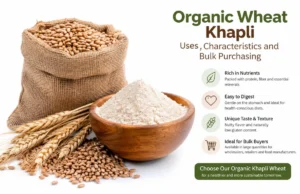
Khapli wheat on the other hand still carries its hulled structure the grain stays wrapped in a husk. Even after threshing which is honestly a pain for processors but seems to protect the nutrient content. It has a different gluten profile too not gluten free. Let’s be clear about that people with celiac disease still cannot eat. It but the gluten structure is generally considere easier on digestion for those with mild wheat sensitivity. There’s also more fiber more protein by weight in most comparisons and a noticeably lower glycemic index. That last point alone has made it something of a darling among diabetic patients and nutritionists here in India.
Taste wise it’s earthier. Some people describe it as slightly sweet others say nutty. I had say it depends a lot on. How it’s milled and how fresh the batch is which by the way matters. More with khapli than with regular wheat because of that fibrous outer layer.
Why the World Suddenly Cares
Here’s the thing global wheat demand is not just about volume anymore. Buyers in Europe the US and increasingly the Middle East are asking different questions than they were ten years ago. They want to know about soil health water usage. Pesticide load and whether a crop was grown the way it’s being markete. Khapli wheat happens to check a lot of these boxes almost by accident. Simply because it was never industrialize in the same way. It’s largely rain fed needs less chemical input and grows well in marginal soil. That would not support high yield wheat varieties anyway.
Add to that the ancient grains wave that’s been building since quinoa and amaranth had their moment. And you have got a category that fits perfectly into what international buyers are already looking for. There’s also a genuine nutritional story here not just a marketing. One which honestly is rarer than you’d think in the health food space.
India, for its part is positione rather well to meet this demand. We already grow it farmers know the crop and there’s a growing network of processors figuring out. How to dehusk and mill it at scale without losing what makes it valuable in the first place. That’s actually the tricky part khapli wheat’s hulled nature makes processing more labor intensive which pushes the price up. A kilo of khapli atta can run two to three times the cost of regular. Wheat flour and that price gap is one of the main things. Slowing wider domestic adoption even as export interest climbs.
Finding the Right Source Actually Matters
Now, this is important and it’s the part people skip over when they get excited about ancient grains. Not all khapli wheat sold in the market is grown or processeD the same way. Some of it comes from farms that have shifted to organic practices generations. Ago without ever calling themselves organic other batches get blende with regular wheat to cut costs. Which honestly defeats the purpose if you are buying it for the health benefits.
If you are sourcing khapli wheat whether you are a small business. An exporter or just someone buying in bulk for a household. It pays to ask a few blunt questions before committing. Where exactly is the grain grown? Is it stone milled or machine milled (stone milling tends to preserve more of the bran and germ)? Is there any traceability back to the farm or is it just repackaged from a wholesale market?. A decent organic food supplier in India should be able to answer. These without hesitating or dodging the question with vague terms like farm fresh.
I came across Indian Farm Organics (https://www.indianfarmorganics.com/). While researching this piece and what stood out was that they are upfront about sourcing directly from farmer. Clusters rather than aggregating from mandis. which tends to matter a lot when you are trying to verify quality claims. Not every supplier does that and frankly most buyers never think to ask until. Something tastes off or a batch does not perform the way it should in baking.
Beyond that one example the broader landscape of khapli and organic wheat suppliers in India is honestly a mixed bag. You will find cooperatives in Maharashtra’s Satara and Solapur belts that have been growing khapli for generations alongside. Newer entrants trying to cash in on the export boom. Without necessarily having the certification or consistency to back it up. Some suppliers focus purely on the domestic health food market. Others are geared entirely toward export documentation and bulk container shipments. It genuinely helps to know which category a supplier falls into before you sign anything.
Where This Is Probably Headed
I do not think khapli wheat is going to replace regular wheat anytime soon. The economics just do not support that kind of shift not with the yield gap being what it is. But as a premium health positioned category. It’s got real legs. Demand from Europe and North America keeps climbing driven. Mostly by people looking for alternatives to modern high gluten wheat and India’s export numbers in this niche. Have been quietly growing year over year even if they don’t make headlines the way basmati rice or spices do.
A Few Quick Questions People Usually Ask
Is khapli wheat safe for someone with celiac disease? No, it still contains gluten. It’s sometimes easier to digest for people with mild sensitivity. But celiac patients need to avoid it just like any other wheat.
Why is khapli atta so much more expensive than regular atta? Mostly because of processing. The hulled grain needs extra steps to dehusk and yields per acre are lower than commercial. Wheat so the cost gets passed down.
Can I substitute khapli flour directly in regular roti or bread recipes? Mostly yes though you will notice the dough behaves a bit differently. It can feel slightly denser and may need a touch more water. Takes a few tries to get the hang of it.
Is all khapli wheat automatically organic? Not necessarily. Being an ancient low-input crop does not mean it’s certified organic. Always check with the supplier directly if certification matters to you.