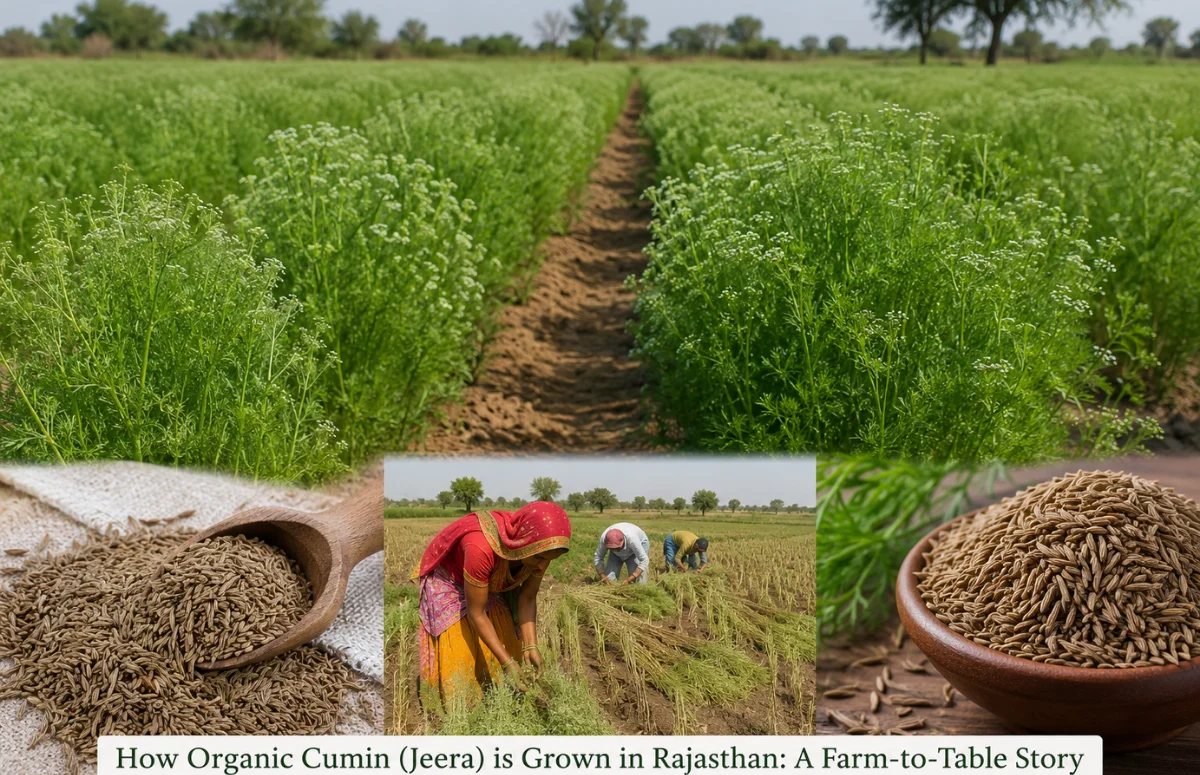
There’s a particular smell that hits you the moment you step off a bus in Nagaur or Jodhpur. During harvest season warm earthy a little sharp at the back of the throat. That’s jeera. Ask anyone who’s grown up around these parts and they will tell you cumin is not just a spice here. It’s basically part of the household economy. Half the villages I have visited over the years have at least one family. Whose entire year revolves around this tiny ridged little seed.
I got curious about this a while back mostly because I kept seeing “organic cumin” labels on jars in city. Supermarkets and wondered what actually happens between a seed going into sandy Rajasthani soil and. It ending up in someone’s kitchen in Mumbai or honestly in a shipping container headed to Germany. Turns out the answer is more interesting and more labor intensive than I expected.
The Land Does Half the Work (and the Farmer Does the Rest the Hard Way)
Rajasthan’s semi-arid climate is weirdly enough perfect for cumin. The plant hates humidity and loves cool dry winters which is basically Rajasthan’s personality from November through February. Districts like Nagaur Barmer Jodhpur and parts of Jaisalmer produce. The bulk of India’s cumin and India itself grows something like 70% of the world’s supply. That’s not a small thing.
But here’s the thing going organic in this belt is not a marketing decision. It’s often just how farming has always been done especially in the more remote pockets. Chemical fertilizer supply chains don’t always reach these villages easily and a lot of small farmers out of necessity. More than idealism a generation ago stuck with cow dung manure neem cake and crop rotation. Now that “organic” has become a certifiable sellable category a lot of these farmers. Are essentially getting paid extra for practices. Their grandfathers never gave a second thought to. There’s something a little funny about that if you think about it.
Sowing happens right after the monsoon retreats usually late October. Seeds go in by hand or with simple seed drills no fancy machinery in most of these fields. The plant is genuinely fussy too much rain. And it rots too little dew and germination fails a stray cold snap. And the whole crop can be wiped out overnight. Farmers here talk about frost the way sailors talk about storms. It’s the thing that keeps them up at night in January.
Weeding is done manually. Which is backbreaking work under a sun that doesn’t really care it’s winter. No herbicides means someone’s out there bent over the rows for hours. By late February or March, the plants turn that golden brown color and the seeds rattle a bit. When you shake the stalk that’s the signal. Harvest is quick and communal whole families and sometimes hired laborers moving through the fields in a matter of days. Because you really don’t want the seeds shattering and falling to the ground before you’ve collected them.
From Field to Somebody’s Spice Rack
After harvest, the cumin gets threshed sun dried on cloth or tarpaulin. (you will see this along the roadside in. Some villages honestly right next to the highway) and then winnowed to separate seeds from chaff. This is where organic certification gets tricky and frankly a bit tedious for smaller farmers. Every batch needs traceability which field. Which farmer what inputs were used. Sometimes going back three years. Since that’s the transition period required. Before land can be certified organic. A lot of farmers I have spoken to find this paperwork more exhausting than the actual farming.
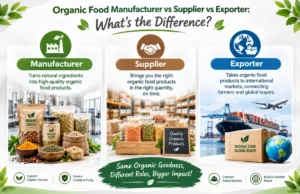
This is also where aggregators and suppliers step in. Because very few individual farmers have the volume storage or export documentation. To deal directly with a buyer in say the US or the Middle East. That middle layer matters more than people realize.
Take a cooperative style operation in the Nagaur belt I won’t name specific brands here. But there are several that work directly with clusters of certified organic farmers handling everything from seed. Sourcing to lab testing for pesticide residue before the cumin even leaves the district. Then there are the Jodhpur-based exporters. Who have built relationships over a decade or more with individual farming families almost like a retainer system. Guaranteeing purchase at a fair price each season regardless of market. Swings which honestly is probably the single most farmer friendly thing any supplier can do. Barmer has a few smaller family-run trading houses too less flashy working. Mostly with 20-30 acre operations doing their own cleaning and grading in house. Rather than outsourcing it.
Further south, near the Gujarat border some suppliers blend cumin sourcing with other organic spices coriander fennel ajwain running. What’s essentially a diversified small farmer network. So the income is not riding entirely on one crop’s price volatility in a bad year. There’s also a cluster of processors around Merta City. Who have invested in proper cleaning and grading infrastructure. Which sounds boring until you realize. How much of India’s raw cumin used to get rejected at export purely. Because of stone contamination or moisture content nobody bothered checking earlier in the chain.
And then you have got the newer players younger folks. Some with agri-business degrees coming back to their family land and trying to formalize things. Proper batch coding QR traceability the works. It’s a mixed bag honestly. Some of it feels a little over-engineered for what is at the end of the day a seed. But some of it genuinely helps close the gap between a Rajasthani farmer and a buyer three continents away. Who wants proof of what they are actually purchasing.
If you are looking into this space yourself sites like Indian Farm Organics are a decent starting point to see how. Some of these supply chains present themselves to buyers worth a browse. If you want a feel for how the sourcing side is typically communicated.
So, How Do You Actually Pick a Supplier?
Honestly speaking, this is the part people overthink or underthink rarely the right amount. A few things actually matter. First ask for the certification documents not just a logo on the packaging. India Organic, USDA or EU organic these should have traceable certificate numbers. And any legit organic food supplier in India will hand these over without hesitation. If someone hesitates or gets vague that’s your answer right there.
Second ask where the cumin is actually grown. “Rajasthan” is a big place Nagaur cumin and cumin from the Barmer desert belt are not identical in oil content. Or flavor profile and a supplier who genuinely knows their sourcing will tell you exactly which village or cluster it’s coming from. Sometimes down to the farmer group.
Third and this one’s underrated ask about testing. Pesticide residue aflatoxin moisture percentage. A supplier that does third-party lab testing on every batch not just once a year for the certificate renewal is generally more trustworthy. Volume consistency matters too if you are buying commercially; a lot of smaller operations can give you a beautiful sample batch and then completely fail to deliver consistent quality across a full year’s supply. It happens more than you’d think.
A Few Quick Questions People Usually Ask
Is all Rajasthani cumin organic? No not even close. Most of it is conventionally grown. Organic is a specific certified subset and honestly it’s still a minority share of total production even if it’s growing fast.
Why does organic cumin cost more? Lower yields per acre higher labor costs since there’s no chemical shortcut for weeding or pest control and the certification and testing overhead. It adds up.
Does organic actually taste different? A lot of chefs and home cooks swear it does slightly more intense aroma less bitterness. I’m not entirely sure it’s scientifically provable but I have noticed it myself for what that’s worth.
Can I buy directly from a farmer or cooperative? Sometimes yes especially during harvest season if you are in Rajasthan itself. Otherwise most buyers go through an established supplier who’s already done the certification and quality control legwork for you.