Let’s be honest most of us have stood in a grocery store picked up two packs of tomatoes noticed the price gap and just put the organic one back. It happens And there’s no shame in that. But as someone who’s spent a fair bit of time digging into how food actually gets from a farm to your plate. I think it’s worth having a real conversation about what organic actually means where the differences genuinely show up and where it might be a little overhyped.
This isn’t going to be one of those articles that tells you organic food will cure everything or that conventionally grown food is basically poison. Neither extreme is true. The reality as usual is more nuanced and honestly more interesting.
So What Even Is “Organic”?
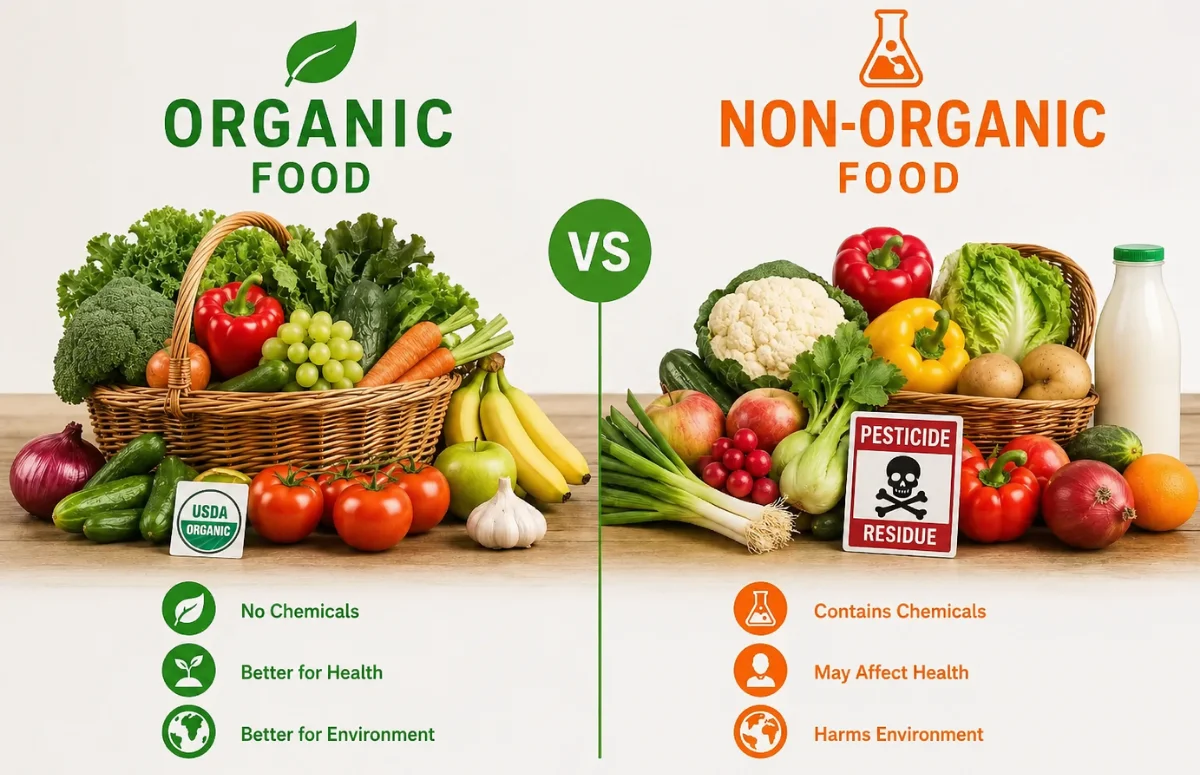
The word gets thrown around a lot. But the technical definition is pretty specific. Organic farming means growing food without synthetic pesticides chemical fertilizers genetically modified organisms or sewage sludge (yes, that’s a real thing used in some conventional farming). Animals raised organically are also supposed to have access to outdoor spaces and aren’t given routine antibiotics or growth hormones.
Non-organic or conventionally grown food doesn’t have these restrictions. Farmers can use whatever legally approved chemicals help them grow crops faster bigger and more uniformly. And to be fair that’s a big part of why conventional food is cheaper and more consistently available year round.
Here’s the thing though certified organic doesn’t automatically mean grown on a small family farm by a person who loves the earth. Large agri businesses can and do obtain organic certifications. So the romantic image some people have of organic food? Worth questioning a little.
The Pesticide Question (This Is the Big One)
If there’s one reason people switch to organic it’s usually pesticides. And this is where the data actually supports some real concern.
Studies consistently show that organic produce carries significantly lower pesticide residues compared to conventionally grown counterparts. The EWG (Environmental Working Group) publishes an annual Dirty Dozen list a ranking of fruits and vegetables with the highest pesticide loads and crops like strawberries, spinach and bell peppers regularly top that list. If you are going to pick your battles these are probably worth buying organic.
But and this is important lower pesticide residue isn’t the same as zero risk from conventional food. Regulatory bodies in most countries set Maximum Residue Limits (MRLs) for pesticides and the vast majority of conventionally grown food falls well within those limits. The long term cumulative effect of low-level pesticide exposure is still being studied and the science isn’t fully settled. So it’s genuinely complex.
Organic farming does use some pesticides too by the way. Just naturally derived ones. Copper sulfate for instance is widely used in organic viticulture and is arguably more toxic to soil organisms than some synthetic alternatives. So organic no pesticides is a bit of a myth.
Nutrition Does Organic Actually Taste or Perform Better?
People often claim organic food tastes better. Honestly? Sometimes it does, sometimes it doesn’t. A lot of that comes down to variety freshness, and soil quality not just the farming method.
On the nutrition front, the evidence is mixed. Some studies, particularly a fairly large meta-analysis published in the British Journal of Nutrition, found higher levels of certain antioxidants and omega-3 fatty acids in organic crops and dairy. Other studies have found negligible differences. What most nutrition scientists agree on is that eating more fruits and vegetables organic or not is far more impactful for your health than stressing over whether they’re certified organic.
That said, soil health does play a real role in nutritional density. Organically managed soils tend to have higher microbial diversity and better mineral content over time, which can translate to more nutrient-dense food. It’s not a guarantee. But the relationship is there.
Environmental Impact And This Part Gets Complicated
Organic farming is better for biodiversity. That’s pretty well established. Less synthetic chemical runoff means healthier waterways, more pollinators, and better soil ecology over the long run. If you care about the environmental footprint of what you eat organic farming does score better on several metrics.
However organic farming typically yields less per acre. Significantly less in some cases. Which means you need more land to produce the same amount of food. At a global scale, if the entire world switched to organic tomorrow, we’d almost certainly need to clear more forest to maintain food supply. That’s a genuine trade off that organic advocates don’t always want to talk about.
The picture gets even more complicated when you factor in transportation. An organic apple grown halfway across the world and flown to your city might have a larger carbon footprint than a conventionally grown apple from a local farm a few hundred kilometers away. Locally sourced food often wins on emissions, regardless of how it was grown.
What’s Happening in India And Why It Matters
India’s relationship with organic food is genuinely fascinating. The country is actually one of the largest producers of organic produce in the world by volume, and the number of certified organic farmers has been growing steadily. But the domestic market for organic food is still pretty fragmented quality control varies, certification standards aren’t always consistent, and a lot of consumers are understandably skeptical of premium-priced products that may or may not be what they claim.
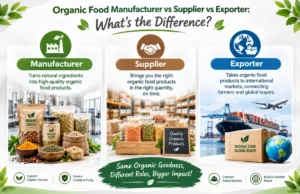
This is part of why finding a trustworthy organic food supplier in India matters more than the average consumer realizes. The supply chain for organic produce in India involves a lot of moving parts, and the difference between a genuinely certified operation and one that’s just slapping “natural on a label can be significant. Platforms like Indian Farm Organics are part of a small but growing ecosystem trying to bring some transparency and traceability to that process connecting buyers with farmers who are actually doing the work.
The broader point is that as urban consumers in India become more health-conscious, the demand for reliable organic supply chains is going to keep growing. The infrastructure is catching up, but slowly.
So Which Should You Actually Buy?
Here’s my honest take after years of following this space a blanket always buy organic or never bother” approach isn’t particularly useful.
Some categories where it probably makes sense to go organic strawberries leafy greens apples bell peppers and anything your kids eat in large quantities on a daily basis. These tend to carry the highest pesticide loads conventionally and children are more vulnerable to chemical exposure than adults.
For things like avocados, onions pineapples and mangoes produce with thick skins that you don’t eat the difference in pesticide exposure is minimal. Buying conventional here isn’t going to hurt you.
Dairy and meat are areas where organic arguably matters more than produce for many people. The absence of routine antibiotics and hormones in organic animal products is a legitimate distinction and antibiotic resistance is a real public health concern not a fringe worry.
And then there’s the economic reality. Organic food costs more. In some cases a lot more. For families on tight budgets, the priority should be eating sufficient quantities of fresh food not stressing about whether it’s certified organic. A non organic apple is vastly better than a bag of chips every single time.
The Honest Summary
The organic vs conventional debate doesn’t have a clean winner. Organic farming tends to be better for the environment, carries fewer pesticide residues, and probably produces marginally more nutrient-dense food in well-managed systems. But it’s more expensive, yields less per acre, and the certification process isn’t perfect.
Conventional farming feeds more people more affordably. But the long-term costs to soil health to ecosystems to potential human health effects from cumulative chemical exposure are real considerations that shouldn’t be dismissed just because they are hard to quantify.
What you eat matters. Where it comes from matters. And having enough reliable information to make those choices without being manipulated by either fear mongering or greenwashing that’s probably the most valuable thing any of us can have in this conversation.
Shop smart. Ask questions. And maybe buy the organic strawberries.