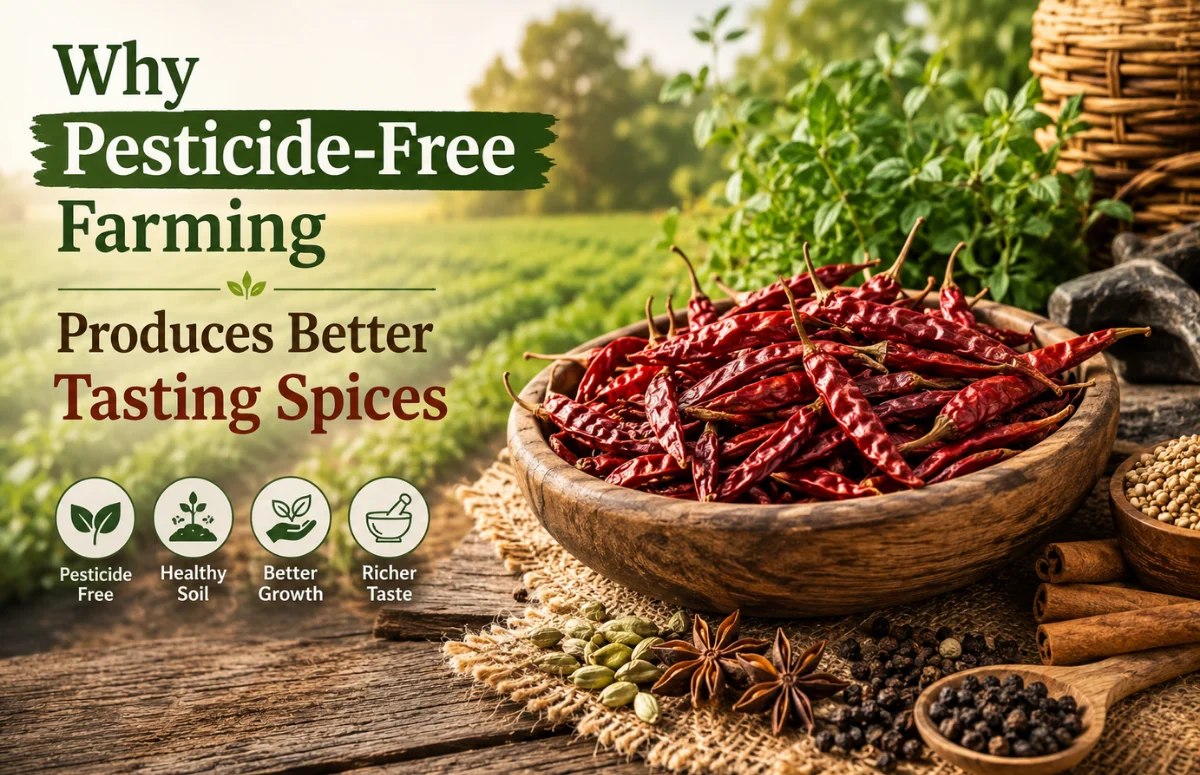
I still remember the first time. Someone handed me a pinch of turmeric grown without a single drop of pesticide. And told me to just smell it. Not taste it smell it. I was skeptical, honestly. Turmeric is turmeric right? Wrong. The difference was almost embarrassing the pesticide free stuff had this earthy. Almost peppery warmth that the regular supermarket jar just did not have. My kitchen jar in comparison smelled kind of flat. Dusty even.
That moment sort of stuck with me and over the years of talking to farmers traders. And a few obsessive home cooks I have come to realize this is not some fluke or placebo effect. There’s actual science and actual agriculture behind why spices grown without chemical intervention taste sharper deeper and honestly more alive.
The Chemistry Behind the Flavour (Yes, There’s Chemistry)
Here’s the thing spices get their flavour and aroma from essential oils. And compounds like curcumin in turmeric piperine in black pepper or capsaicin in chillies. These compounds are basically the plant’s defense mechanism produced in response to environmental stress. Soil microbial activity and natural pest pressure. When you spray a crop with synthetic pesticides you are essentially short circuiting that whole defense process. The plant does not need to try as hard because the chemicals are doing the protective work for it.
Now, this is important less stress on the plant often means fewer of these protective compounds get produced. Less curcumin less piperine less of literally everything that makes a spice taste. Like itself instead of tasting like well nothing much. Organic and pesticide free farms tend to rely on companion planting neem. Based deterrents and healthier soil biology to keep pests away. Which keeps the plant’s natural chemistry intact. It’s not magic. It’s just letting the plant do what it evolved to do.
Soil Health Plays a Bigger Role Than People Think
I used to underestimate this part. Soil is not just dirt that holds the roots up it’s basically a living ecosystem. And pesticide use disrupts that ecosystem pretty aggressively. Beneficial microbes fungi earthworms all of that gets wiped out or at least suppressed when synthetic chemicals are involved. And soil microbiology directly affects nutrient uptake. Which directly affects flavour compound synthesis. So yeah healthier soil basically equals more flavourful spice. It sounds almost too simple but that’s agriculture for you sometimes.
Looking at Real Organic Suppliers Across India
If you actually go digging around India’s spice belt and I mean physically travelling through Kerala, Karnataka Rajasthan. Or parts of Andhra you start noticing patterns among suppliers who have committed to pesticide free methods.
Take a supplier like Indian Farm Organics for instance. I came across indianfarmorganics.com while researching turmeric sourcing a while back and what stood out was not flashy marketing. It was the sheer detail they go into about soil preparation and traceability. That kind of transparency tends to be a decent signal that a company actually knows farming not just branding.
Then there’s 24 Mantra Organic which has become almost a household name at this point. They work with a huge network of farmers across Madhya Pradesh and Maharashtra focusing heavily on turmeric, coriander and cumin. Their scale is impressive though some smaller buyers. Say the personal touch gets lost a bit once you are dealing with a company that large.
Organic India is another one worth mentioning though they lean more toward wellness products. And herbal blends than pure raw spices. Still their sourcing practices around ashwagandha and tulsi reflect the same. Pesticide free philosophy and their farmer partnerships in Madhya Pradesh are genuinely well documented.
Moving south Kerala’s Peermade Development Society (PDS) deserves a mention too. They have been quietly doing organic spice cultivation cardamom, pepper, cloves for decades way before organic became a marketing buzzword. Honestly some of the best pepper I have ever tasted came from a small PDS linked farm near Idukki.
Pahal Farms in Rajasthan focuses on chillies and cumin and what’s interesting is their emphasis on desert soil. Biodiversity arid regions apparently produce surprisingly intense flavour concentration. Because the plants are naturally under mild stress (the good kind without the pesticide shortcuts).
Suminter India Organics is more B2B-focused exporting a range of pesticide free spices. And dried herbs and they have built a decent reputation among international buyers. Who need certification-heavy documentation useful if you are an organic food supplier in India trying to source for export markets.
And then smaller, regional players cooperatives in Wayanad Coorg and parts of Himachal. Often produce incredible pesticide-free black pepper and turmeric in small batches. They rarely show up on Google searches which is kind of a shame honestly. Because some of that stuff is genuinely superior to branded alternatives.
So How Do You Actually Pick a Supplier?
This part trips people up more than it should. Everyone wants a checklist. But sourcing spices is not really a checklist kind of business. It’s more of a relationship thing if that makes sense.
Start by asking about certification sure but don’t stop there. Certifications (India Organic, USDA or even the newer NPOP tags) tell you the legal box is checked. Not necessarily that the spice tastes good. What actually matters more is asking where the farm is located. What the soil testing history looks like and whether the supplier can show you batch-to-batch consistency. A supplier who genuinely knows their farming region will talk your ear off about soil pH and monsoon timing and. Honestly that’s a good sign not a red flag.
Also, do not be afraid to just taste and smell things before committing to bulk orders. If a company claims to be the best organic food manufacturer company in India. But won’t send samples that tells you something too. Real suppliers the good ones usually want you to taste the difference because they know it sells itself.
Price is tricky. Pesticide free spices cost more that’s just reality given the lower yields and higher labour involved. But if the price feels absurdly low for something marketed as organic. it probably is not. Trust your instincts a bit here.
A Few Honest Thoughts Before Wrapping Up
Look pesticide free farming is not some perfect utopia solution either. Yields can be lower prices are higher and not every organic label out there is fully trustworthy. There’s greenwashing in this industry just like anywhere else. But when it comes to flavour the science and the sensory experience genuinely line up. Less chemical interference means the plant’s natural compounds get to do their job and that translates into spices. That smell stronger taste deeper and honestly just feel more real on the tongue.
If you are someone who cooks often or even just occasionally obsesses over getting that perfect biryani or curry. Right it might be worth tracking down a smaller pesticide free supplier. Near you instead of grabbing whatever’s cheapest at the store. Your taste buds will probably notice before your brain even figures out why.
FAQ
Does pesticide-free automatically mean organic? Not always. Pesticide free is one part of organic certification but true organic farming also involves soil management. Non-GMO seeds and specific composting practices. Some farms are pesticide free without being formally certified organic. Which is worth checking.
Why are pesticide-free spices more expensive? Mostly because of lower yields more manual labour for pest control and the cost of certification and testing. It’s not just a marketing markup in most legitimate cases.
Can I really taste the difference, or is it just in my head? It’s real at least chemically speaking. Studies on curcumin and essential oil concentration in pesticide. Free turmeric and pepper show measurable differences compared to conventionally farmed batches.
How do I know if a supplier is genuinely pesticide-free and not just claiming it? Ask for lab test reports not just certificates. A transparent supplier will happily share soil and residue testing data. If they hesitate or dodge the question that’s usually a sign to look elsewhere.