I was at a small trade fair in Jaipur. Last winter wandering past stalls selling everything from millets to cold pressed oils. And I overheard a conversation that stuck with me. A buyer was asking a stall owner. But is this really organic or just labeled organic?. The stall owner laughed and said something like depends which certificate you trust. That exchange pretty much sums up where the Indian organic market is right now full of good intentions. Genuine producers a few opportunists and a confusing alphabet soup of certifications that. Most people including some sellers themselves do not fully understand.
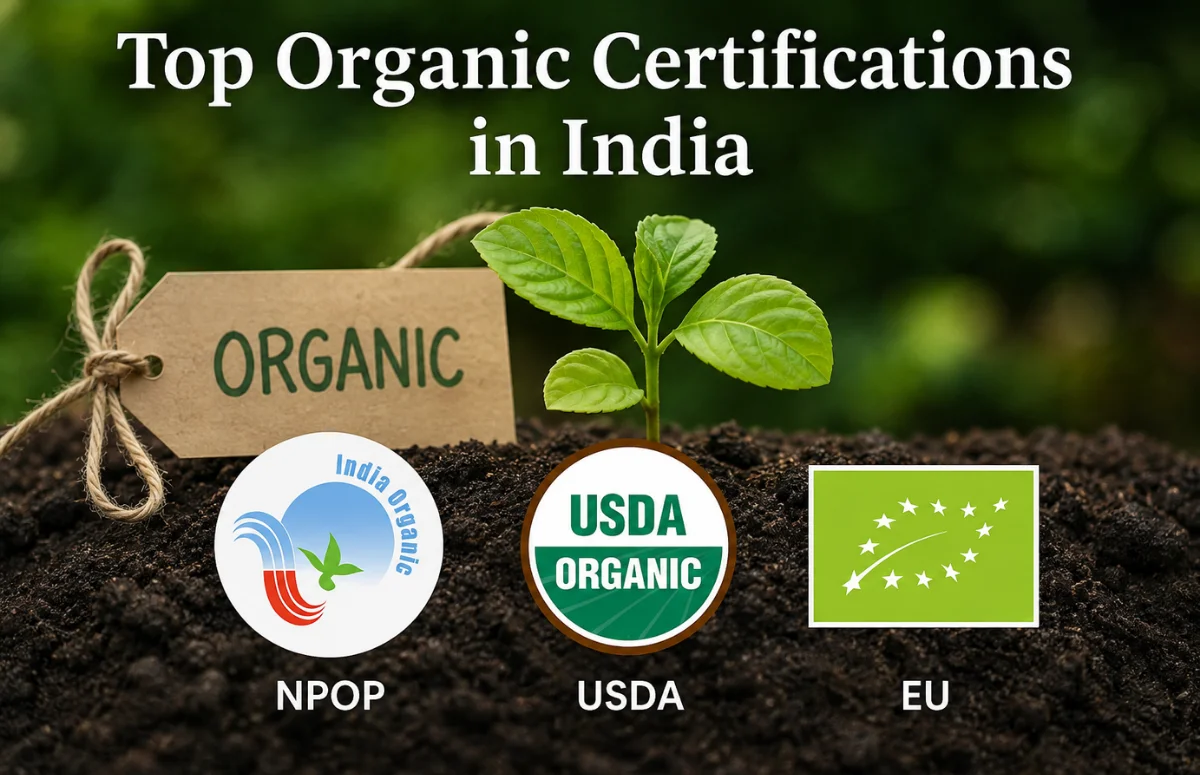
So let’s actually unpack this. If you are trying to source organic produce spices or packaged goods from India. Whether you are an importer in Germany or a retailer in Mumbai. You have probably run into three big names NPOP, USDA Organic and EU Organic. They are not the same thing they do not mean the same thing and honestly. Knowing the difference can save you a lot of money and a fair bit of embarrassment. When a shipment gets rejected at customs.
NPOP India’s Own Standard and Why It Matters More Than People Think
NPOP stands for National Programme for Organic Production. And it’s run by APEDA (Agricultural and Processing Food Products Export Development Authority) under India’s Ministry of Commerce. This is the homegrown certification the one that governs how Indian farms and processing units are inspected and approved. Before anything gets the organic tag domestically.
Here’s the thing people often miss NPOP is not just a rubber stamp for the local market. It’s actually recognized as equivalent by the EU for certain product categories. Which means Indian exporters do not always need to go through a separate EU certification process from scratch. That equivalence agreement has been a huge deal for exporters. Because dual certification used to be brutally expensive for small and mid sized farms.
That said NPOP has had its share of criticism. There have been instances and I won’t pretend otherwise. Where lax inspection or paperwork only audits let some not-so-organic produce slip through. APEDA has tightened things up over the years with traceability systems like Trace Net. But if you are buying in bulk. It’s still worth asking your supplier for the actual certificate number and verifying it on the APEDA portal yourself. Takes five minutes saves headaches later.
USDA Organic The Gold Standard for the American Market
If you want to sell into the US, USDA Organic certification is not optional, it’s the entry ticket. The standards here are administered by the USDA’s National Organic Program. And they are notably stricter on things like soil transition periods. (typically three years of organic management before a farm’s produce can even be labeled organic) and synthetic input restrictions.
What’s interesting is that USDA doesn’t directly certify Indian farms. It accredits certification bodies that then carry out the audits in India. Names like Control Union Ecocert and OneCert India come up a lot in this space. The cost of USDA certification is genuinely higher than NPOP and the documentation burden is heavier too. Small farmers often can’t afford it on their own. Which is partly why you see aggregator models and FPOs (Farmer Producer Organizations) pooling resources to get certified collectively.
I’d say if your buyer base or target retail chain is American do not even negotiate. On this USDA Organic is non negotiable. Trying to substitute NPOP alone for the US market is a common rookie mistake among newer. Exporters and it leads to shipments getting flagged or rejected.
EU Organic Stricter in Some Ways More Bureaucratic in Others
The EU Organic logo (that little green leaf made of stars) operates under EU Regulation 2018/848. Now which replaced the older 834/2007 framework a few years back. The transition period requirements are similar to USDA in spirit. But the EU tends to be more particular about things like pesticide residue thresholds and processing facility. Separation meaning your organic and conventional production lines. Genuinely cannot share equipment without serious cleaning protocols and documentation in between batches.
As I mentioned India’s NPOP-EU equivalence helps here but it’s not blanket coverage. Certain product categories processed foods. Especially often still need direct EU certification through bodies like Ecocert or Control Union’s European arm. If you are exporting something like organic basmati rice or turmeric powder to Germany. Or the Netherlands double-check whether your current NPOP cert actually extends to that specific HS code. Under the equivalence agreement sometimes it does not and that’s where shipments get stuck at ports.
The Suppliers Actually Doing This Right
Now, talking certifications in the abstract is one thing. Let’s talk about who’s actually out there supplying certified organic goods at scale. Because that’s probably why you are reading this.
Sresta Natural Bioproducts the company. Behind the 24 Mantra Organic brand is probably the most recognizable name in Indian organic FMCG. They have built out a fairly impressive farmer network across states like Madhya Pradesh and Maharashtra and their products. Typically carry both NPOP and USDA certifications depending on the line. Their scale is honestly what sets them apart they’re not a boutique operation they are moving real volume.
Then there’s Conscious Food based out of Mumbai. Which has been around since the late ’80s, longer than most people realize. They started small, focused on rice and pulses and have since expanded into a fairly broad catalog. Their certifications lean heavily NPOP with select USDA-certified product lines for export.
Pro Nature Organic Foods is another one worth mentioning they work with farmer cooperatives in South India. And have built a decent reputation for spices and millets specifically. I have heard mixed things about their delivery timelines for bulk export orders. So if you are sourcing from them build in some buffer.
Morarka Organic Foods interestingly is also tied into research and farmer training through the Navdanya. Adjacent ecosystem (not directly affiliated. But philosophically similar) and they have got a strong presence in cotton and grain. Exports with NPOP and EU dual certification on several SKUs.
Now, somewhere in this conversation about reliable sourcing. It’s worth bringing up smaller more specialized players too not just the big FMCG names. There are regional aggregators and exporters working directly with certified farm clusters. Who can offer more customization on order size and crop type than the bigger brands typically will. I came across indianfarmorganics.com while researching supply chains for a client a while back. And what stood out was how transparent they were about sharing certification documentation upfront rather. Than making you chase it down after placing an order which frankly is not always the norm in this industry.
Organic India (the tea and supplements company) deserves a mention too mostly for their herbal and wellness product lines. Which carry strong USDA and EU credentials even though their core business has shifted. More toward branded retail than raw bulk export.
And then there’s a tier of smaller lesser known exporters often based out of Gujarat, Rajasthan and Tamil Nadu. Who don’t have flashy websites but supply directly to European and Middle Eastern buyers on contract. Honestly some of the best deals. I have seen on raw spices and pulses come from these less visible players precisely. Because they do not carry the branding overhead of the bigger names.
So How Do You Actually Pick a Supplier?
This is where people overthink it or underthink it rarely the right amount. My honest advice don’t just ask are you certified ask certified by whom for which markets. And can I see the cert number. Any legitimate organic food supplier in India should hand this over without hesitation. If there’s hesitation that’s your answer right there.
Also pay attention to whether their certification covers the specific product. You want not just their farm or company in general. Certifications in this space are often product and batch-specific not blanket approvals. A supplier might be NPOP certified for rice but not yet for the turmeric they are also selling you. Ask directly.
Lead times matter too, more than people factor in upfront. Organic supply chains are smaller and less buffered than conventional ones a bad monsoon season. Or a delayed harvest can throw off your delivery window by weeks not days. Build relationships with suppliers who communicate proactively about this rather than going silent when things slip.
Quick FAQ
Is NPOP certification accepted everywhere? No not universally. It’s strong domestically and has equivalence with the EU for many (not all) product categories. The US still generally requires separate USDA Organic certification.
Can a product be both NPOP and USDA certified at the same time? Yes and a lot of serious exporters. Do exactly this so they can serve both domestic and international markets without re-certifying constantly.
How long does organic certification typically take in India? Usually around 18 to 36 months for full conversion certification since the soil and farming practices need a transition period. Before the organic label applies. Some shortcuts exist for already compliant farms. But genuinely there’s no fast way to skip the transition window itself.
Does a higher price always mean better certification? Not necessarily sometimes you are paying for branding packaging or marketing more than the certification itself. Always verify the actual cert not just the price tag or label design.