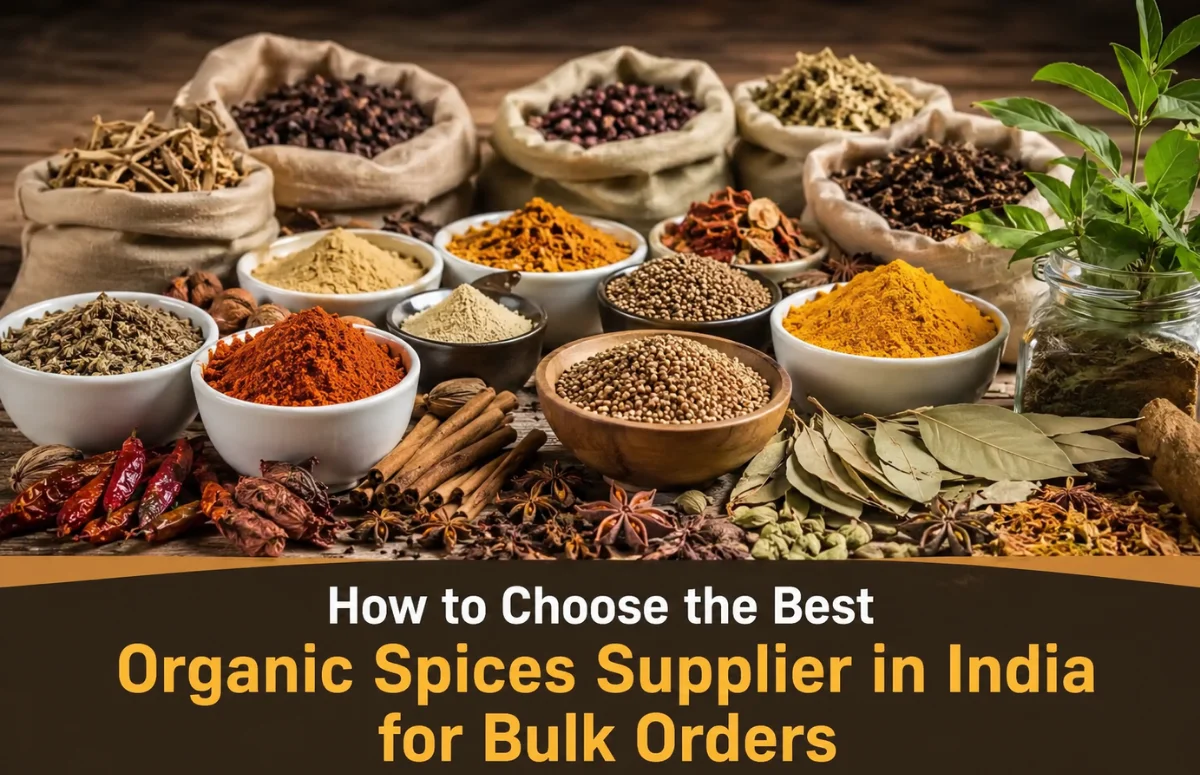
Let me be honest with you sourcing organic spices in bulk from India is not as straightforward as people make it sound. You will read a dozen articles telling you to check certifications and compare prices. But anyone who’s actually been through the process knows there’s a lot more friction involved. Wrong shipment timelines, inconsistent quality between batches, suppliers who vanish after the first order it’s a whole thing.
India is, without question one of the most important spice producing regions in the world. Kerala, Rajasthan, Madhya Pradesh, Gujarat each belt has its own crops its own farming culture its own strengths. But navigating all of this as a bulk buyer especially if you are sourcing for export, retail or food manufacturing requires more than just a Google search and a few quote requests.
This piece is for people who are actually trying to build a reliable supply chain not just looking for a one time order.
Some Suppliers Worth Knowing About
Let’s get into specific names because vague advice helps nobody.
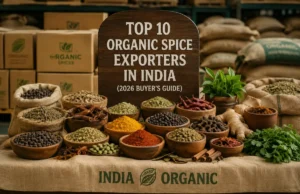
Indian Farm Organics is one supplier that keeps coming up in conversations among serious buyers. They work directly with certified organic farmers which matters more than people realize it means fewer middlemen touching the product and traceability is actually possible. Their range covers turmeric, cumin, coriander, black pepper and several other staples. If you are building a supply chain around high volume orders with consistent certification requirements they are worth looking into. You can explore their offerings at https://www.indianfarmorganics.com/. What I like about their model is the farm-to-export linkage it’s not just a label claim.
Organic India is another established name. They have been around long enough to have solid export infrastructure and their USDA and EU organic certifications are in order. They are probably better suited for larger institutional buyers given their minimum order requirements, but if your volume justifies it they are reliable.
Sresta Natural Bioproducts (the folks behind 24 Mantra Organic) operates one of the larger certified organic networks in the country. They work with a wide cooperative of farmers which gives them volume capacity. The trade-off sometimes is that with large cooperative-sourced products, batch-to-batch uniformity can vary slightly not a dealbreaker but worth watching.
Then there’s Nature Bio Foods based out of Haryana. They have quietly become one of the more important organic food supplier in India players in the export segment. Their processing facilities have multiple certifications and they handle a fairly wide range of spices and pulses. They are a bit less visible in retail conversations but come up a lot when you talk to people in the export trade.
Frontier Natural Products has Indian sourcing partnerships that work well for international buyers who want a third-party validated supply chain. Not a direct-from-India supplier in the traditional sense. But useful if you are operating out of North America or Europe and need the paperwork handled cleanly.
Vasudha Organic is worth a mention for buyers specifically interested in South Indian spices black pepper cardamom, cloves. Their sourcing is Kerala-heavy and the quality tends to be consistent with what premium specialty food brands need.
Spices Board of India is not a supplier per but it’s an underused resource. They maintain approved exporter lists quality benchmarks and can connect you with certified suppliers in specific regions. If you are starting from scratch and do not know who to trust their database is a reasonable starting point.
So How Do You Actually Choose?
Here’s the thing the decision is not just about who has the lowest price per kilogram. That’s the rookie mistake. Organic certification is step one not the whole picture.
Start with certifications but go deeper than checking whether someone has an organic certificate. Ask which certifying body issued it. India NPOP certification is the domestic standard. But if you are exporting you will almost certainly need USDA Organic or EU Organic equivalents. Some suppliers have all three many have only one. Know what your market requires before you start talking to anyone.
Now, this is important ask for third-party lab reports. Any serious supplier should be able to provide pesticide residue analysis and heavy metal testing results from an accredited lab. If they can’t or they are evasive about it that’s a red flag regardless of what their certificate says.
Traceability is the next filter. Can the supplier tell you which farm or farming cooperative a batch came from? Can they provide lot numbers tied to specific harvests? This matters for food safety compliance especially in European markets where regulations are getting stricter. Suppliers who can’t provide this aren’t necessarily doing anything wrong. But they can’t help you if something goes sideways with a batch.
Honestly speaking visit when you can. Or have a sourcing agent visit. Photos and videos are easy to fake a physical verification of storage conditions processing hygiene and workforce practices tells you things that a certificate never will. I have heard enough horror stories about beautiful looking supplier websites connected to warehouses with serious contamination issues.
Minimum order quantities and logistics flexibility matter more than people admit upfront. Some of the best quality suppliers have MOQs that simply don’t work for mid sized buyers. Factor that in early. Also ask about their packaging options do they support private labeling, vacuum sealing nitrogen flushing for extended shelf life? For bulk orders these aren’t nice-to-haves.
One more thing payment terms and communication. This sounds basic but it’s genuinely predictive of a supplier relationship’s durability. A supplier who responds slowly to inquiries before you are a customer isn’t going to suddenly become attentive once you have wired money.
A Note on Regional Specialization
India’s spice geography is real and it matters. Turmeric from Erode in Tamil Nadu has a different curcumin content than turmeric from Sangli in Maharashtra. Rajasthani cumin has specific flavor characteristics that differ from Gujarati cumin. Black pepper from Wayanad carries its own profile. If you are buying for a specific end product especially for branded consumer goods regional sourcing specificity can be a meaningful differentiator.
This is why working with a supplier who has established sourcing relationships in multiple growing regions gives you more flexibility. It also gives you options when a particular region has a bad harvest year which happens more than you’d expect.
FAQ
How do I verify if an organic certification is real? Most certifying agencies like APEDA for India NPOP or bodies accredited under USDA’s NOP maintain online databases where you can cross-check a certificate by registration number. Don’t just accept a PDF look it up independently.
What’s a realistic MOQ for bulk organic spice orders from India? It varies quite a bit. Some suppliers start at 50–100 kg per SKU larger operations might require 500 kg or more. For export orders container load economics usually push you toward larger volumes. Always negotiate early and be transparent about your volume projections.
Is there a meaningful quality difference between certified organic and conventionally grown Indian spices? Depends on who you ask and what you measure. Pesticide residue data generally favors certified organic. Flavor profile differences are more subjective and debated. For market positioning and regulatory compliance in most export markets the certification itself is non-negotiable regardless of the underlying quality debate.
How long does it typically take to establish a reliable sourcing relationship with an Indian spice supplier? Budget for at least 2–3 test orders over 6–9 months before committing to high volumes. Consistency across batches is what you are testing for not just quality on the first order.