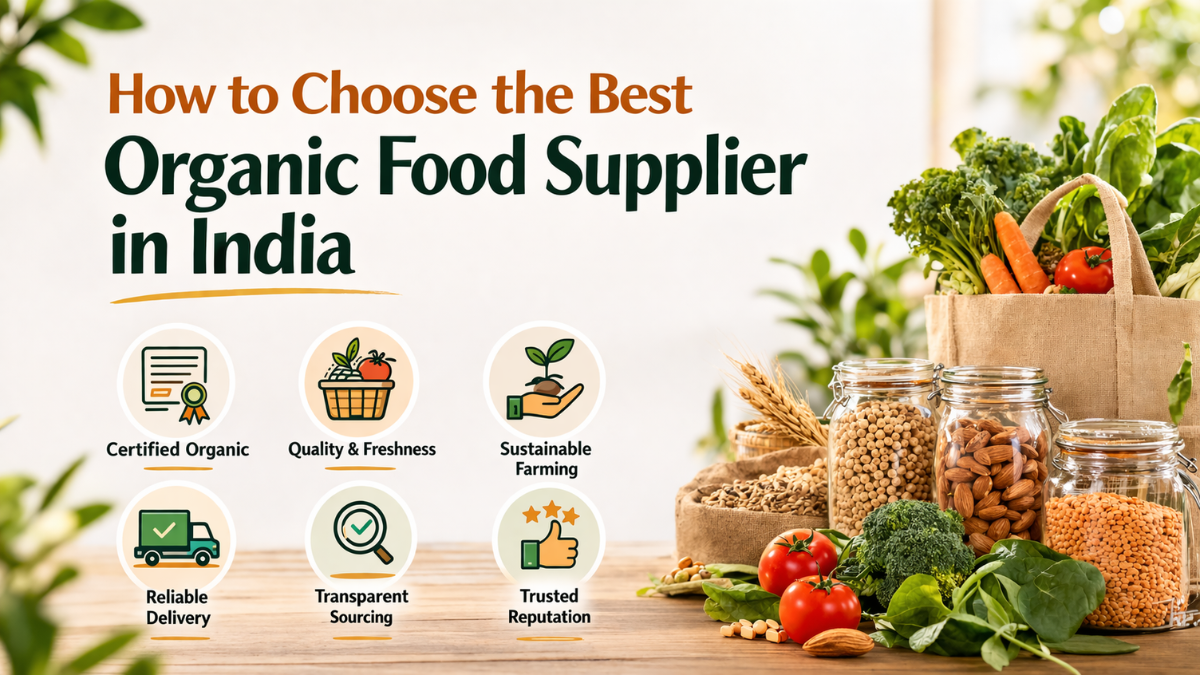
The demand for organic food in India is growing faster than ever. Consumers are becoming more conscious about what they eat where it comes from and how it impacts their health. But here’s the challenge not all organic food suppliers are truly organic.
If you’re a business owner, retailer or even an individual buyer choosing the right organic food supplier is crucial. The quality of your supplier directly affects your health your brand reputation and your customers trust.
Let’s break it down in a simple, practical way.
1. Check for Genuine Organic Certifications
This is the first and most important step.
A reliable organic food supplier in India must have valid certifications such as:
- NPOP (National Programme for Organic Production)
- USDA Organic
- India Organic Certification
- EU Organic Certification (for exports)
These certifications ensure that the products are grown without harmful chemicals, pesticides or synthetic fertilizers.
Tip: Always ask for certification proof. A genuine supplier will never hesitate to share it.
2. Understand Their Sourcing and Farming Practices
Not all organic labels mean the same thing. The best suppliers are transparent about their sourcing.
Ask questions like:
- Where are the farms located?
- Are the products directly sourced from farmers?
- Do they follow sustainable farming methods?
A trustworthy supplier will give you clear answers not vague marketing talk.
3. Evaluate Product Quality and Consistency
Organic food should look natural not artificially perfect.
When choosing a supplier check:
- Freshness and aroma
- Color (natural, not overly polished)
- Texture and cleanliness
- Batch consistency
Consistency matters especially if you are buying in bulk for resale or manufacturing.
4. Supply Chain & Delivery Reliability
A great supplier isn’t just about quality it’s about reliability.
Make sure they:
- Deliver on time
- Maintain proper packaging standards
- Have a strong logistics system
- Can handle bulk orders without delays
Late or inconsistent supply can harm your business operations.
5. Experience and Market Reputation
Experience speaks volumes.
Look for suppliers who:
- Have been in the organic industry for several years
- Work with known brands or exporters
- Have positive reviews or testimonials
A supplier with a proven track record is less risky than a new untested one.
6. Pricing Transparency (Not Just Cheap Rates)
Organic food is naturally more expensive than conventional food but beware of prices that seem too low.
Low prices may indicate:
- Compromised quality
- Fake organic labeling
- Poor sourcing practices
Choose a supplier who offers:
- Fair pricing
- Clear quotations
- No hidden costs
7. Private Labeling & Customization Options
If you’re building your own brand, this is a big advantage.
A good organic supplier should offer:
- Private labeling services
- Custom packaging options
- Bulk supply with branding flexibility
This helps you scale your business faster.
8. Compliance with Food Safety Standards
Apart from organic certifications, check for:
- FSSAI Registration
- ISO Certifications
- HACCP compliance (for food safety)
This ensures the products are processed and handled hygienically.
9. Communication & Customer Support
A professional supplier values long term relationships.
They should:
- Respond quickly to queries
- Provide clear documentation
- Offer support for bulk orders
- Be easy to communicate with
Poor communication is often a red flag.
10. Range of Organic Products Offered
It’s always better to work with a supplier who offers a wide range of organic products like:
- Organic pulses and grains
- Spices and herbs
- Dry fruits and seeds
- Superfoods
This reduces the hassle of dealing with multiple vendors.
Final Thoughts
Choosing the best organic food supplier in India is not just about price or convenience it’s about trust, quality and long term value.
Take your time ask the right questions and never compromise on authenticity. A reliable supplier becomes more than just a vendor they become a partner in your growth.