If you have ever stood in a grocery store staring at two packets of dal one regular one organic and wondered “Is it really worth it — this article is for you.
We are not going to throw a wall of health statistics at you. Instead let’s talk about where your food actually comes from how Indian Farm Organics works differently and how to know when you are ready to make the switch to organic.
The Problem With How Most of Us Buy Food
Most of us have no idea how our food travels from a farm to our kitchen. And honestly the journey is not always pretty.
A typical packet of rice or chana dal goes through traders middlemen wholesalers distributors and retailers before it reaches you. By the time it lands on your shelf the farmer who grew it may have earned a fraction of what you paid. And along the way? Synthetic pesticides, chemical preservatives, and prolonged storage treatments are common practice not exceptions.
This isn’t about fear-mongering. It’s just the reality of a supply chain that was built for scale, not health.
What Farm to Table Actually Means — And Why Most Brands Just Use It as Marketing
Farm to Table is one of the most overused phrases in the food industry today. Every second brand claims it. Very few actually practice it.
At its core farm to table means the food you eat was grown by a real farmer handled minimally and reached you without a long chain of anonymous intermediaries inflating the price and compromising the quality.
Indian Farm Organics run by Ganpati Scientifics out of Jaipur Rajasthan takes this seriously not as a tagline but as a business model.
How Indian Farm Organics Sources Directly from Farmers
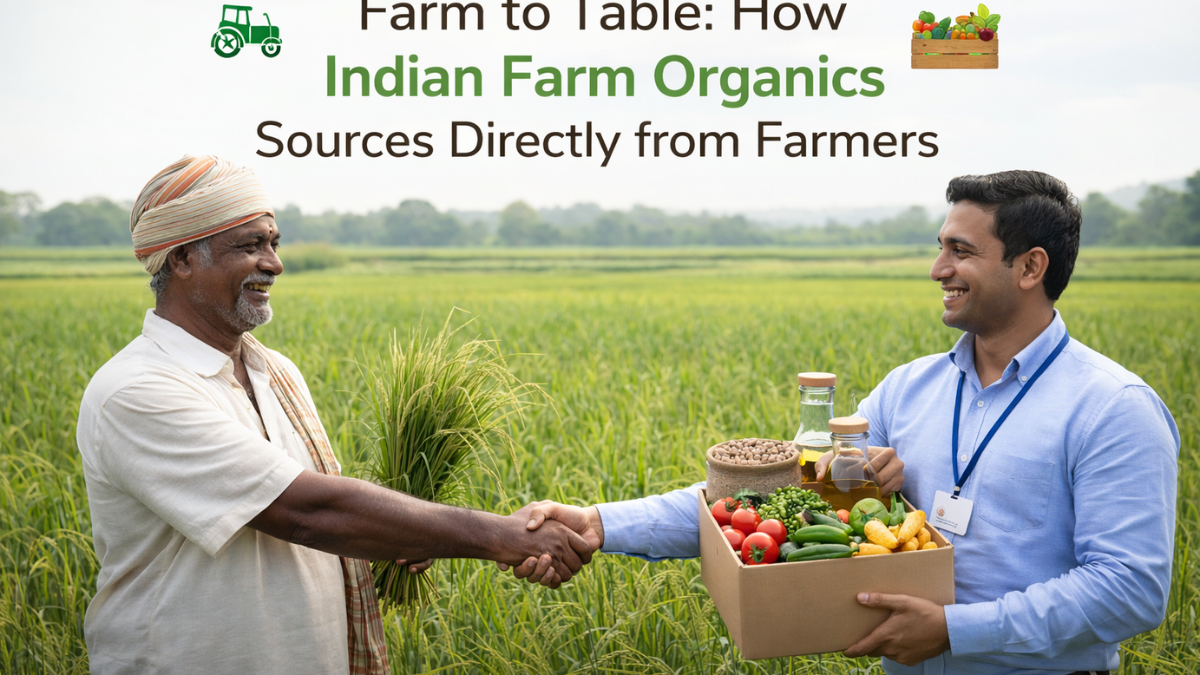
Indian Farm Organics works directly with small organic farmers across India. The idea is simple but powerful cut the middlemen support the farmer deliver cleaner food to the consumer.
Here’s what that looks like in practice:
Farmer partnerships, not transactions. The relationship with farmers is not a one-time purchase arrangement. It is ongoing. Farmers are treated as partners supported with knowledge about organic practices helped in maintaining certification standards and given consistent fair buying commitments. When a farmer knows their buyer is reliable, they invest more care into what they grow.
Certified from the source. Every product on the platform carries certifications USDA Organic India Organic (NPOP), EU Organic, FSSAI, HACCP, and Kosher among them. These aren’t just stickers. They mean an independent agency has verified that what you’re eating was grown without prohibited chemicals, from seed to shelf.
No compromise on purity. The product range pulses, spices, millets, grains, rice, herbs, oils, flours, super seeds, dry fruits is sourced with a clear mandate no synthetic pesticides, no chemical fertilisers no artificial preservatives or colours. What the farmer grows organically is what reaches you.
Flexible and honest packaging. From small retail packs for households to bulk orders for businesses, the packaging is clean and transparent. Custom-branded options are also available for businesses building their own organic product lines.
This is not a fancy urban startup pretending to care about farmers. It is a Jaipur-based company with real certifications, real farmer relationships, and real accountability and that matters.
So When Should a Beginner Make the Switch to Organic?
This is the real question most people are too afraid to ask publicly because they think the answer involves overhauling their entire kitchen overnight.
It doesn’t.
Here’s an honest, no-pressure guide:
Start When You’re Ready to Ask What’s in My Food?
You don’t need a health scare or a documentary to trigger the switch. The best time to start is simply when you become curious about what you’re feeding yourself and your family. That curiosity is the only qualification needed.
Switch the Things You Eat Every Single Day First
If you eat dal every day, switch your dal first. If you cook with the same two or three spices daily, those come next. The logic is simple — if you consume something every single day, the cumulative effect of whatever’s in it (good or bad) is the highest. Organic pulses, organic rice, organic everyday spices these are the highest-impact, most practical starting points.
Indian Farm Organics makes this easy because their core product range is built around Indian daily staples moong, chana, masoor, rajma, rice, ginger, garlic, turmeric. Not exotic superfoods you will use once and forget.
Switch When the Price Difference Stops Feeling Like a Loss
Organic food does cost more. That is the truth. But the framing matters. If you buy cheaper dal that was grown with chemicals you are not saving money you are offloading the health cost onto your body and paying for it later.
When you start thinking of organic food as preventive health spending rather than a premium grocery splurge, the price difference stops stinging. Most people reach this mental shift naturally and when you do, you are ready.
Don’t Switch Everything at Once
Trying to go 100% organic overnight is expensive overwhelming and unsustainable for most Indian households. It also sets you up to quit. Instead, build the habit slowly.
- Month 1: Switch your daily dal and one spice
- Month 2: Add organic rice or flour
- Month 3: Expand to oils, sweeteners, or super seeds
By month four, you’ll have quietly replaced most of your daily staples without a dramatic budget disruption.
Switch When You Have a Trustworthy Source
This one is underrated. The hesitation many people feel about organic food is valid the market is flooded with brands making organic claims without proper certification. Buying organic from a non-certified or unverified source is often worse than buying regular food, because you are paying a premium for nothing.
When you have a reliable certified source like Indian Farm Organics with verified USDA, India Organic and EU certifications the switch becomes a genuine lifestyle upgrade, not a gamble.
The Bigger Picture: Why This Matters Beyond Your Kitchen
When you buy directly sourced organic food you are not just making a personal health choice. You are participating in something larger.
You are supporting a small farmer in Rajasthan or Madhya Pradesh who chose not to spray his fields with chemicals even though it would have been easier and cheaper. You are telling the food industry that you care about how your food was grown not just what it tastes like. You are reducing the demand for pesticide heavy chemical dependent agriculture that degrades soil contaminates groundwater and eventually works its way back into the food supply.
That sounds big. But it starts with one packet of dal.
Final Thoughts
The switch to organic isn’t an all or nothing decision and it is certainly not only for people with large grocery budgets or strong opinions about wellness. It’s a gradual practical shift that anyone can make one staple at a time
Indian Farm Organics exists to make that shift as simple affordable, and trustworthy as possible. No complicated sourcing stories no vague claims just certified organic food sourced directly from farmers who grow it the right way.
If you have been sitting on the fence, here is your honest answer: the best time to start was yesterday. The second best time is your next grocery run.
Explore the full range of certified organic staples at indianfarmorganics.com from everyday pulses and spices to millets, super seeds, and cold-pressed oils.