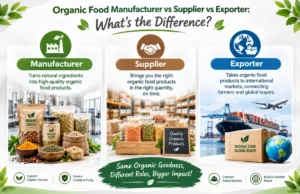
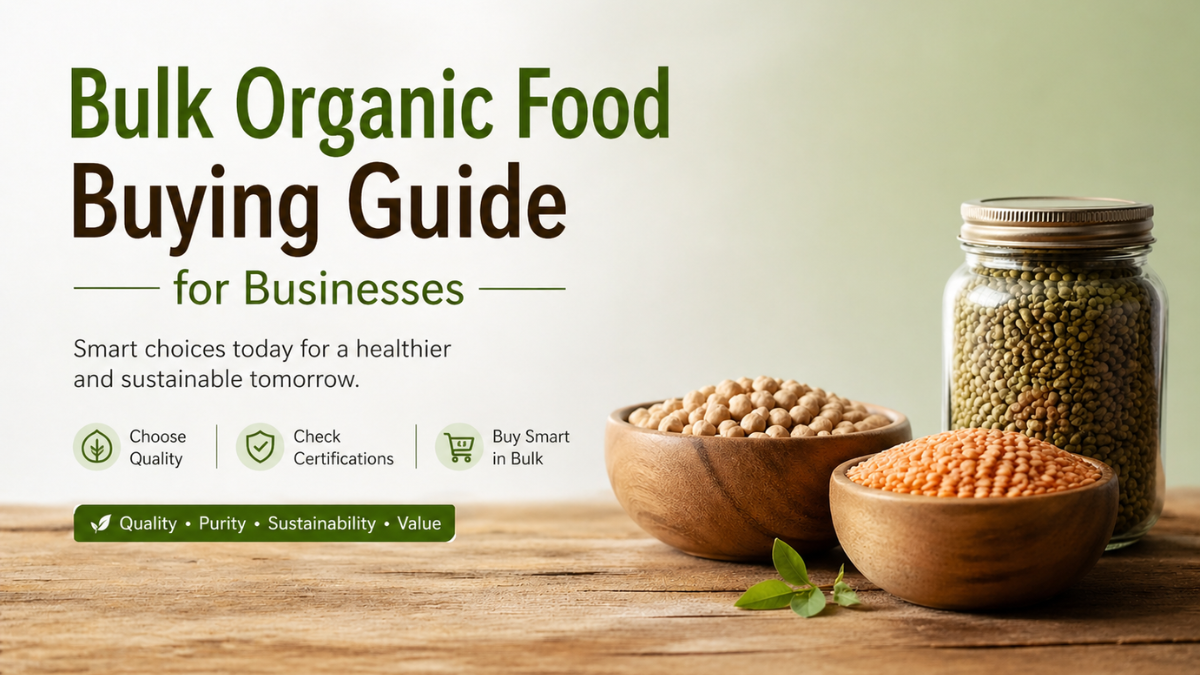
So you have decided to go organic not just for the label but because your customers are actually reading ingredients now. Whether you are running a restaurant chain a D2C food brand a cloud kitchen or a hotel group sourcing organic at scale is a completely different game than picking up a bag of organic rice at the supermarket. And honestly most businesses learn that the hard way.
The demand for certified organic produce has been quietly growing for years across India, but what caught a lot of food businesses off guard is how quickly it accelerated post 2020. Consumers started caring really caring about where their food comes from. And suddenly “we use organic ingredients” stopped being a marketing line and started being a procurement problem.
Here’s the thing bulk organic sourcing has its own ecosystem. Its own rhythms certifications seasonal constraints and frankly its own set of supplier quirks. This guide is meant to cut through some of that noise.
Finding the Right Organic Food Supplier in India It’s Trickier Than It Looks
Let’s be honest about something. When you search for an organic food supplier in India you will find a mix of genuine certified producers aggregator platforms and a few players who are let’s say creatively interpreting what “organic” means. So before we talk about specific names it’s worth understanding what you are actually looking for.
Certification is non negotiable. India Organic (NPOP), USDA Organic, and EU Organic are the three certifications most commonly accepted by serious buyers. If a supplier can’t produce a valid certificate not a screenshot an actual verifiable document that’s a hard stop. The APEDA database is publicly accessible and you can cross verify. Do it.
Now, this is important certification alone doesn’t tell you about supply consistency. A small farm might be beautifully certified and completely unable to fulfill a 500 kg monthly order of turmeric without breaking a sweat in quality. That’s where most B2B buyers get burned in year one. You need to assess both compliance and capacity separately.
Suppliers Worth Knowing About
Indian Farm Organics is one of the names that comes up fairly consistently among procurement folks who have actually done the homework. They focus on Indian staples pulses, spices grains oils and cater specifically to business buyers rather than retail. What I like about indianfarmorganics.com is that they are fairly transparent about sourcing regions which is rare. Most suppliers tell you very little until you push. If you are a food brand trying to make clean label claims that traceability matters more than people think.
Sresta Natural Bioproducts (24 Mantra Organic) probably the most recognized organic brand operating at industrial scale in India. They work with thousands of farmers across Andhra Pradesh Telangana and other states through a contract farming model. For bulk buyers they are reliable and their certification record is solid. The flip side? Less flexibility on customization and MOQs can be steep if you are still scaling.
Organic India has been around long enough that most people in the food industry have at least heard of them. Strong on herbs and wellness ingredients tulsi ashwagandha moringa. If your product line skews toward health and functional foods, they are worth a conversation. Their farm network is large and fairly well audited.
Down To Earth Organics is a Pune based aggregator that works with certified organic farms across Maharashtra and Karnataka. They’re interesting because they handle both commodity organics (wheat, rice, dals) and some harder-to-source items like organic kokum or amaranth. Smaller scale than some of the others but surprisingly responsive for a business of their size.
Praakritik operates more as a curated sourcing platform, but they have built relationships with certified producers across multiple states and can handle institutional orders. Good option if you want variety in a single vendor relationship rather than managing five different farm contacts.
Navdanya founded by Vandana Shiva’s organization so there’s a strong philosophical bent here toward seed sovereignty and biodiversity. They are not the right fit for everyone but if your brand story aligns with traditional Indian varieties and heirloom grains they offer something genuinely differentiated. Also useful for sourcing minor millets and forgotten grains that have suddenly become very fashionable.
Suminter India Organics is one of the larger exporters but also works with domestic B2B buyers. Their strength is spices and processed ingredients organic turmeric powder, chili, cumin coriander. They have been in the game for a while and have internationally recognized certifications. Which matters if you are co-packing for export markets.
There are also regional players that fly under the radar farm cooperatives in Uttarakhand, Sikkim (India’s only fully organic state) and parts of Himachal Pradesh that supply directly to businesses without much of an online presence. These can be excellent for niche sourcing but require legwork to vet and often have seasonal supply windows you need to plan around.
Choosing a Supplier What to Actually Evaluate
Beyond certifications, here’s how I’d frame the evaluation process for any business doing this seriously.
Start with a sample order not a call. You can learn more from a 5 kg sample than from two hours of presentations. Assess the packaging the freshness the smell, the consistency of the batch. If rice arrives with mixed grain sizes or spices have already lost their top note that’s your preview of what bulk looks like.
Talk about rejection and refund policies upfront. Suppliers who can’t articulate a clear process for quality disputes are suppliers you will argue with later. A good supplier isn’t defensive about this they have a process because they have had to use it.
Understand their harvest and supply calendar. Organic produce follows seasonal rhythms more strictly than conventional supply chains. Your turmeric supplier might have a 3-month gap post harvest before the next crop is ready. If you don’t plan around this, you will find yourself scrambling and compromising.
Ask specifically about how they handle a bad crop year. Climate variability is real and it affects organic farming more acutely because synthetic interventions aren’t available. A supplier who’s thought through contingency sourcing is a supplier who’s been doing this for a while.
Finally and this is something a lot of buyers skip visit if you can. Even once. There is no substitute for seeing a farm or processing facility in person. The gap between what’s on a supplier’s website and what actually happens at the warehouse can be educational.
A Few Questions That Come Up A Lot
Is organic food significantly more expensive to source in bulk? Yes but the gap isn’t as dramatic at scale as it is retail. You are typically looking at a 20–40% premium over conventional depending on the commodity. Some items like organic A2 ghee or cold-pressed oils carry higher premiums. Build it into your COGS from day one rather than trying to absorb it later.
What certifications should I insist on from an Indian supplier? NPOP (National Programme for Organic Production) is the Indian standard recognized by APEDA. If you are selling in European markets EU organic equivalence matters. For the US, USDA NOP. Don’t accept “in process of certification” as a substitute for actual certification that phrase has been stretched creatively by many suppliers.
How do I verify a supplier’s organic certification independently? The APEDA AgriXchange portal and the PGS-India portal both allow you to look up registered organic operators. It’s a bit clunky to navigate but it works. Always verify the certificate number directly rather than taking a document at face value.
What’s the typical MOQ for bulk organic sourcing? Varies widely. Smaller farm cooperatives might work with you from 50–100 kg. Larger commercial suppliers usually start at 500 kg per SKU sometimes a metric ton. If your volumes are in between aggregators are often the most practical entry point.
The organic supply chain in India is genuinely maturing more farmer groups getting certified more traceability infrastructure more institutional buyers creating reliable demand that supports better supply. It’s not perfect and anyone who tells you it’s plug and play is selling something. But for businesses willing to invest a bit of time in their sourcing relationships, it’s increasingly viable and increasingly worth it.
Do your homework. Visit when you can. And please, verify those certificates.