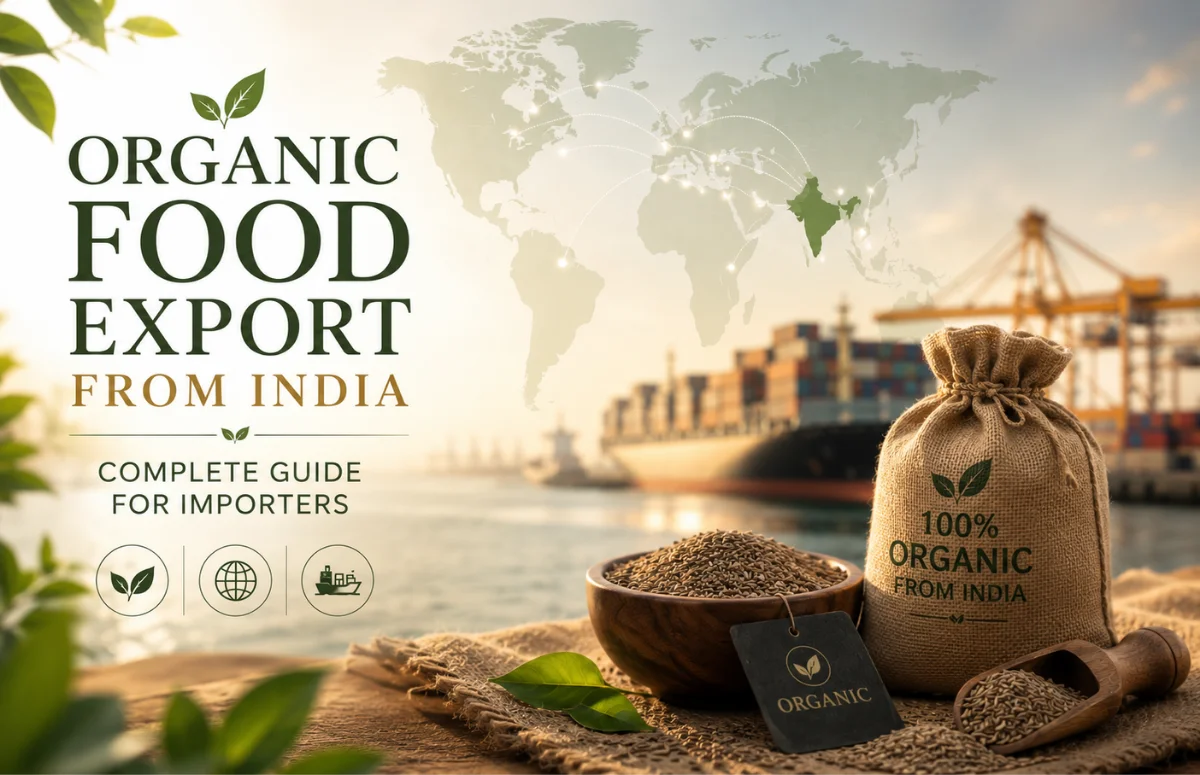
If you have been in the food import business for any length of time. You already know that sourcing organic products from Asia has become something of a gold rush over the last decade. India specifically has quietly positioned itself as one of the most significant players in the global. Organic food trade and yet a lot of importers I talk to still treat it as an afterthought. They will go to the European suppliers. First maybe consider some Latin American options and then almost reluctantly look at India. That’s a mistake, honestly.
India is now one of the largest producers of certified organic products in the world. The country has millions of certified organic farmers spread across diverse agro. Climatic zones from the spice rich plains of Kerala to the cold mountain terrains of Sikkim. Which became India’s first fully organic state back in 2016. That kind of geographic diversity means the product range is genuinely staggering. Pulses spices, cereals, oilseeds, tea, coffee, fruits, vegetables, cotton and more. For any serious importer understanding how to navigate this landscape is worth the effort.
Why India and Why Now
The numbers tell part of the story. India exports organic products to over 50 countries. With the US, the EU, Canada, Switzerland and Australia being the major destinations. The value of organic exports has been growing steadily driven by both government support and rising global demand. But beyond the numbers there’s something more interesting happening the quality gap that once existed. Between Indian organic produce and Western alternatives has narrowed considerably.
That said this market still has complexity baked into it. Certifications vary. Supplier reliability ranges wildly. And logistics well, let’s just say international food trade is never a simple affair. So let’s actually dig into what importers need to know.
Navigating the Supplier Landscape
Here’s the thing that trips up a lot of first time importers India. Doesn’t have one centralized organic authority the way some European countries do. The regulatory backbone is the National Programme for Organic Production (NPOP). Which is managed by APEDA (Agricultural and Processed Food Products Export Development Authority). Suppliers exporting to the EU need to comply with EU Council Regulation EC 834/2007. And those targeting the US market need NOP (National Organic Program) certification. Many reputable suppliers carry all three.
Now, for the actual suppliers. Let me walk through some of the better-known names in the space. Along with some context that doesn’t show up in brochures.
Sresta Natural Bioproducts (24 Mantra Organic) is probably the most recognized brand name in Indian organic exports. Based in Hyderabad they have been in the game. Since 2004 and supply everything from rice and lentils to cooking oils and ready-to-eat products. Their certifications are solid USDA NOP, EU and India. Organic and they work with a large farmer network across multiple states. They are a logical first call for importers wanting a broad product portfolio from one supplier.
Organic India is another heavyweight, known particularly for their Tulsi (Holy Basil) teas and herbal supplement range. They work directly with tribal farmers in Madhya Pradesh and have a strong Fair Trade angle. Which matters a lot to certain buyer demographics in Europe and North America. If wellness products or adaptogens are part of your category, they are worth a serious look.
Moving to spices and India is, after all the world’s largest spice producer Kancor Ingredients out of Kerala stands out. They specialize in spice extractives and organic spice powders and their technical capabilities in extraction and standardization are genuinely impressive. Importers sourcing turmeric black pepper, cardamom or ginger oleoresins should have them on the shortlist.
For grains and pulses Agri-Exim Agencies based in Gujarat has built a strong reputation. Over the years particularly for chickpeas toor dal and various milled grain products. Gujarat and Rajasthan tend to dominate pulse production in India and having a supplier with deep roots in that geography. Matters when you are talking about traceability and volume consistency.
Then there’s the question of smaller more specialized exporters and this is where it gets interesting. Platforms like www.indianfarmorganics.com connect international buyers. Directly with certified organic farms and exporters covering categories like dry fruits, pulses, spices and cereals. For importers who want more transparency in the supply chain who want to know the farm. Not just the exporter this kind of direct-to-farm model is increasingly attractive. It’s not always the easiest route but it often gives you better margins. And a more compelling sourcing story for your customers.
Navneet Organics is a name that comes up repeatedly among importers sourcing sesame seeds and castor oil. They have been exporting for decades and have a pretty straightforward operation. Not flashy, but reliable which counts for a lot when you are planning 6-month import schedules.
Another one worth knowing Suminter India Organics. Which operates an interesting integrated model where they control farming processing, and export under one umbrella. Their product range spans fruits and vegetables cereals, pulses, spices and even fresh organic produce. The integrated approach reduces quality variation across the chain which is a real advantage.
For tea specifically and Indian organic tea from Darjeeling. Assam and the Nilgiris is genuinely world-class Goodricke Group and Chamong Organic are among the more established. Exporters with proper organic certifications and consistent volume capability.
How to Actually Choose a Supplier (Not the Textbook Version)
This is where most guides get vague so let me be direct about it.
Start with certifications but don’t stop there. A supplier can have a valid India Organic certificate and still deliver inconsistent product quality. Ask for their third-party audit reports not just the certificates. Ask which certifying body issued them Lacon, OneCert, IMO Control and Control Union are among the credible ones. If a supplier is vague about this move on.
Visit if you can. I know that sounds old-fashioned in the age of Zoom. But nothing replaces a facility visit when you’re committing to a long-term sourcing relationship. If travel isn’t feasible, hire a local inspection agency they are not that expensive relative to what’s at stake.
Check their export history. APEDA maintains public records. A good organic food supplier in India will have a clean track record of exports to developed markets. Which means they have already navigated the documentation and compliance requirements that trip up smaller players.
Product testing matters. Always and I mean always do independent lab testing on your first few shipments. Pesticide residue panels aflatoxin testing for spices and nuts heavy metals for specific categories. This isn’t a reflection of distrust it’s just how professional importing works. Most experienced suppliers expect it and will provide samples without complaint.
Minimum order quantities are negotiable more often than people think. Don’t let a high MOQ quoted in an initial email deter you. Have the conversation.
And finally payment terms and relationship. India’s organic export sector despite its scale, still runs heavily on relationship trust. Suppliers who have been burned by international buyers defaulting on payments will be cautious. Coming in with a clear track record, reasonable payment terms and genuine engagement goes a long way.
Documentation and Compliance Basics
Exporting organic food from India to most developed markets requires a fairly specific documentation stack. You will need the NPOP certificate (for products certified under India’s national programme). A Transaction Certificate issued for each shipment by the certifying body phytosanitary. Certificates where required (essentially always for plant-based products) and an Organic Export Certificate issued by APEDA. If your market is the EU, the supplier needs to be listed in TRACES (Trade Control and Expert System). Which is the EU’s online certification platform.
For the US, the importer of record needs to ensure. That the certifying body is accredited under USDA’s National Organic Program. This sounds more complicated than it is once you have been through it a couple of times. But it does require due diligence upfront.
Country-of-origin labelling import duties and specific product regulations (particularly for herbs and supplements destined for the US market). Are additional layers but those really depend on your specific product category and destination market.
A Few Things Nobody Warns You About
Monsoon season affects shipments in ways that are not always obvious. Humidity during India’s June-September monsoon can impact packaging integrity for hygroscopic products like spices and pulses. Good suppliers will factor this into their packaging specs. But it’s worth explicitly discussing if you are placing orders for monsoon-period shipping.
Also India has a lot of suppliers who claim organic status without formal certification. Particularly in smaller commodity categories. You will encounter brokers who will confidently tell you their product is naturally grown. Or “traditionally farmed” as a substitute for actual certification. It isn’t. Always verify independently.
Quick FAQ
Is India’s NPOP certification equivalent to EU Organic certification? Yes, the EU and India have a bilateral equivalency agreement covering NPOP-certified products. Which means goods certified under NPOP can be sold as organic in the EU without additional certification. The US has a similar arrangement under NOP. This significantly simplifies compliance for importers.
What’s the typical lead time from order to delivery? For established suppliers with ready inventory. You are typically looking at 4–8 weeks from order confirmation to arrival at a major European or US port. Custom processing new product development or large volume orders can extend this to 10–14 weeks.
How do I verify an exporter’s authenticity? Check the APEDA database, request their Importer-Exporter Code. (IEC) number and verify their organic certification with the listed certifying body directly. For additional due diligence third-party background check services that specialize in South Asian supply chains are available and relatively affordable.
Are Indian organic prices competitive compared to other origins? Generally, yes particularly for spices pulses, and grains where India has natural production advantages. For categories like organic nuts or fresh produce. The calculus is more complex and depends heavily on the season and specific origin within India. Worth comparing on a product-by-product basis rather than assuming a blanket advantage.